
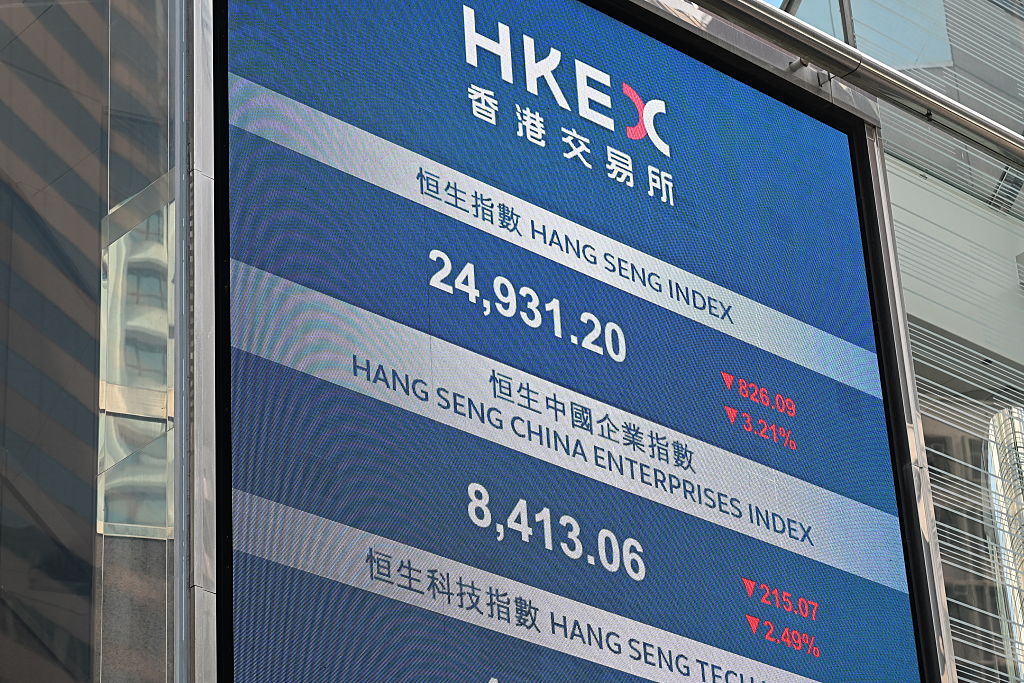
Hangzhou post-80s stock investor Mr. Cao sighed, “The difficulty of trading in the current market is too high. I never expected to lose more than 2 million RMB at the beginning of September, which is roughly equivalent to the 10-year salary of an average white-collar worker.”
Mr. Cao concentrated his funds on the Hong Kong stock AI track, holding significant positions in leading internet companies such as Alibaba, Tencent, as well as major model manufacturers like Zhipu and MiniMax, without diversification. However, these stocks have now become the “disaster areas” in the capital market where sell-offs are prevalent.
Since the beginning of September, the Hong Kong stock AI big model sector has been under continuous pressure. The stock prices of Zhipu and MiniMax, known as the “AI big model giants” in Hong Kong stocks, have noticeably fallen.
Zhipu has seen a cumulative decline of nearly 40% since September, retracting more than 70% from its peak in June this year; while MiniMax has also dropped by over 25% since September.
On September 10, DeepSeek released V4.1 Flash and once again lowered API prices, causing Zhipu to fall by 10.34% and MiniMax by 8.98% on the same day. Concerns about the continuous decline in big model prices and commercial prospects have intensified in the market.
On September 14, the downtrend of AI big model stocks continued. By mid-day on that day, Zhipu fell to around 736 Hong Kong dollars, a decrease of approximately 7.19%.
Moreover, on the evening of September 13, Zhipu announced a new round of financing plan, involving the allocation of up to 21.965 million new H shares and the issuance of convertible bonds totaling RMB 20.14 billion. The H share allocation price is 714 Hong Kong dollars per share, representing a discount of about 9.96% from the closing price of 793 Hong Kong dollars on September 11.
As Hong Kong stock AI big model stocks weaken, Chinese A-share AI computing-related stock prices have also shown significant fluctuations. On September 14, the photovoltaic module giant Zhongzai Xuchuang fell by 5.72%; Xinyisheng dropped by 4.99%; Tianfutongxin declined by 1.91%, while Hanwuji remained unchanged.
Lately, AI chip and computing-related individual stocks such as Hanwuji, Hanguang Information, and Inspur Information have also experienced noticeable fluctuations, with diverging declines within the sector.