
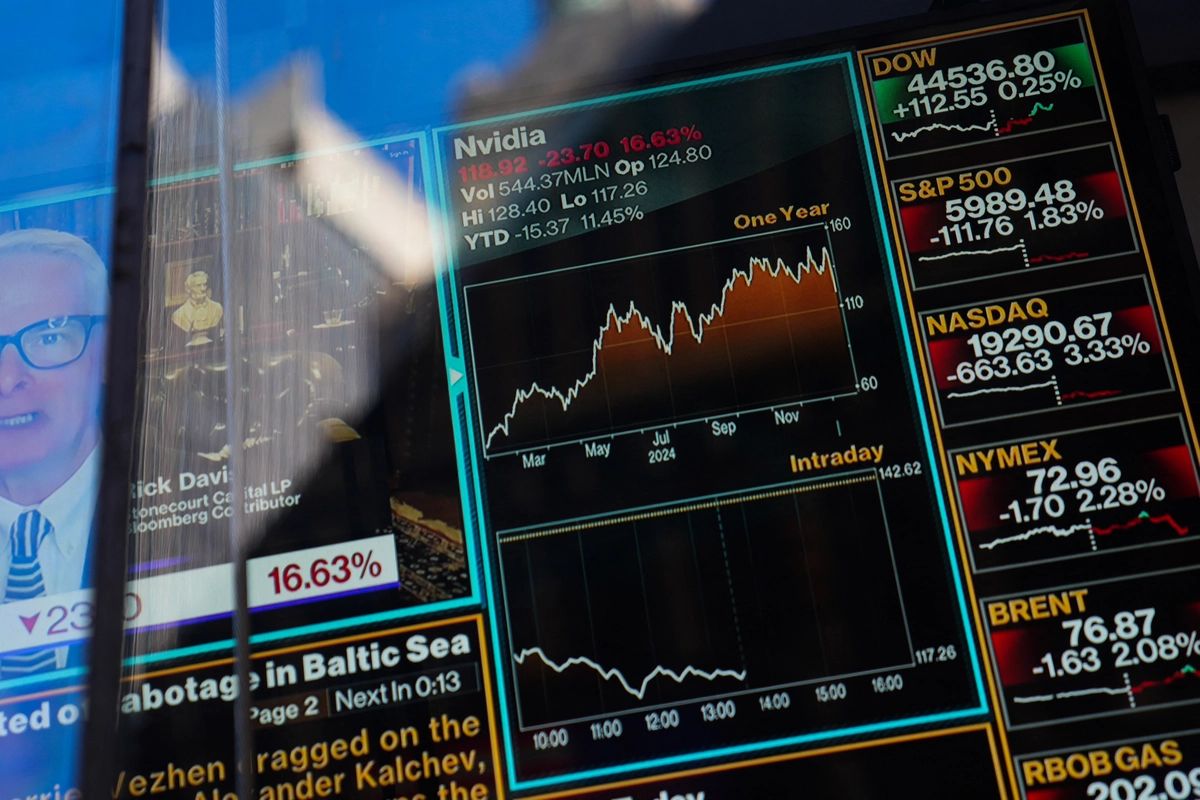
Currently, a combination of factors including non-farm employment and inflation data, increased probability of Fed rate hikes, etc., may lead to volatility in the US stock market. A report from Citigroup highlights five capital market risks while Goldman Sachs indicates that the market is enveloped in a “high-interest rate panic.”
On September 13, Investing, a well-known financial data and analysis media outlet, cited a report from Citigroup stating that concerns in the energy market, central bank policies, and geopolitical issues continue to escalate, urging investors to closely monitor five risks.
The five risks identified by Citigroup are: hawkish Federal Reserve, global risks caused by rising bond yields, unwinding of yen carry trades, 1970s-style oil shocks, and disruptions in European natural gas supply. Citigroup believes that there are misjudgments in the market regarding each of these risks.
In addition to the mentioned risks, Citigroup also points out that artificial intelligence (AI) regulation could pose a potential hidden threat. “The biggest AI risk may come from model bans. If governments deem certain AI models too dangerous, training work could experience substantial halts, leading to a sudden surge in excess computing power.”
At the same time, Citigroup does not anticipate a replay of previous market turmoil due to AI efficiency breakthroughs, stating that the market is unlikely to go through another ‘DeepSeek moment’ as investors are now focusing on specific profit performance rather than impressive benchmark test scores.
Goldman Sachs, on the other hand, states that the current US stock market is in the grip of a “high-interest rate panic” as long-term US bond yields continue to rise. As of now, the 30-year US bond yield has risen to 5.354%, the highest level in nearly twenty years, with the 10-year bond yield approaching 5%.
The report suggests that despite the forward P/E ratio of the S&P 500 dropping from 22 times earlier in 2026 to 19 times, the stock market valuation relative to bonds remains stable. Goldman’s Dividend Discount Model (DDM) implies a stock risk premium of about 3% currently, which has also remained relatively stable in recent years. This indicates that while rising rates compress absolute valuations, they have not systematically disrupted the equity-to-bond allocation value.
Goldman believes an important buffer is that the rate market has already priced in expectations of the Fed raising rates by over 25 basis points more than three times by mid-2027, which to some extent raises the threshold for further-than-expected policy tightening, reducing the risk of market shocks.
The medium-term impact of rate hikes on the stock market ultimately depends on how monetary tightening affects profit growth, which is the core driver of the stock market. Goldman predicts that the S&P 500 earnings per share (EPS) will reach $340 in 2026, up 24% year-on-year, further increasing to $385 in 2027, up 13% year-on-year.
In the current environment, Goldman suggests that avoiding residential builders sensitive to long-end rates and embracing targets with high growth potential may be the best investment strategy.
According to Barron’s, Benjamin Bowler, the global equity derivatives research director at Bank of America, believes that while the market is indeed concerned about rate changes potentially disrupting the stock market, the momentum generated by the tech stock boom is quite strong. It would require significant macroeconomic risks to threaten the market. Even if corrections occur, buying interest may quickly flow back, leading to market resilience. Similar situations have been seen during the dot-com bubble era and more recently in market performance.
Mike Sanders, fixed income director at investment firm Madison, notes that traditionally, the stock market tends not to welcome rate hikes as higher rates may dampen economic activity and increase the attractiveness of bonds relative to stocks. However, the current market environment presents a paradox: investors may be more concerned not only about how much rates rise, but whether policies are clear enough and can bring stability.