
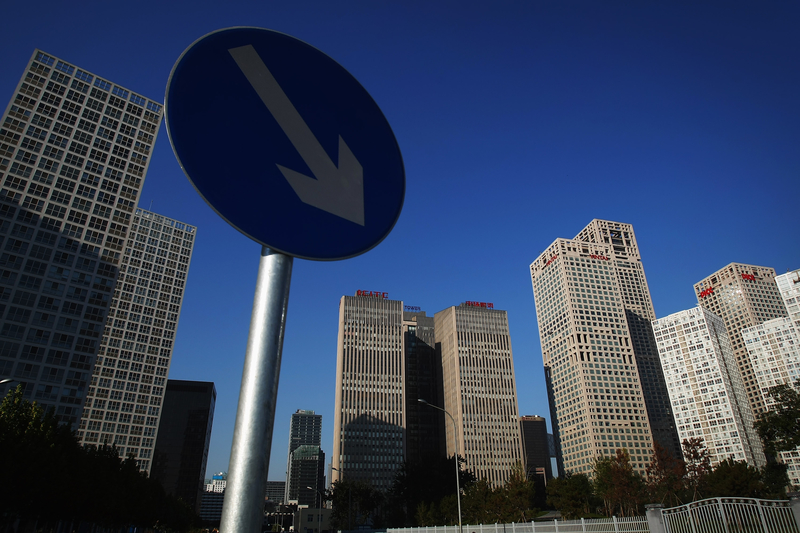
Due to factors such as reduced demand during the college graduation season and a tight job market, data shows that the average residential rent in China declined in August.
The latest data released by the China Real Estate Research Institute “Zhongzhi Research Institute” shows that in August 2026, the average residential rent in 50 representative cities in China was 34.02 yuan (RMB, the same below) per square meter per month, a decrease of 2.45% year-on-year.
Among them, the average rent in individual first-tier cities increased. The average residential rent in Shanghai was 84.39 yuan per square meter per month, an increase of 0.61% month-on-month and 1.25% year-on-year. The average residential rent in Shenzhen was 83.05 yuan per square meter per month, an increase of 0.27% month-on-month and a decrease of 0.11% year-on-year.
The Zhongzhi Research Institute has been monitoring 50 key real estate market sample cities for a long time to release core industry indices such as average residential rent and housing prices. The 50 sample cities include 4 first-tier cities (Beijing, Shanghai, Guangzhou, Shenzhen), 16 quasi-first-tier cities (Hangzhou, Chengdu, Nanjing, etc.), and 30 second-tier cities (Xiamen, Dongguan, Foshan, Dalian, etc.).
The Zhongzhi Research Institute stated that the housing rental market exhibits significant seasonal fluctuation characteristics. Historically, the period from March’s return to work rush to the college graduation season from June to August is the traditional peak season for housing rental demand. After September, the seasonal effects subside. It is expected that in September, the average residential rent in key cities will mainly fluctuate slightly, and the overall average rent in first-tier cities is expected to remain stable.
Current rental demand has shown signs of the peak season ebbing. Another real estate market institution, the “58 Anjuke Research Institute,” released its national monthly rental market report on September 8, showing that the “house-hunting intensity” index in 100 cities nationwide in August was 77.8, a 2.8% decrease month-on-month; the index for first-tier cities was 77.5, a 2.6% decrease month-on-month. The institution believes that the ebb of the peak season is mainly due to the concentrated release of rental demand during the college graduation season.
Reuters previously reported that Chinese graduates facing unemployment are fleeing cities where the middle-class dream could be realized. Due to a lack of job opportunities, nearly half of those who have not entered the labor market have returned to their parents’ homes. Those who are determined to pursue their urban dreams are even willing to rent out half of their beds to save money.
Political observer Xia Yan believes that some graduates, unable to find ideal jobs, are choosing to return to their hometowns directly, resulting in a slowdown in the inflow of permanent residents to major cities, thereby reducing the additional demand for rentals. Even those graduates who have found jobs are inclined to cut expenses in the current economic and employment environment. For example, downgrading from a “single room” to a “shared rental,” or choosing more remote and cheaper rental locations. In addition, in recent years, many homeowners facing difficulty in selling second-hand homes have “converted to rentals,” leading to an oversupply of housing in the market, increasing pressure on the rental and sales market in the future.
Changes in residential rents are seen as leading indicators of the real estate market conditions in the industry, involving city population inflows, job market activity, and other circumstances. The National Bureau of Statistics of the CPC Central Committee released unemployment rate data for different age groups in towns and cities without including students in July. Among them, the unemployment rate for the labor force aged 16 to 24, without including students, was 17.9%, for those aged 25 to 29, it was 7.2%, and for those aged 30 to 59, it was 3.9%. Compared to the annual low of 14.9% in June, the unemployment rate for the 16-24 age group in July increased by three percentage points, reaching a new high since September last year.
In 2026, the total number of regular college graduates in China reached 12.7 million, an increase of 480,000 from 2025. The youth unemployment rate in August 2026 is expected to be announced to the public around September 17th-18th, with the industry predicting that the youth unemployment rate may reach a new high.