
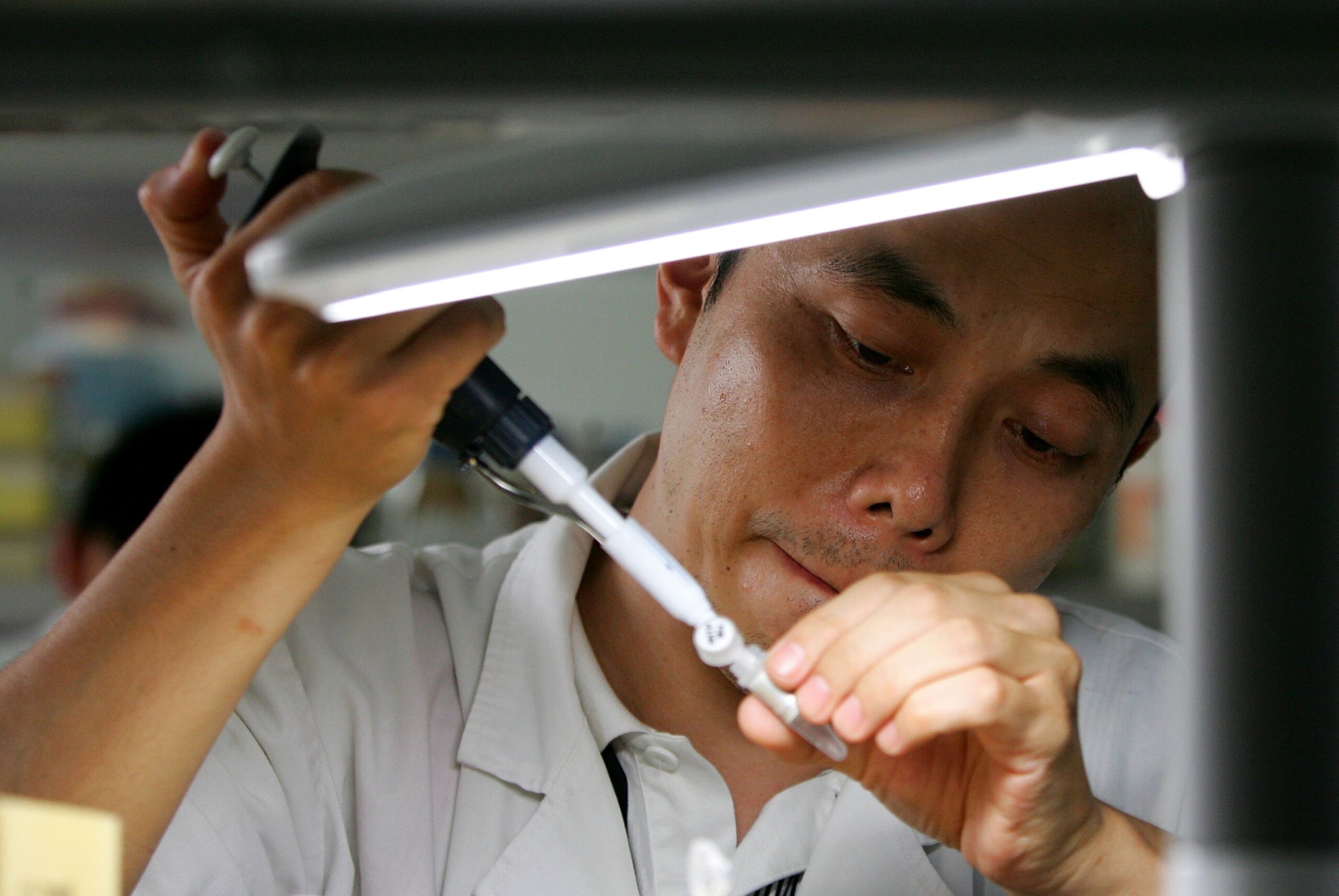
A 6-year-old girl died after receiving experimental gene editing therapy. Industry experts have expressed concerns over the remarkably low threshold for such trials in China, where researchers can push forward controversial clinical trials as long as they are approved by Chinese research hospitals.
Furthermore, scientists pointed out serious flaws in risk assessment, transparency, and institutional regulation in clinical trials in China.
According to a joint investigation by the international top academic journal “Science” and the Retraction Watch published on July 23rd, last year at the Xinhua Hospital affiliated with Shanghai Jiao Tong University, a 6-year-old girl named Xiaomei died a week after receiving a customized therapy aimed at correcting a neurological development gene mutation.
Xiaomei, a pseudonym, was globally known as the first person to receive brain gene editing therapy and the sole participant in this controversial clinical trial.
This news has shocked the global research and biomedical community. Foreign gene therapy experts and bioethicists who carefully reviewed the case question whether Chinese doctors properly informed the girl’s parents about the risks of the treatment before proceeding.
Led by Qiu Zilong, a neuroscientist at the Brain Science Center of Shanghai Jiao Tong University, the trial used an Investigator-Initiated Trial (IIT) model.
To stay competitive in cutting-edge medical treatments, the Chinese authorities have granted rare regulatory flexibility to hasten the initiation of clinical trials, aiming to promote the rapid development of China’s biotechnology industry and catch up with the U.S. and European counterparts.
Under the IIT framework in China, as reported by the South China Morning Post on Wednesday, researchers only need approval from a research hospital without requiring authorization from national regulatory agencies to test new therapies on humans, which has propelled the flourishing of China’s biotechnology sector.
An article by Endpoints News in December 2025 indicated that the Chinese IIT model provides a flexible approach for companies and institutions to assess the potential of experimental therapies, differing significantly from traditional clinical trials that need strict approval from national regulators.
This mechanism has helped China’s biotech industry keep pace with Western competitors, particularly solidifying its position as a competitive force in the fields of cell and gene therapies.
Wang Haoran, the CEO of Weihai Xinlan Biotechnology Co., confirmed this to the South China Morning Post, mentioning that China’s mechanisms offer more flexibility for early clinical exploration under strict regulations.
“This case appears to have exposed serious deficiencies in risk assessment, transparency, and institutional regulation. Obviously, there needs to be stronger safeguards, especially in the first human gene editing therapies involving children,” Wang Haoran stated.
Xiaomei suffered from Snijders Blok-Campeau syndrome, a rare neurodevelopmental disorder caused by a mutation in the CHD3 gene, leading to developmental delay, language impairments, intellectual disabilities, and autism features. However, her symptoms were relatively mild and not life-threatening.
From July 2023, when Xiaomei’s father contacted Dr. Qiu Zilong, until the Clinical trial in March 2025 at Shanghai Xinhua Hospital, no medical personnel reportedly informed the girl’s parents about the significant risk of mortality associated with the surgery.
If successful, Xiaomei would have been the world’s first patient to receive brain-targeted gene editing therapy, bringing fame to Qiu Zilong both domestically and internationally. However, seven days later, Xiaomei passed away due to severe immune reactions believed to be connected to the treatment.
Multiple life scientists noted that the therapy Xiaomei received carried extremely high risks, mainly due to the need to inject a massive amount of virus particles into the patient’s body. Repairing enough brain cells required injecting billions of virus particles since only a tiny fraction of the viruses could reach target cells and activate the base editing mechanism.
Studies revealed that all four monkeys in Qiu Zilong’s preclinical trial who received this therapy, regardless of dosage, experienced moderate to severe liver damage. However, Qiu Zilong’s team persisted in advancing human trials.
The Ethics Committee of Xinhua Hospital approved the clinical trial a month before the publication of the monkey toxicology report, indicating that the institution did not review the primate toxicology report.
Cui Xiang, a senior scientist at the multinational biotech company Novartis, told the South China Morning Post that the hospital’s Ethics Committee failed to adequately verify the safety of the technology and assess the risk-benefit ratio of the therapy correctly.
Cui Xiang stated that the gene editing incident resulting in a 6-year-old girl’s death could have a “lasting impact” on China’s rapidly advancing biotechnology industry.
In contrast, last year in the United States, an infant named Kyle Patrick Muldoon, Jr., known as KJ, successfully underwent personalized CRISPR gene therapy for a life-threatening metabolic disorder. The severity of Xiaomei’s condition was considered “far from life-threatening” in comparison.
In August 2024, KJ was born at the University of Pennsylvania Hospital, where doctors soon noticed some unusual signs. KJ was diagnosed with CPS1 deficiency, an extremely rare and severe urea cycle disorder with an early infant mortality rate of up to 50%. The only available treatment previously was a liver transplant for KJ when he grew older, with uncertainty whether he would survive infancy due to increasing risks of neurological damage and mortality.
At six months old, KJ became the first patient ever to receive personalized gene editing medicine. The medication was infused into his bloodstream and targeted his liver.
Despite the urgency, the surgical plan for this American infant underwent comprehensive layers of scrutiny, ultimately greenlighted by the highest U.S. medical regulatory authority, the Food and Drug Administration (FDA).
According to an article detailing the gene therapy published in the New England Journal of Medicine, then-FDA Chief Medical Officer Vinay Prasad and Martin Makary elaborated on the “Plausible Mechanism Pathway” regulatory framework set up in the United States for such unique cases requiring evidence on a molecular and biological mechanistic level due to the limited number of patients not suitable for traditional randomized clinical trials, applying an evidence model different from traditional large-scale clinical trials.