
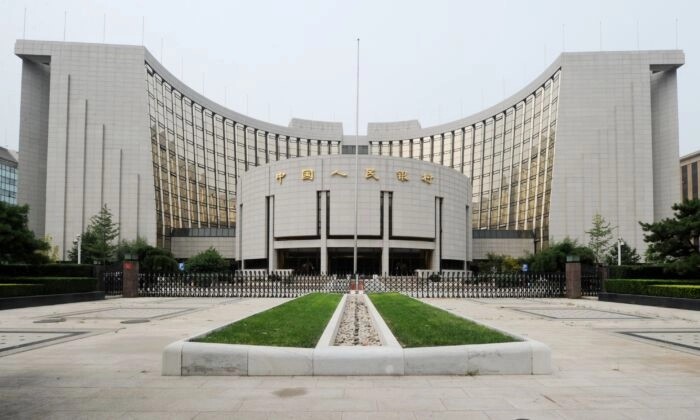
The latest data released by the People’s Bank of China (PBOC) shows that in July of this year, household deposits in mainland China decreased by 630 billion yuan (RMB), marking the third consecutive month of net decrease in household deposits. This indicates that the trend of “moving” bank deposits continues.
According to a report by the Beijing News on August 17th, the latest financial statistics released by the PBOC reveal a continued decrease in household deposits in July.
Since the beginning of this year, household deposits have seen net decreases in April, May, and July. Among them, the largest decrease was in April, reaching 1.94 trillion yuan. May witnessed a decrease of 110 billion yuan. While there was an increase in household deposits in June, July saw a decline of 630 billion yuan.
Financial regulatory expert Zhou Yiqin mentioned that due to seasonal factors, banks tend to boost deposits at the end of June, with a significant amount of funds returning to banks. As July begins after the assessments conclude, funds naturally flow out, and July is also a month where household deposits tend to weaken, following a seasonal pattern. Zhou Yiqin acknowledged that the trend of households “moving” deposits is ongoing.
Data from the PBOC also confirms the movement of deposits. In July, deposits in non-banking financial institutions increased by 1.11 trillion yuan, but the year-on-year growth was reduced by 1.03 trillion yuan. Non-bank deposits mainly refer to funds from securities, insurance, funds, and wealth management placed in commercial banks. This signifies that the trend of deposit “migration” remains unchanged.
As for the reason why residents continue to withdraw money from banks and “move” deposits, many depositors have expressed that it is primarily due to the low bank deposit interest rates.
Ms. Ha told the Beijing News, “At the end of the previous year, the interest rate for inter-city deposits was around 2.6%, but now it’s barely reaching 2%. It’s not worth depositing money anymore.” She mentioned that her deposits will soon mature, and in the future, she may opt for wealth management through banks.
Mrs. Fan, who is in her sixties, used to be a loyal customer of bank deposits, but as deposit rates declined, the proportion of her deposits also decreased. “Nowadays, bank deposit rates are just too low, so locking money in the bank for a few years isn’t very profitable.”
Data from Rong360 Digital Technology Research Institute shows a continual decline in bank deposit rates. In July 2026, the deposit rates for time deposits and large-denomination certificates of deposit for 3 months to 3 years all saw a decrease compared to the previous month.
However, some depositors mentioned that due to their advanced age and lack of understanding of financial management or stock trading, they would still choose the safe option of fixed-term deposits regardless of fluctuations in interest rates.
Furthermore, the sluggish growth in retail loans is also one of the reasons for the decrease in household deposits. Loans can lead to deposits, as the amount individuals borrow from banks can directly transfer into personal or corporate deposits. But with the current slowdown in bank loan growth, this channel has also seen a decline.
According to PBOC data, household loans decreased by 460.3 billion in July, with short-term and medium-to-long-term loans decreasing by 340 billion and 120.2 billion respectively compared to the same period last year. The pressure of reducing household loans is more significant.
Industry insiders believe that considering the current low levels of deposit rates, the trend of moving deposits from the banking system and flowing towards diversified wealth management products is likely to continue.