
According to a report released by the real estate website Realtor.com on July 20, the annual income needed for American families to purchase a starter home has increased by 80% from 43,000 USD in 2019 to 78,000 USD.
This increase far surpasses the growth rate of the median household income in the same period. The report shows that the median household income in the United States has only risen from 69,000 USD to 88,000 USD, an increase of 28.3%.
The report also points out that compared to June 2019, there are approximately 300,000 fewer homes priced below 350,000 USD in the current market, reflecting a decrease in the supply of starter homes. In addition, the average selling price of starter homes was 256,000 USD in 2019, but has now reached 344,000 USD.
In June 2019, 55.1% of homes for sale were priced below 350,000 USD, but now this proportion has dropped to 37.6%.
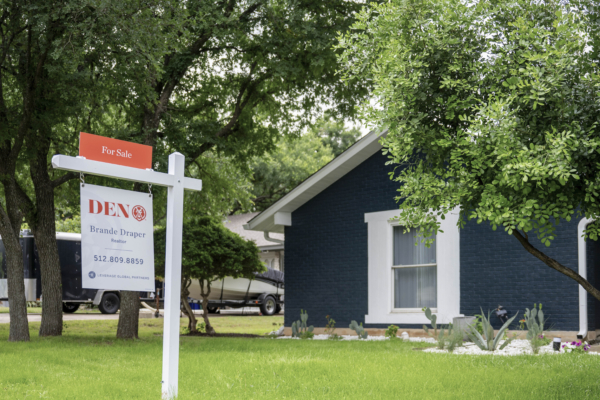
Real estate company Redfin defines starter homes as homes in the lower third of the local market price ranking, typically averaging around 1,200 square feet with fewer bedrooms and one to two bathrooms. Depending on the region, these homes may be small single-family houses with yards, apartments, or townhouses. The report indicates that many starter homes often require some degree of renovation.
Hannah Jones, a senior economist at Realtor.com, stated in the report that the starter home market varies greatly depending on the region.
She mentioned in the report: “In the South and West, builders have been actively meeting the demand for starter homes in recent years, so local buyers now have more choices and better prices than two years ago; however, in the Northeast, this response has never really materialized, and even though the overall housing market has cooled, prices continue to rise.”
The price of starter homes in the West has seen the largest price drop in the United States since 2022 at 7.3%, but it is still the highest in the country, with a median of 480,000 USD.
The Midwest remains the most affordable region, with a median price of 264,000 USD for starter homes, a significant increase from 192,000 USD in 2019.
In the South, the current median price for starter homes is 311,000 USD, a 3.5% decrease from 2022 but still far above 2019’s 237,000 USD.
The report notes that the price of starter homes in the Northeast has risen by 12.6% since 2022, with the current median reaching 444,000 USD. Comparatively, in June 2019, the median price of starter homes in the region was only 296,000 USD. Currently, only 29.7% of homes in the Northeast are priced below 350,000 USD.
Jones stated: “The Northeast is now the most challenging market in the country for first-time homebuyers. Limited land supply, strict zoning regulations, and strong buyer competition have pushed starter home prices to a level where most middle-income families struggle to qualify for mortgages.”
Jones mentioned that although the supply of starter homes is still significantly lower than in 2019, since 2022, there has been an increase of 220,000 homes priced below 350,000 USD, with the listing rate of affordable homes growing by 1.6% compared to the previous year.
However, the report found that in April of this year, the sales volume of homes priced below 350,000 USD decreased by about 10% compared to the same period in 2025 and has decreased by 7.2% cumulatively this year.
Jones stated: “While there are more homes on the market, theoretically driving more transactions, what we are seeing in reality is not the case.” She believes that higher mortgage rates may be causing potential buyers to be “stuck in place.”
As of July 16, the average interest rate for a 30-year fixed-rate mortgage published by Freddie Mac was 6.55%, while the 15-year fixed-rate mortgage averaged at 5.93%.
The report predicts that the situation for starter home buyers will gradually improve in the next five years as the lock-in effect of mortgage rates weakens, the market supply increases, and buyer behavior changes accordingly. However, young, low-income first-time homebuyers who have not yet accumulated home equity will continue to face the greatest obstacles in homeownership.