
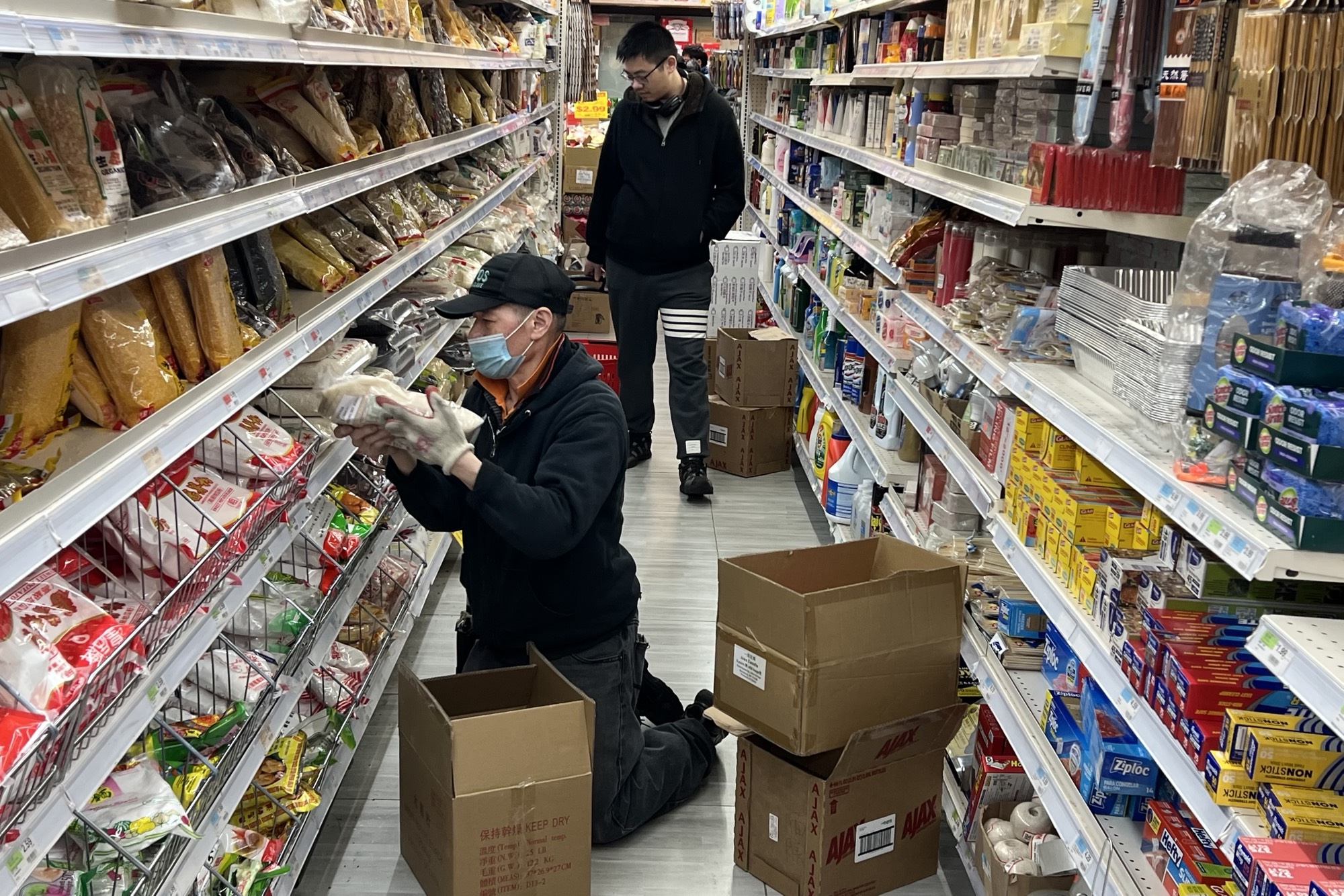
In the United States, have you ever wondered why Chinese supermarkets have struggled to break into mainstream American society for so long? While Japanese and Korean supermarkets have been successful in attracting a more diverse range of consumers? With these questions in mind, in this episode, I will attempt to analyze where the “invisible barriers” faced by Chinese supermarkets are.
Let’s first take a look at Japanese supermarkets. The customer base of Japanese supermarkets in the United States is actually quite diverse across ethnicities, with the most representative brands being Mitsuwa, Tokyo Central, and Nijiya.
In 2013, “Supermarket News” interviewed the manager of Mitsuwa’s New Jersey store, where the customer structure provided by the store was: 40% Japanese, 40% non-Japanese Asian, 20% non-Asian, meaning that 60% of the customers were not Japanese.
Even earlier, the Costa Mesa store in Southern California also shared a similar breakdown: around 40% Japanese, with the rest including Chinese, Korean, other Asian ethnicities, and white customers; at that time, over 70% of Food Court customers were not Japanese.
Tokyo Central is another excellent example. Its predecessor was Marukai. After the Costa Mesa store was renovated into Tokyo Central in 2015, the target audience was deliberately expanded from Japanese to “Cross-Cultural Shopper.”
The company told the “Los Angeles Times” at the time that during the Marukai period, non-Asian customers accounted for about 10% to 20%. After becoming Tokyo Central, the percentage of non-Asian customers temporarily increased to around 70%. Even though this was reported in 2015, there were already a significant number of diverse ethnic consumers at that time.
In 2025, when Tokyo Central opened a new store in Irvine, Southern California, it attracted nearly ten thousand visitors during the opening weekend, and sushi and deli items were quickly sold out. The company now positions itself as a one-stop destination for Japanese culture, cuisine, and lifestyle. They aim to not only cater to Japanese immigrants buying soy sauce and rice but also to attract more consumers to “experience Japan.”
By 2026, “Japan Times” went as far as stating “American shoppers are flocking to Japanese supermarkets” to describe this phenomenon.
Why do Japanese and Korean supermarkets in the United States shine brighter than Chinese supermarkets? | Customer structure analysis Who can attract American consumers | Five key reasons to attract mainstream American consumers #US real estate hotspot 9/12/2026
Now, let’s shift our focus to Korean supermarkets. Represented by H Mart, Zion Market, and Mega Mart in the United States, Korean supermarkets have long surpassed the traditional Korean community base, forming a diverse structure that includes Korean-Americans as a foundation, pan-Asian consumers as the main force, and rapid growth among young people and middle-class individuals from various ethnic backgrounds.
Among them, H Mart, also known as Han Ah Reum, is undoubtedly at the forefront. Official data from H Mart indicates that non-Asian customers make up about one-third (30%-35%). It has evolved beyond being just a Korean supermarket, deliberately positioning itself as an “Asian food destination,” selling Korean, Chinese, Japanese, and American food items, making it easier to tap into non-Korean consumer markets.
In 2024, the “New York Times” interviewed H Mart CEO Brian Kwon, who stated that about 30% of H Mart’s shoppers were non-Asian.
Another noticeable trend is the high viewership of short videos tagged with #HMart, #HMartHaul on TikTok and Instagram, with billions of views, mostly created by non-Asian young people showcasing Korean hot dogs, turkey noodles, various unique snacks, and food court tastings.
In contrast, Chinese supermarkets have a significant gap in spontaneous dissemination on mainstream English-speaking platforms, with most activities still limited to platforms like Xiaohongshu or WeChat within the Chinese ecosystem.
Additionally, there are also many second-tier Korean supermarkets, all based on Korean food but most also selling a large variety of Chinese, Japanese, and other Asian food products. Examples include Zion Market, deeply rooted in Southern California, Lotte Plaza Market representing the East Coast, and Mega Mart under the Korean “Nongshim Group” brand, gradually expanding beyond Korean food to pan-Asian and international markets.
Turning back to Chinese supermarkets in the United States, there are actually quite a few of them, given the larger Chinese population in the country. Prominent brands include 99 Ranch, as the most well-known, along with other chains like Dahua Supermarkets, Good Fortune, Chinese Mart, Shun Fa, Yonghe, Hong Kong, Kinmen, and the Daiso Mart which made a strong entry into the American market at the end of 2024.
99 Ranch is undoubtedly the largest and most extensive Chinese supermarket chain in the United States, with “99 Ranch” being one of the few Chinese supermarket brands that many Americans can easily recognize. Since its second-generation management took over, they have been actively expanding into different markets, aiming to appeal to mainstream American food enthusiasts, second-generation Asian-Americans, white families, and Latinx households.
Another noteworthy mention is Daiso Mart, which was originally the largest Chinese chain supermarket in Canada, founded in Vancouver in 1993. However, it was acquired by Canada’s largest retail giant, Loblaw, in 2009 and now operates nearly forty stores across Canada, becoming a well-known traditional brand.
In fact, 99 Ranch and Daiso Mart have deep ties. Tawa Supermarket, the parent company of 99 Ranch, was one of the important investors when T&T Supermarket was founded, and during the early days of T&T, the founder Cindy Lee personally visited 99 Ranch in Los Angeles to learn how to operate large Asian supermarkets. Additionally, the Taiwan food conglomerate, Uni-President, was also an early investor in Daiso Mart. Therefore, the name Daiso Mart can be understood as: Daiso + Uni-President + Chinese market.
For a long time, 99 Ranch and Daiso Mart peacefully coexisted with a division of “you manage America, and I manage Canada,” allowing both to become undisputed Chinese supermarket leaders within their respective borders. It wasn’t until 2024 when Daiso Mart aggressively entered the US market, planting flags in areas like the Seattle region of Washington and California.
When it comes to internationalization and better penetration into mainstream America, Daiso Mart is undoubtedly a force to be reckoned with. They target audiences directly towards European-American middle-class families, white-collar groups, and cross-ethnic consumers who seek high-quality produce. Backed by the Canadian retail giant Loblaw, their store layout and standards closely match those of Whole Foods or large American supermarkets, completely addressing the traditional Chinese supermarket pain points of “slippery floors and strong seafood odors.”
Furthermore, to overcome the unfamiliarity barrier with non-Chinese ethnic groups, the second-generation operator Tina Lee at Daiso Mart launched their own Private Label brand with detailed English labeling and high-quality in-house bakeries, hot food bars, and ready-to-eat bento boxes, significantly reducing the learning curve for cooking Chinese food for people from different ethnic backgrounds.
Having said that, let’s revisit the central issue discussed in this episode: why have Chinese supermarkets struggled to break into mainstream American society? Despite making many changes and efforts, they still haven’t been as easily embraced by the mainstream and diverse ethnic groups as Japanese and Korean supermarkets. The reasons could stem from the following five points:
– Japanese and Korean supermarkets cater to existing consumer demands facilitated by restaurants, entertainment, and social media, providing familiar products and experiences to customers even before they step into the store.
– Korean food benefits from cultural exports such as K-pop, Korean dramas, YouTube, TikTok, with food becoming one of the main entry points for Americans to engage with Korean culture.
– While Chinese cuisine has been more widespread in the US, there exists a gap between “familiar Chinese dishes Americans know” and the items sold in Chinese supermarkets. This discrepancy can lead to confusion when navigating the variety of ingredients and products in Chinese supermarkets.
– Chinese cuisine composition may overwhelm American consumers with its complexity, making it challenging to directly translate restaurant popularity into supermarket sales.
– Japanese and Korean supermarkets offer low learning curve products that can be easily consumed with single purchases, providing a comfortable entry point for those unfamiliar with Asian cuisine.
– Traditional Chinese supermarkets, known for their extensive variety of ingredients, may pose a choice overload for first-time American visitors, creating a barrier to entry due to the lack of guidance on what to buy and how to use the products.
In summary, it’s not that Japanese and Korean cuisine naturally appeal more to Americans than Chinese cuisine; it’s that Japanese and Korean supermarkets have made the “cross-cultural consumption threshold” much lower. They understand the importance of stepping outside their comfort zone to cater to a diverse consumer base, leaving the comfort aspect for consumers of different ethnic backgrounds.