
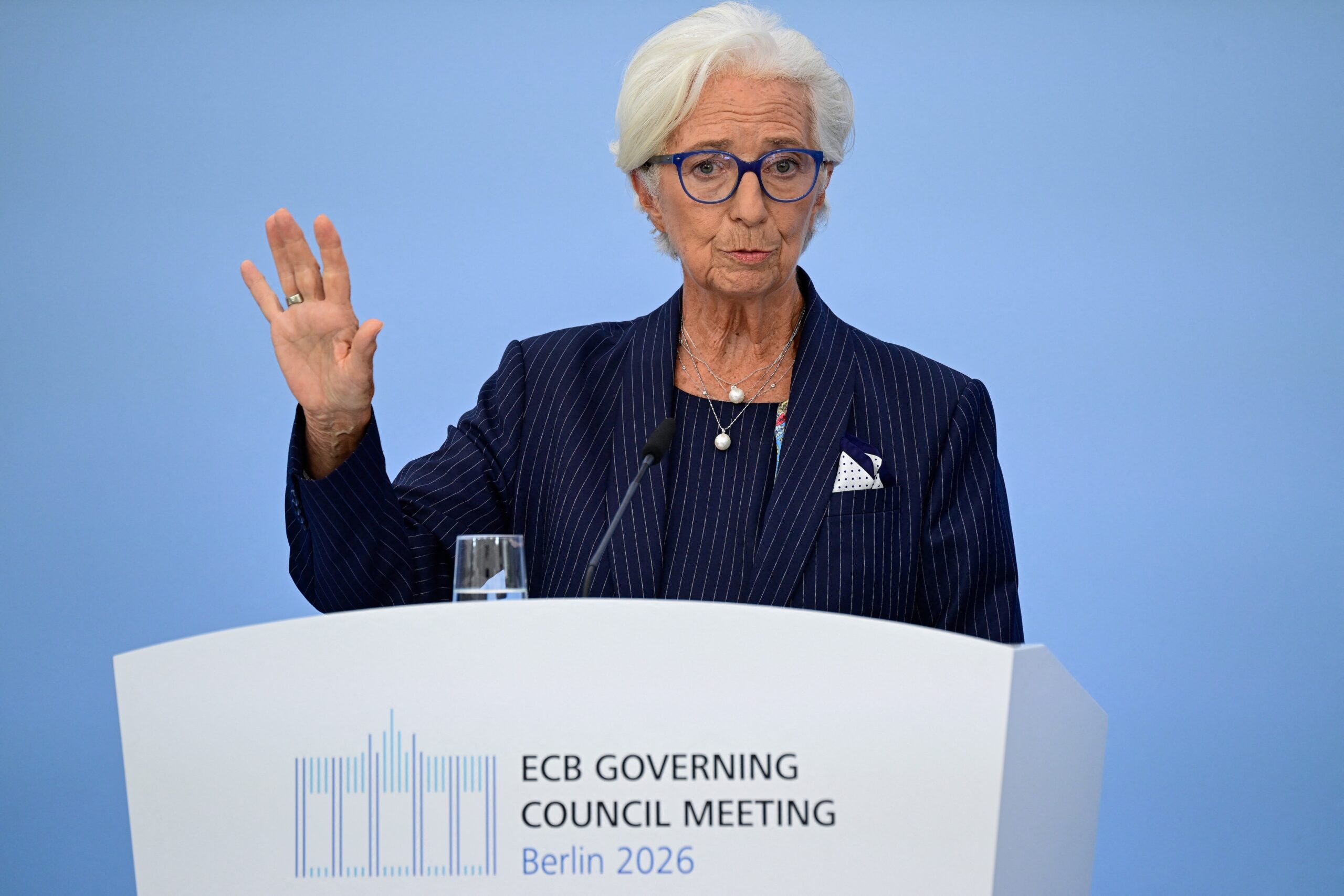
The European Central Bank (ECB) announced on September 10th that it would raise the deposit rate to 2.5%. Following this decision, officials have started discussing a further interest rate hike more explicitly. Latvian central bank governor Kazaks stated that the reasons supporting continued policy tightening are strengthening, while ECB President Lagarde warned that the current inflationary impact may last longer than initially expected.
Latvian central bank governor and ECB Governing Council member Martins Kazaks, in an interview with Reuters on Monday (September 14), mentioned that with energy prices and overall inflation remaining high, the ECB may need to gradually raise interest rates. “The reasons supporting further policy tightening are strengthening,” he said.
Last week, the ECB increased the deposit rate from 2.25% to 2.5%, marking the second hike of the year. Kazaks described 2.5% as the upper limit of the “neutral interest rate range”, where rates neither stimulate nor restrain economic growth. However, he emphasized that 2.5% should not be seen as a ceiling for rate adjustments.
“The interest rate may need to enter a restrictive range,” he said, emphasizing that there is no invisible threshold for rates to go beyond 2.5%.
Regarding whether the ECB will hike rates again as early as October, Kazaks did not provide a direct answer. He suggested that the ECB can proceed gradually and does not need to act hastily.
Kazaks pointed out that the euro area’s spare capacity is decreasing, and economic activity is approaching full capacity, making it easier to pass on higher fuel costs. “The output gap is narrowing, which means the transmission to prices and wages may strengthen,” he said, highlighting this as an upward risk for inflation.
Over the weekend, Christine Lagarde mentioned in an interview with French newspaper Ouest-France that a major impact has occurred and is likely to last longer than initially expected. She pointed to conflicts in the Middle East and disruptions in global refinery capacity, particularly in Russia, pushing up energy costs and subsequently driving up other prices.
Some economists believe that when inflation stems from external shocks rather than internal economic overheating, a rate hike may jeopardize economic growth. Lagarde noted, “If the shock is temporary, that is true; but the current shock is lasting longer.”
She added that as conflicts persist, the ECB expects fluctuations and pressures on energy prices to continue.
The euro area’s inflation rate for August stood at 3.3%, above the ECB’s midterm target of 2%. The latest ECB projections released last week forecast an average inflation rate of 3.0% for 2026, 2.5% for 2027, and 2.1% for 2028. These predictions for 2027 and 2028 have been revised upwards from the June estimates.
Bloomberg cited sources familiar with internal ECB discussions stating that officials anticipate further rate increases to bring inflation back to the 2% target.
German Bundesbank President Joachim Nagel also mentioned last Friday that the ECB may need to bring rates into a “moderately restrictive range.”
The market will now focus on Lagarde’s public speech later on Monday. According to the ECB’s official schedule, she will attend the “Hofburg Dialogues: Economy, Europe, Resilience” event in Vienna, delivering a keynote speech and participating in a panel discussion.
The full text of her speech will be published on the ECB’s website. As the market continues to assess whether the ECB will raise rates further, Lagarde’s latest statements may provide more clues about future policy direction.