
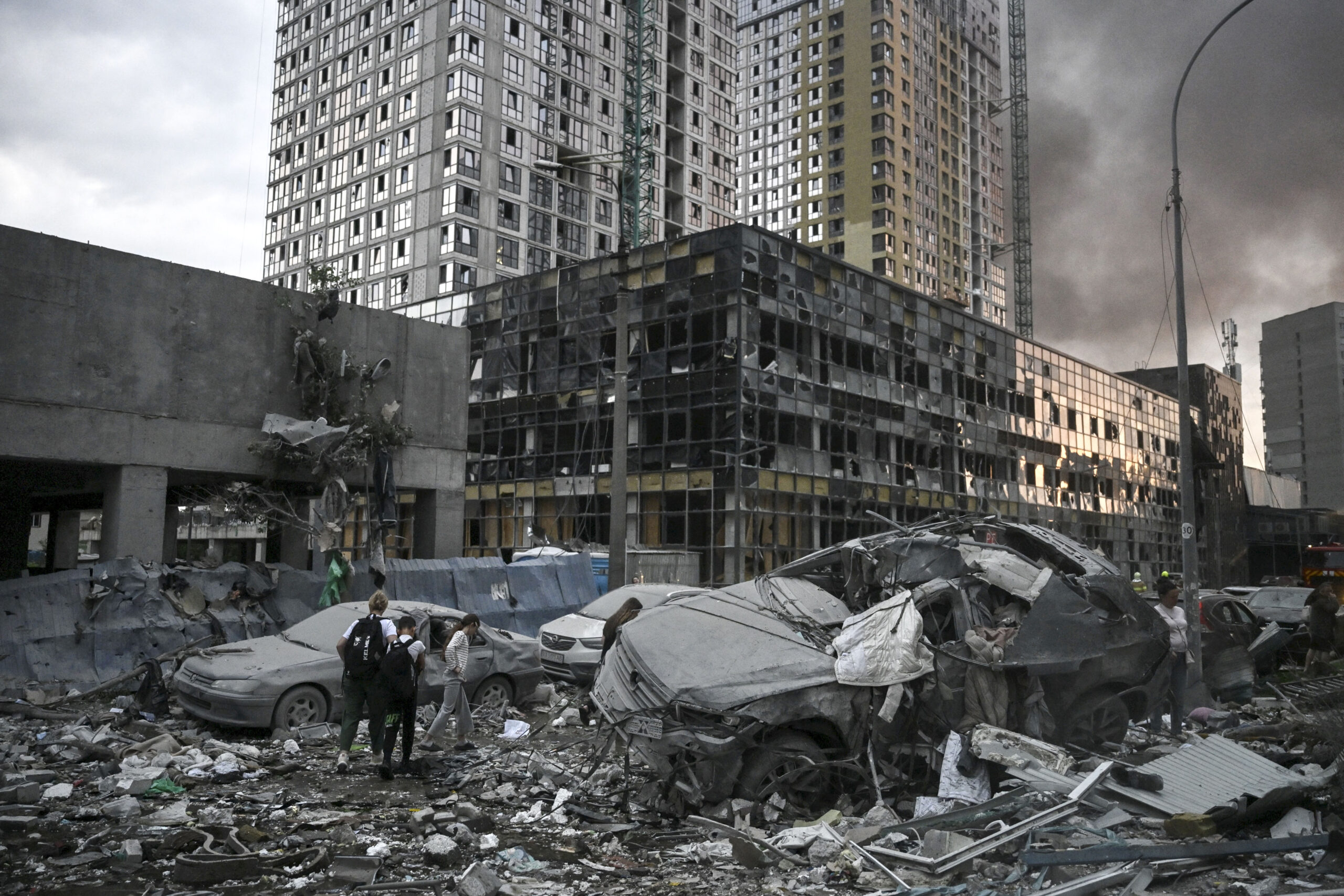
Russia continues to launch airstrikes against Ukraine. Ukrainian officials recently stated that this year, the economic losses caused by Russian military airstrikes, along with disruptions to port shipping, could impact economic output by as much as 1.5 percentage points of GDP.
According to Reuters, Ukrainian Economy Minister Oleksandr Kravchenko said on Saturday (September 12) at the Yalta European Strategy (YES) forum in Kyiv that the estimated infrastructure and fixed asset losses due to Russian airstrikes this year are close to $10 billion.
He mentioned that the economic losses from the attacks and the actual disruptions in Ukrainian port shipping collectively could impact economic output by approximately 1.5% of GDP.
Kravchenko stated that Ukraine is expected to face a “very difficult” winter this year, as critical infrastructure continues to be targeted by Russian forces, putting pressure on the economy. The government’s fiscal space is currently very limited.
After more than 4.5 years since Russia’s invasion of Ukraine, the frontline situation has mostly reached a stalemate, leading both sides to intensify attacks on each other’s logistical networks and other economic assets to weaken their war capabilities.
Reports indicate that Russia has been relentlessly using high-speed jet drones to attack Kyiv for over two weeks, disrupting the daily lives of residents, commercial activities, and government operations.
Simultaneously, Russia has escalated airstrikes in Ukraine’s southern regions, posing a serious threat to the transportation and export activities of Ukrainian Black Sea ports. Kravchenko mentioned that the transport disruptions at Black Sea ports could jeopardize around $40 billion in export income. Ukraine heavily relies on the transportation services provided by these ports for its key exports like agricultural products and steel.
Russia’s continuous targeting of infrastructure and industrial facilities further exacerbates Ukraine’s financial strain. Roksolana Pidlasa, Chair of the Ukrainian Parliament’s Budget Committee, stated that the domestic fiscal revenues were $1.35 billion less than expected in the first 8 months of this year, with about a quarter of this deficit occurring in August.
Pidlasa highlighted that the costs of the war keep escalating, and Ukraine can no longer solely depend on domestic financial resources as it did in previous years to cover defense expenses.
Data shows that Ukraine’s defense expenditures amounted to approximately $42 billion in the first 8 months of this year, excluding military aid in material form. However, the combined domestic fiscal revenues and local government borrowing during the same period were only about $39 billion, insufficient to cover defense spending.
Pidlasa mentioned that the daily cost of the war this year has risen to approximately $190 million, exceeding the $140 million in 2024. She pointed out that factors like inflation, expanding military forces, increased social welfare benefits for deceased soldiers’ families, and higher ammunition consumption have driven up the costs of the war.
Reuters reported that Ukraine still faces an additional gap in defense funding by the end of this year. The government is seeking to reduce or delay non-military budget expenditures while engaging with Western partners to secure more financial support. However, as of now, there’s no clear strategy to swiftly bridge the funding gap.
Ukraine’s economy suffered heavily after Russia’s invasion in 2022. World Bank data shows that Ukraine’s real GDP shrank by approximately 28.8% in 2022, followed by a recovery. In 2025, Ukraine’s nominal GDP was around $214.2 billion, with a growth rate of 1.8%. Yet, challenges like damaged energy infrastructure and a shortage of labor still hinder economic recovery.