
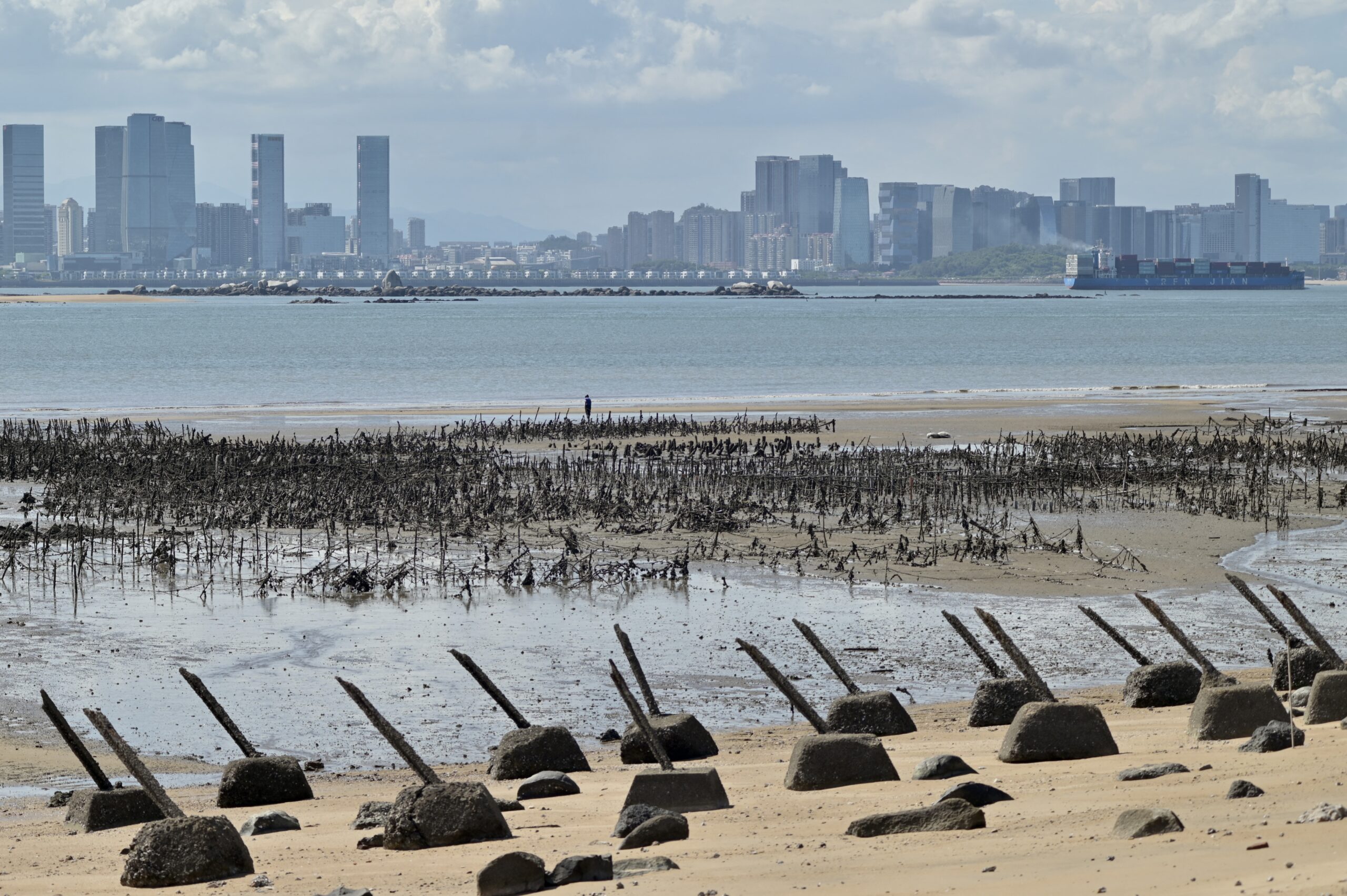
The Chinese Communist Party is in full swing in Xiamen, constructing a new airport that is expected to be operational later this year. The details of this airport are scarce to the public, but it is located only about 6 miles away from Kinmen Airport on Taiwan’s Kinmen Island. The overlapping airspace and communication issues between the two airports have sparked concerns about aviation safety from the Taiwan side.
According to a recent analysis in The Washington Post by Tom Tugendhat, a Research Fellow at the Hudson Institute and a Conservative Party member in the UK, the dispute surrounding the airport goes beyond just a matter of airport operations. It reflects China’s efforts to infiltrate and pressure international institutions, thus limiting Taiwan’s international space.
With a population of around 140,000, Kinmen Island has been under the control of the Nationalist Party since the end of the Chinese Civil War in 1949. While the close proximity of the two airports presents airspace overlap issues, they could be resolved through data sharing, flight coordination, and establishing emergency communication mechanisms.
For years, Taiwan’s civil aviation authority has sought similar coordination with China, but the Chinese government has not only been unresponsive but also obstructed Taiwan’s participation in international organizations like the International Civil Aviation Organization and the World Health Organization under the One-China principle.
Taiwan participated as a guest in the International Civil Aviation Organization Assembly in 2013 and as an observer at the World Health Assembly from 2009 to 2016. However, China has since employed various tactics to hinder Taiwan’s participation in these international bodies.
The international aviation safety and public health are not merely political issues but critical to global security and health. China’s pressure tactics to exclude Taiwan from the international civil aviation framework have prevented the exchange of aviation safety information between the two sides. Amid the COVID-19 pandemic, Taiwan’s ability to participate effectively in the global health system has been hampered by Chinese interference, weakening international information sharing.
This underscores China’s disregard for international security, with its primary aim being subjugating international organizations for its own gains.
After World War II, the victorious nations established institutions like the United Nations not for seizing spoils of war but for promoting peace. Democratic accountability, open trade, and rule-based cooperation aimed to decentralize power, foster mutual prosperity, and prevent the recurrence of war.
The author highlights how the Kuomintang-led Republic of China government, as one of the key victorious nations, was a founding member of the United Nations. Over the past 80 years, the international order has brought about unprecedented peace and prosperity, opportunities from which China has also capitalized.
However, while benefiting greatly from this system, China has been actively undermining the global platform that was once created to promote prosperity and peace through cooperation and dialogue, replacing it with coercion and exploitation.
China’s coast guard ships have clashed with Philippine supply vessels in the South China Sea, fisherman fleets have created mile-long barriers to harass foreign vessels, and Chinese military aircraft frequently harass Taiwanese planes at the edge of Taiwan’s airspace. Earlier this summer, a Chinese submarine launched a ballistic missile from the South Pacific Nuclear-Free Zone towards a flight distance of about 4500 miles.
China is increasingly exporting its domestic practices to the international community, exerting influence by infiltrating and controlling key positions within international organizations. Previously, Chinese officials concurrently led four out of 15 specialized UN agencies, outnumbering other countries in such roles.
The British Indian Ocean Territory of Chagos Archipelago, dubbed as the “Crossroads of the Indian Ocean,” hosts significant US military bases. Last year, the UK government, fearing Chinese influence through the International Telecommunication Union, raised concerns about potential challenges to British control over the archipelago and the communication systems of the American military base.
Whether it is the UK agreeing to transfer the Chagos Archipelago, the incident with Kinmen Airport, or China exerting pressure through international bodies to restrict Taiwan’s participation in the International Civil Aviation Organization, it all follows China’s consistent pattern of exploiting loopholes in international organizations to achieve its aims.
Adherence to the “One China” policy by most Western countries or upholding the existing international order does not equate to blindly following China’s directives to exclude Taiwan from participating in international organizations. Diplomacy should navigate through ambiguous situations but must not tolerate China’s bullying behavior, especially when it threatens everyone.