
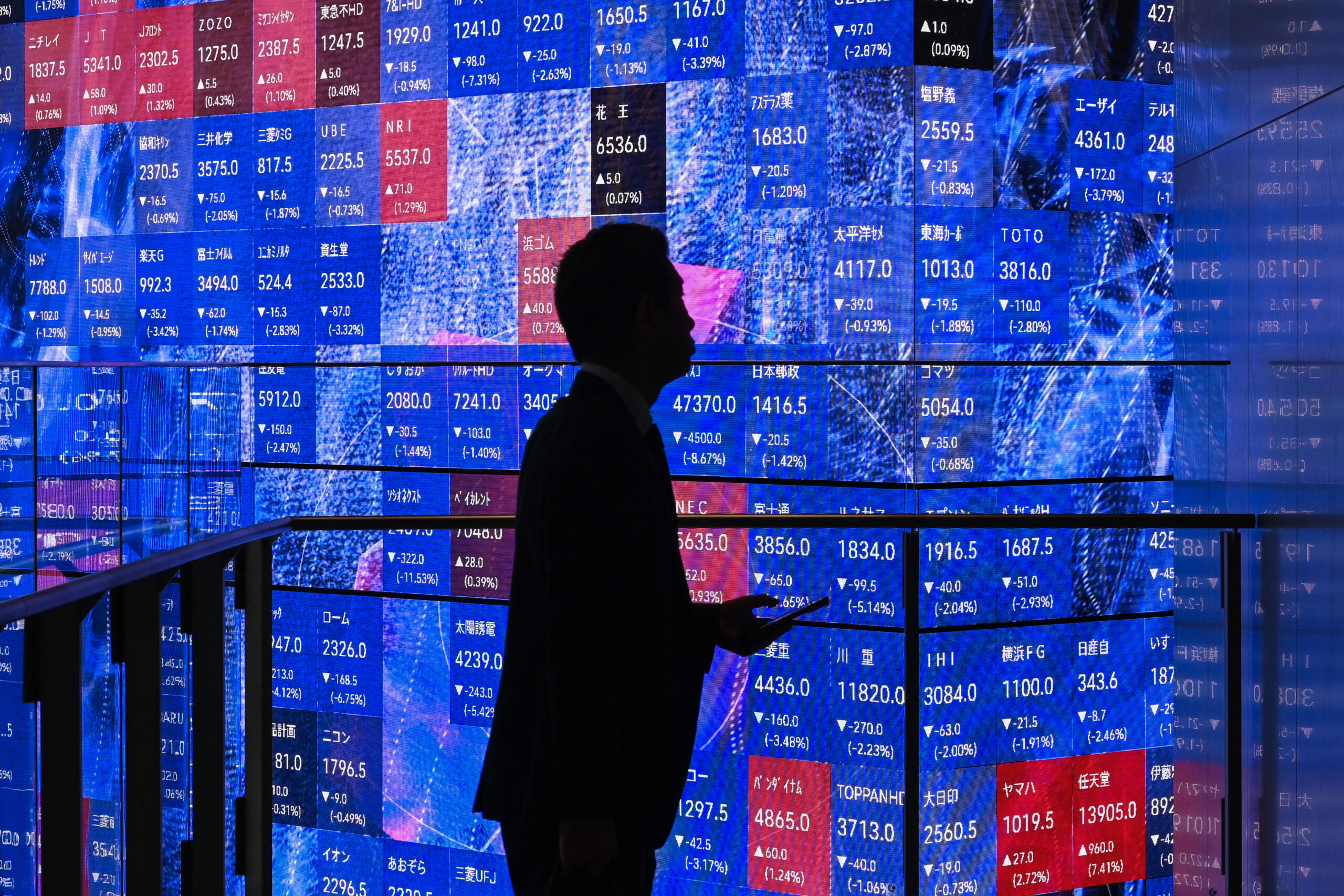
On Wednesday, July 29th, the Asia-Pacific stock markets experienced significant volatility due to concerns over AI valuations, escalating competition, high capital expenditure, as well as the resurgence of political tensions in the Middle East. South Korea, Taiwan, and Japan all witnessed intense selling pressures in their stock markets.
The Korea Composite Stock Price Index (KOSPI) plummeted by over 11%, triggering a circuit breaker for the second consecutive trading day, leading to a 20-minute trading halt.
At the same time, the US Central Command confirmed that the US military intercepted multiple ballistic missiles launched by Iran, sparking market concerns about potential disruptions in oil supply. The price of US West Texas Intermediate crude oil (WTI) surged by over 4%.
The epicenter of this market shake-up in Asia was the semiconductor industry. The South Korean stock market initially rose by nearly 2% in early trading but then sharply reversed course. As of 12:41 pm Taiwan time on Wednesday, July 29th, the KOSPI stood at 5,340.67 points, down by 682.99 points, marking a 11.34% decline and triggering the circuit breaker for the second consecutive trading day.
Despite South Korean semiconductor giant SK Hynix reporting record quarterly earnings with a year-on-year profit increase of nearly 557%, more than six times higher than the same period last year, the market’s high expectations were not met, causing its stock price to plummet by almost 13%. Samsung Electronics also recorded an almost 8% decline.
The Nikkei 225 Index in Japan closed at 60,712.71 points, down by 1,652.21 points, a 2.65% decrease. The Taiwan Weighted Index also experienced a significant drop, closing at 39,470.55 points, down by 2,132.81 points, a 5.13% decline, with the electronics sector bearing the brunt of the selling pressure.
In contrast, the Hong Kong stock market defied the trend and rose, with the Hang Seng Index closing at 25,657.66 points, up by 346.81 points, a 1.37% increase. The Shanghai Composite Index in China closed at 3,793.18 points, down by 20.13 points, a 0.53% decrease.
Elsewhere in the Asia-Pacific region, the Australian S&P/ASX 200 Index rose by 0.97%, and the Indian NIFTY 50 Index increased by 0.95%.
Investors are also awaiting the earnings reports of Microsoft, Meta, and Qualcomm, with these results expected to be a critical test amid the AI investment craze.
Gary Tan, portfolio manager at Allspring Global Investments, stated, “This week, with the Federal Open Market Committee (FOMC) meeting sandwiched between the announcements of major US tech company earnings, market expectations for AI capital spending are already high. As investors anticipate a crucial test for AI spending expectations and market liquidity, it appears they are preemptively reducing some risk exposure.”
The heightened geopolitical tensions further exacerbated market anxiety. The US Central Command (CENTCOM) announced on social media, “The Islamic Revolutionary Guard Corps launched multiple ballistic missiles from Iran, attempting to strike US forces stationed in the Middle East. All Iranian missiles were successfully intercepted.”
This incident disrupted the relative calm in the US-Iran conflict of recent days. Brent crude oil futures rose by approximately 3% to around $86.80 per barrel; West Texas Intermediate crude oil surged by over 4% to around $82.60 per barrel.
IG market analyst Tony Sycamore noted that the latest attack underscores the significant distance between the two sides in resolving the core dispute over passage through the Strait of Hormuz. Oil price hikes prior to the announcement of the Federal Reserve’s policy decision have once again shifted inflation pressures to the forefront of market focus.
The market eagerly awaits the Federal Reserve’s interest rate decision, scheduled to be announced on Wednesday afternoon Eastern Time. With current Fed Chairman Kevin Warsh opting not to provide policy guidance, predicting this decision has become particularly challenging.
According to the CME FedWatch tool, futures market pricing indicates a close to 70% probability that the Federal Reserve will maintain interest rates within the current target range of 3.5% to 3.75%.
Nick Twidale, Chief Market Strategist at ATFX Global, commented, “I believe the risk of a Fed rate hike will also worry investors. Therefore, the market may not remain as calm as usual ahead of the Fed meeting; I sense that the coming hours could be quite volatile.”