
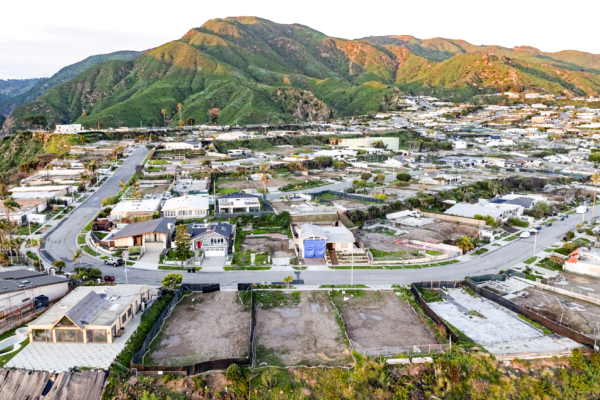
A report released this month by real estate website Realtor.com indicates that despite nearly a quarter of homes in the United States being located in areas prone to severe weather conditions, many homebuyers continue to search for properties in these high-risk areas.
According to the report, 23.1% of homes in the US (with a total estimated value of $11.2 trillion) are situated in regions vulnerable to natural disasters. Even though these areas are susceptible to risks such as flooding, wildfires, or strong storms, the demand for home purchases remains strong, often due to lower property prices compared to neighboring lower-risk areas.
“For many homebuyers, price remains the primary factor to consider, even when the climate risks in that area are well-known,” stated Realtor.com economist Jiayi Xu in the report. “However, this doesn’t mean the risks disappear but rather emerge post-purchase in the form of home insurance fees, property management costs, and financing expenses.”
The report reveals that homeowners residing in high-risk disaster areas incur higher costs to safeguard their properties from disaster-related losses. The median monthly property fee for homeowners in these regions is $192, which is 53.6% higher than in lower-risk areas.
Realtor.com found that the disparity in property fees between high-risk and low-risk homes is most significant in Delaware, South Carolina, and Oregon. For instance, in high-risk areas in Oregon, the median monthly property fee is $423, compared to $114 in low-risk areas.
In California, despite enduring severe wildfires in some regions over the years, many homebuyers have not been deterred by this fact.
In Santa Clara County, homes in high-risk areas are priced at only 78% of the per square foot price of low-risk homes, with a 48% higher viewing rate.
Similarly, in Los Angeles County, high-risk homes enjoy price discounts, with a per square foot price of about 75% compared to low-risk homes, and a 23% higher viewing rate.
“When disasters strike, homebuyers may pause temporarily, but this impact is usually short-lived,” the report stated. “Following the wildfires in Los Angeles in January 2025, interest in high-risk homes dropped by 10% temporarily but fully recovered within a month.”
However, in other markets, such as Anne Arundel County in Maryland labeled as a high-risk area, homebuyers are willing to pay an additional 44% per square foot due to the allure of waterfront views outweighing weather risks.
A similar situation is observed in Llano County, Texas, where homebuyers are willing to pay almost twice the price to reside near the river in high-risk areas.
Regions in the US that have long been prone to flooding include Oklahoma, Idaho, Mississippi, and Alabama.
The report highlighted that homebuyers are not actively seeking out risks, but in markets where home prices are consistently unaffordable, price remains the most crucial indicator, and high-risk homes precisely offer discounts that make homeownership achievable.
A report released by the Pew Research Center in May 2022 showed that 71% of US homeowners stated that their home insurance premiums have increased. Most respondents believed that rising repair and rebuilding costs and the increasing frequency of extreme weather events were the primary reasons for the premium hikes.
Insurance comparison website Insurance.com published a report in April this year indicating that obtaining homeowners’ insurance in Florida has become increasingly challenging due to the high risk of hurricanes. Many insurance companies in the state have exited the market, leaving residents with only the state-run insurance program Citizens Insurance as an option, with annual premiums around $7,000 and even higher in coastal areas.
Additionally, due to the wildfire risk, acquiring homeowners’ insurance in California is equally challenging. As a result, several major insurance companies such as State Farm and Allstate have ceased offering new homeowners’ insurance policies.
For those who still choose to purchase homes in disaster-prone areas, Insurance.com recommends ensuring their policy provides sufficient coverage for replacement costs to receive adequate compensation in the event of natural disasters. ◇