
The Taiwan Ministry of the Interior’s Fire Department announced that the first ever Asia’s international standard drone training center, located in Nantou, Taiwan, is set to be completed by the end of this year. It is expected to deliver 20 drones and establish diverse training facilities. Minister of the Interior, Shiu Fang Liu, expressed hope that through inter-agency resource sharing, training efficiency can be maximized.
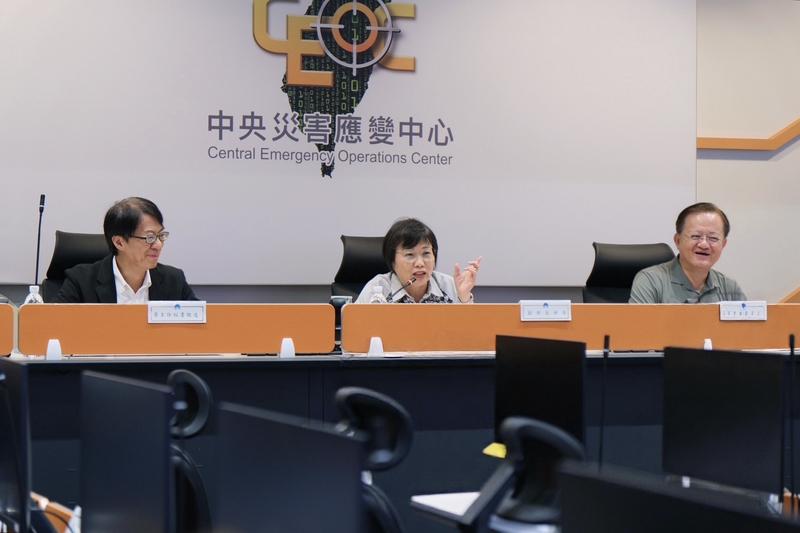
To implement the national defense resilience policy and address challenges posed by extreme weather and complex disasters, the Taiwan Ministry of the Interior convened at the Fire Department Training Center on the 23rd to present the “Establishment of the Indo-Pacific Disaster Prevention Training Center Vision” project report.
Minister Liu instructed the Fire Department to upgrade the training center to meet NFPA and other international standards and enhance training mechanisms to ensure the frontline disaster response capabilities and the safety of personnel. She envisaged the training center serving as a platform to maximize training benefits through inter-agency resource sharing, deepen cooperation with Indo-Pacific countries, and become a hub for regional disaster prevention training.
The Director of the Fire Department Training Center, Chih-Chiang Hsieh, highlighted in the project report that specific to various disaster scenarios, existing training center facilities have incorporated AR technology to realistically replicate frontline fire scenes. In addition to immersive firefighting training, they have set up a simulated tilted building training ground to demonstrate search and rescue operations in collapsed structures, showcasing the achievements of search and rescue dogs to maximize assistance in special rescue missions.
Hsieh emphasized that in the face of intensified extreme weather events and the complexity of disasters arising from the development of high-tech industries and emerging energy sources, there is an urgent need to not only increase the number of firefighters annually but also upgrade the hardware facilities of the training center promptly.
Moreover, the Fire Department has planned a new phase of training ground construction, aiming to enhance existing hardware facilities comprehensively. The plan includes the construction of a water-based and rapid current disaster simulation training ground, a full-scale fire simulation and combustion certification laboratory, and Asia’s first international standard drone specialized training site to bolster Taiwan’s disaster prevention and mitigation capabilities.
The Fire Department mentioned that to establish an internationally aligned training and assessment system, they have fully adopted the National Fire Protection Association (NFPA) international standards in professional training. They have already obtained certifications in NFPA 470 Chemical Disaster Operations and NFPA 1020 Basic Firefighter Training. They are advancing the implementation of NF (16 domestic drones, 4 American standard drones), diversifying training ground layouts, and introducing NIST capability classifications. By 2027, they aim to complete the development of the simulation system and obtain NFPA 2400 drone rescue certification.
In order to establish a regional disaster prevention mutual assistance network, the Fire Department stated that they will continue to deepen training cooperation with Indo-Pacific countries such as the Philippines, Japan, and South Korea. Through joint training, drills, and professional exchanges, they intend to strengthen regional disaster prevention collaboration and technical exchanges.
Additionally, the Fire Department announced that the “IDEA 2026: International Disaster Prevention and Rescue Education and Action Forum” is expected to officially kick off in late September. Through practical demonstrations and international discussions, Taiwan’s disaster prevention experiences will be continuously shared, solidifying Taiwan’s position as a hub for Indo-Pacific disaster prevention training.