
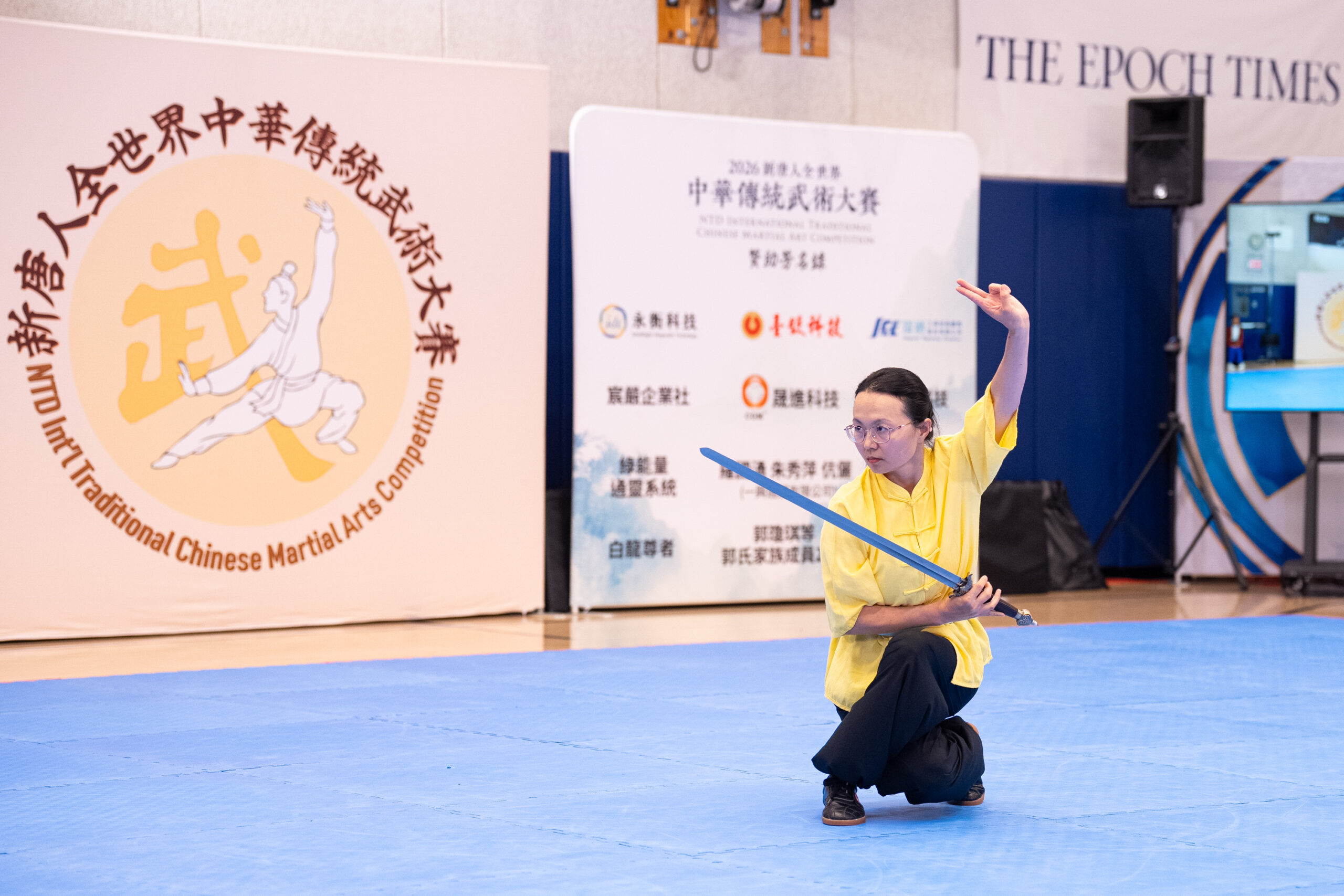
In the 9th NTD World Chinese Traditional Martial Arts Competition, held in New York, USA, Wang Pingping and her 10-year-old daughter Lü Dexin from California, won bronze medals on August 15th.
Wang Pingping, who works in analysis for the California government, explained that her interest in martial arts stemmed from her love of martial arts novels in her youth. Due to her busy work schedule, she rarely had time to exercise. Upon hearing about a teacher offering martial arts classes, she saw it as an opportunity to pursue something she loved and also improve her physical fitness, thus embarking on the journey of learning traditional martial arts.
According to Wang Pingping, through learning traditional martial arts, she realized that it not only trains the body but also cultivates one’s character and morality, setting high standards for practitioners.
She emphasized that traditional martial arts values aspects like dedication, perseverance, persistence, and embracing hardship, pushing practitioners to step out of their comfort zones. Even when unsure of progress, one must persevere; even in pain, one must persist; regardless of weather conditions, consistency is key.
She believes that this reflects the pursuit of ancient people, aiming for spiritual and physical elevation to higher levels.
In her words, “When practicing traditional martial arts, we emphasize tolerance, forbearance, avoiding conflicts as much as possible, and following principles of not deceiving goodness nor fearing evil. This is a form of mental and physical cultivation.”
She noted the difference in the spiritual requirements of traditional martial arts compared to general fitness or contemporary martial arts. Traditional martial arts, being rooted in theism, stress virtues like justice, kindness, and the retribution of good and evil. On the contrary, modern fitness might focus on discipline and resilience but lacks moral demands, with contemporary martial arts sometimes promoting violence.
She explained that the character for “martial arts” implies using martial skills to prevent conflicts because a person who is strong will deter others from challenging them. Physical strength also expands one’s mental capacity, allowing for a more tolerant approach in resolving conflicts.
Discussing the benefits of practicing martial arts, Wang Pingping expressed, “I have gained so much from it because I believe this traditional martial art is suitable for people of all ages and physical conditions.” Despite past knee injuries and ligament ruptures, she found her overall strength and muscle mass increased through traditional martial arts practice.
On a spiritual level, she felt her capacity for compassion and tranquility expanded, leading to a decrease in her inclination towards confrontation.
However, she stressed that practicing traditional martial arts is not easy and requires genuine interest and commitment from practitioners. Merely going through the motions without deep contemplation could lead to boredom and eventual abandonment, though this challenging process is a form of refinement.
Wang Pingping also mentioned her daughter, Lü Dexin, who shares her passion for traditional martial arts. She highlighted the positive influence practicing martial arts has had on her daughter, who became more righteous and disciplined after training.
“Regular training has instilled a sense of calmness in her,” Wang Pingping remarked, “and with today’s abundance of electronic devices, traditional martial arts provide an avenue to divert her attention from screen time, promoting physical activity.”
Reflecting on her competition experience, Wang Pingping admitted feeling nervous at first but emphasized that her goal was not solely to win but to showcase the perseverance of traditional martial arts practitioners.
She said, “Traditional martial arts is a form of culture, a part of our Chinese traditional heritage, and an essence of human culture. I want people to know that despite societal temptations, there are individuals willing to endure hardship to practice traditional martial arts and showcase this cultural legacy to the world. I will do my best to contribute what I can.”
Surprisingly, Wang Pingping won a bronze medal in the women’s apparatus category during the competition.