
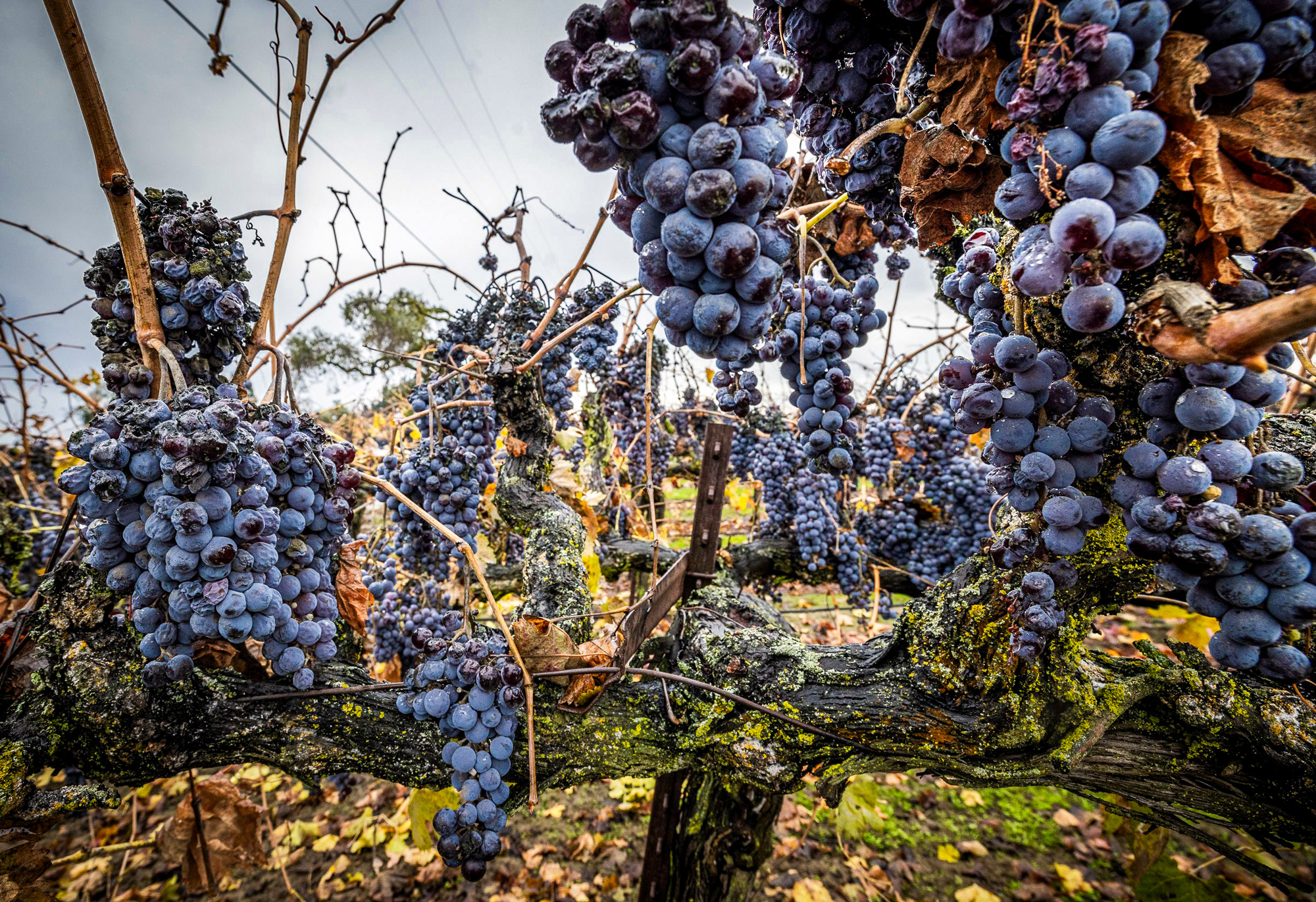
California’s wine industry continues to struggle, facing grape oversupply, declining prices, and stagnant market demand. Some vineyard owners are allowing grapes to rot on the vine, while others are resorting to burning or uprooting vineyards altogether. Notable vineyard operator Beckstoffer Vineyards has recently announced significant operational cutbacks, planning to remove over half of its grapevines and laying off a majority of its workforce.
Jason Smith, the CEO of Valley Farm Management, recently sold off all his land and set fire to his own vineyard. He expressed that continuing grape cultivation is no longer economically viable, stating, “There is simply no way to make money.”
On the day Smith burned down his vineyard, he witnessed neighboring farms uprooting grapevines. The land he had previously cultivated has been taken over by Jackson Family Wines, with other plots sold to private equity firms and agricultural equipment liquidated for cash.
“This is a job I’ve dedicated my whole life to, now I must find a new occupation,” Smith said.
Even Beckstoffer Vineyards, with 50 years of history, has not been immune to the industry’s turmoil. At its peak, the company operated vineyards spanning approximately 4,000 acres in Lake County, Mendocino County, and Napa County, cultivating wine grapes.
Post-cutbacks, the company plans to retain 140 acres in Lake County, 800 acres in Mendocino County, and maintain 1,000 acres in Napa County for the time being.
Beckstoffer has already removed around 800 acres of grapevines in Lake County and about 400 acres in Mendocino County, leading to a projected reduction of several thousand tons in grape production. Out of the company’s 65 employees, 50 have been laid off.
Brandon Axell, the company’s Vice President of Farming Operations, with 28 years of experience in grape cultivation, expressed shock at the market’s rapid and severe deterioration. “The most difficult part is the impact on people,” he stated, noting that many of those laid off were long-serving employees.
Beckstoffer typically supplies grapes to around 80 large and small wineries annually, however, in recent years, partnering wineries have been decreasing their order volumes, and bulk wine sales have been declining as well. With expenses surpassing income, the company ultimately had to make the “harsh decision” to downsize.
A report by the California Wine Grape Growers Association revealed that from October 1, 2024, to August 1, 2025, over 38,000 acres of vineyards had been removed in the state. Regions with the most removals included San Joaquin County, Fresno County, Monterey County, Napa County, Sonoma County, and San Luis Obispo County.
According to data from the U.S. Department of Agriculture, in 2025, California wineries collectively crushed 2.62 million tons of wine grapes, a decrease of over 8% from the previous year. The average prices per ton for red and white grapes dropped by 4.4% and 0.9% respectively.
The California Wine Grape Growers Association estimates that around 800,000 tons of grapes went unpicked or unsold in 2025, with overall production hitting the lowest point in 30 years.
The industry crisis primarily stems from a decline in consumer demand. A Gallup poll from October 2025 showed that only 54% of American adults reported drinking alcohol, the lowest since tracking began in 1939. Wine sales also plummeted to levels not seen in over 20 years, resulting in a massive backlog of wine stocks at wineries, with many grapes left to rot on the vine.
California produces over 80% of all wines in the United States. Following the 2004 film “Sideways,” which boosted demand for Pinot Noir, the trend has waned significantly, with production of Pinot Noir decreasing by about 30% since 2021.
Facing weak domestic demand, California legislators have even called for the reopening of the U.S. wine market in Canada, though the timeline for this export channel’s recovery remains uncertain.
Industry experts predict that hundreds of wineries may close in the next two years. Steve Lohr, the President of J. Lohr Vineyard and Wine Companies, with 54 years in the business, remarked on the unprecedented scale of change, uncertainty, and chaos in the industry.
However, some wineries believe the current situation is just part of the industry’s cyclical nature. Au Bon Climat from Santa Barbara, plans to reduce production due to weak demand but maintains faith in the enduring consumer interest in wine and food pairing.
Axell hopes that California’s wine industry can stabilize within the next two years, but even if the market recovers, the industry’s scale may struggle to return to its previous heights.