
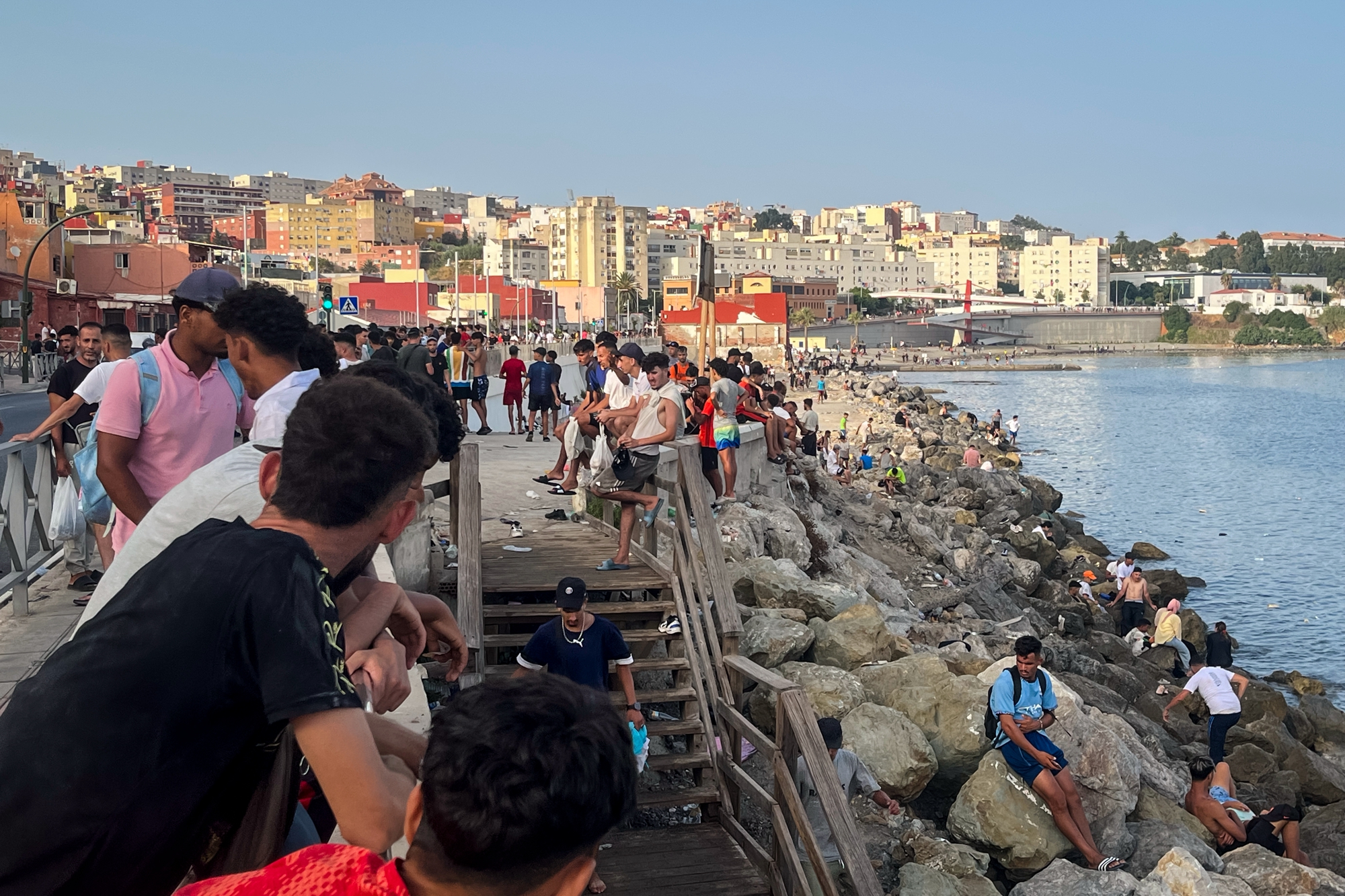
In recent days, a serious border crisis has erupted in Ceuta, a Spanish enclave in North Africa, with tens of thousands of people illegally crossing the border from Morocco by sea and land, leading to a complete collapse of the local border and severe chaos. The Spanish government has urgently deployed troops and police reinforcements, and the Spanish Prime Minister has visited the area to inspect the situation. Faced with the sudden influx of migrants, several EU countries are calling for a reassessment or suspension of Spain’s Schengen Area qualification.
The Chairman of the Ceuta Autonomous Government, Juan Jesús Vivas, stated on Friday (July 31) that approximately 60,000 immigrants have poured into Ceuta in the past 24 hours from Morocco, causing the border to completely collapse. The current registered population of Ceuta is approximately 83,600.
Local officials reported that at least 57 people have died during the border crossing, with many drowning while swimming across, and others tragically being trampled to death while rushing through the fences on Tarajal beach.
Spanish Prime Minister Pedro Sánchez rushed to Ceuta on Friday to supervise the situation, strongly condemning the large-scale crossings as “an infringement on the territorial integrity of Spain” and pledging to use national resources to ensure security and quickly repatriate illegal immigrants.
Spanish officials stated on Friday evening that over 48,000 illegal immigrants have chosen to voluntarily return to Morocco, and the chaotic situation on the streets of Ceuta has gradually subsided.
The Spanish government is taking steps to address the aftermath of the crisis and ensure the safety and security of Ceuta and its residents. The situation has also sparked discussions within the EU about border security and immigration policies, highlighting the challenges faced by countries dealing with large migratory flows. The incident has prompted a reevaluation of Spain’s border control measures and has raised concerns about the vulnerability of the Schengen Area system to such mass movements of people across borders.
As the situation in Ceuta continues to unfold, international attention remains focused on the implications of the crisis and the need for coordinated responses to address the root causes of irregular migration and border challenges. The events in Ceuta serve as a stark reminder of the complexities and human costs associated with border management and migration control, underscoring the importance of international cooperation and solidarity in addressing these pressing issues.