
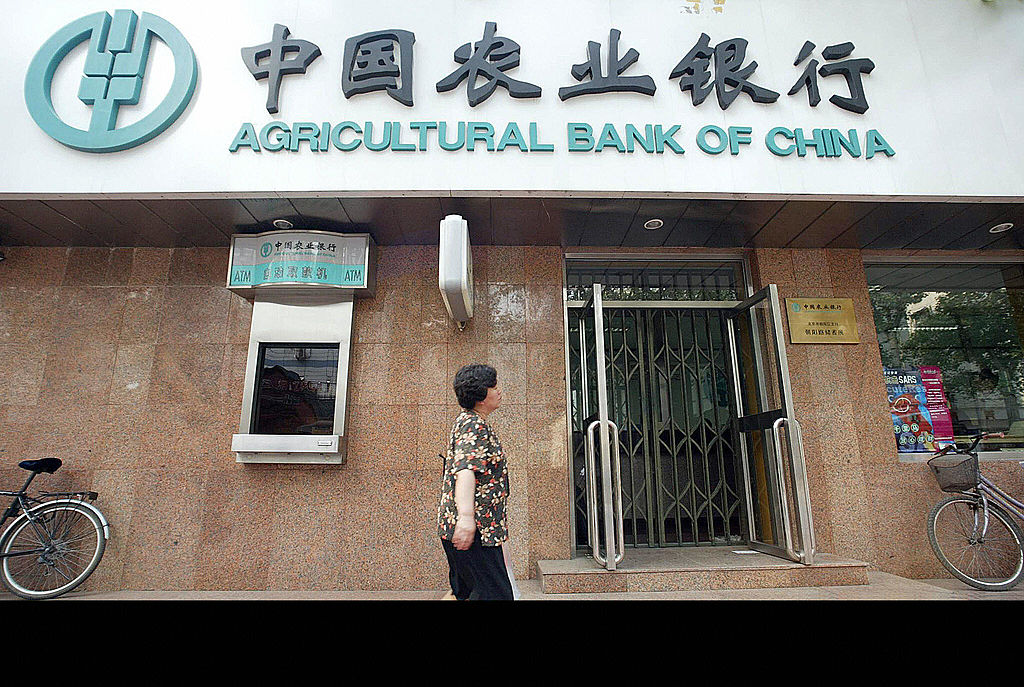
The 2026 Fortune Global 500 list was released, with Chinese banks collectively falling in rankings due to factors such as narrowing net interest margins and weak interest income growth. In July, the stock prices of these banks all fell below their book value per share.
On July 28, the 2026 Fortune Global 500 list was unveiled, based on total revenue (or sales) of companies in the latest fiscal year. According to Fortune, this list provides insights into the latest trends of the world’s largest enterprises, and in-depth research at the national or regional level can reveal changes in the distribution of big corporate groups.
Among the world’s top 100 Fortune Global 500 companies, there are 6 Chinese financial institutions, including ICBC, Agricultural Bank of China, Bank of China, China Life Insurance, Bank of China, and Ping An Insurance. However, compared to American banks, there is a noticeable contrast on this year’s list. All 9 mainland Chinese commercial banks on the list have dropped in rankings, while the rankings of American commercial banks remained stable.
As state-owned banks, ICBC dropped from 26th to 29th place, a decrease of 3 spots, with the smallest decline among the banks. Agricultural Bank of China, Bank of China, and Construction Bank dropped by 5, 6, and 6 places respectively. Postal Savings Bank of China fell by 20 places, and there is a clear differentiation among joint-stock banks, with Minsheng Bank’s revenue shrinking from $40.212 billion to $37.039 billion, dropping in rank by 60 places to 447th, almost falling out of the top 500 list. China Merchants Bank, Industrial Bank, and Shanghai Pudong Development Bank fell by 18, 46, and 40 places respectively.
An article published by Manager Magazine analyzed that the collective decline in rankings of Chinese banks is due to a combination of internal and external factors. Externally, the global high-tech industry is experiencing explosive growth, widening the revenue growth gap with the traditional financial industry. Internally, the revenue growth of China’s banking industry is under pressure, with fees, commissions, and non-interest income experiencing a decline. Concurrently, the net interest margin in the market continues to shrink, leading to weak core interest income growth, consequently causing a general decline in rankings.
Professor Wang Guojun from the University of International Trade and Economics of China told Red Star News that the collective decline in rankings of Chinese banks in the Fortune Global 500 is due to continuous interest rate reductions, narrowing net interest margins, weak interest income growth, and a slowdown in revenue expansion. With the banking industry being of massive scale and entering a period of slow growth, it is difficult to maintain the high revenue growth rates of the past.
All the aforementioned Chinese banks listed in the Fortune Global 500 have seen their stock prices fall below their book value per share in July this year. Data shows that in the first half of 2026, out of 42 Chinese bank stocks, only 6 went up while 36 went down. The total market value of the sector shrunk from around RMB 15.7 trillion at the beginning of the year to RMB 14.17 trillion, evaporating RMB 1.54 trillion. All 42 listed banks have dropped below book value, with the price to book ratio dropping from 0.65 to 0.57.
Trading below book value means the market price per share is lower than the book value per share, with a price-to-book ratio (PB) less than 1. This indicates that the market trading price is lower than the company’s liquidation value and typically reflects investors’ pessimistic expectations of future profits or overall market downturn.
Political observer Xia Yan analyzed that the biggest asset of banks is the loans they have extended to others. Investors are concerned that due to the downturn in the real estate sector in recent years, some real estate developers (such as Evergrande) have gone bankrupt, leaving the huge loans owed to banks potentially unrecoverable.
Chairman Xie Jinhe of Taiwan’s Wealth Access Media recently pointed out that among China’s 42 listed banks, there are not many with strong financial foundations. In the past few years, developers like Evergrande and Country Garden relied on political power to extract money from banks. Now, the banks are left with bad debts that nobody dares to handle. “This phenomenon is like finding cancer cells in a patient but being too afraid to remove the tumor, which will only worsen over time! The banking sector in China is starting to face tough times!”