
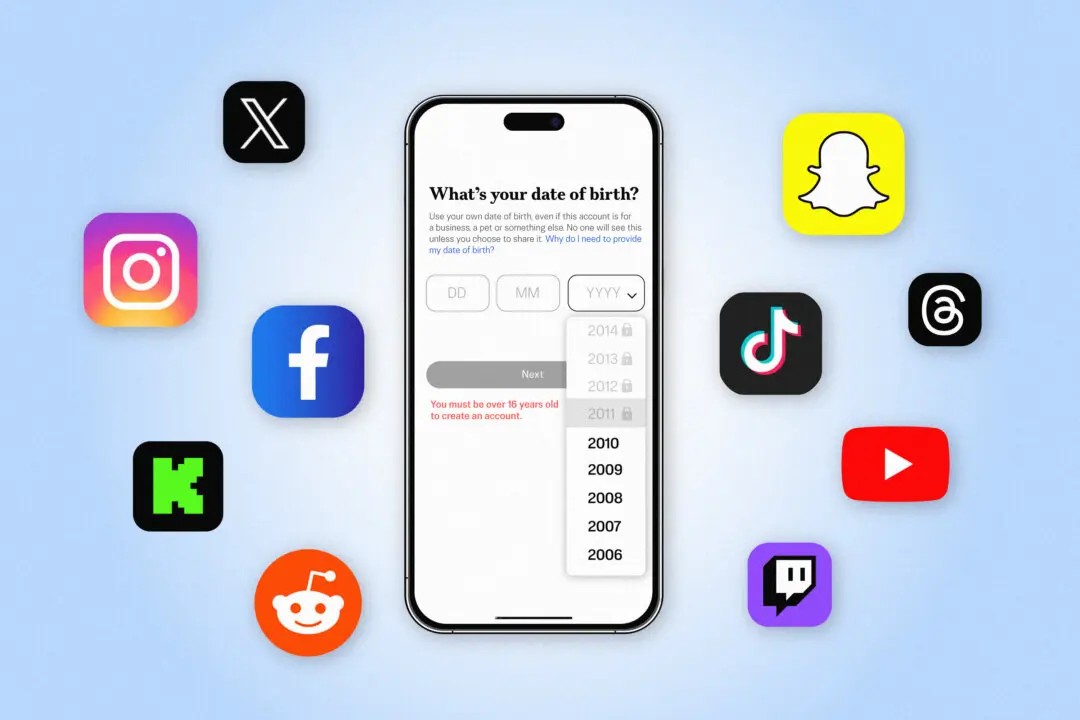
The United States and other countries are closely monitoring Australia’s approach to restricting teenagers’ use of social media in search of inspiration. However, experts and parents are reminding that government regulation is just one part of the solution.
Australia implemented a law in December 2025 that raised the minimum age for opening and using accounts on the top ten mainstream social media platforms to 16, including TikTok, Instagram, Snapchat, and X. According to Australia’s eSafety Commissioner, this pioneering global initiative led to approximately 4.7 million accounts immediately losing access.
Subsequently, some countries in South America, Asia, and Europe have also enacted or proposed similar regulations. However, the compliance and effectiveness of Australia’s law are still under observation.
The United States leads the world in researching the harmful impacts of social media use, but legislative processes at the state and federal levels have been repeatedly thwarted by resistance from major tech companies.
While large tech companies have previously won legal disputes related to the First Amendment (protecting freedom of speech) rights, on August 26, a setback occurred. Meta agreed to pay $17 billion to reach a settlement with 29 states to address lawsuits filed by these states. The states accused Meta of knowingly allowing its Facebook and Instagram platforms to potentially addict children, yet deliberately taking measures to try to make children addicted to these platforms.
The think tank and advocacy organization Ethics and Public Policy Center (EPPC) based in Washington, D.C., described the settlement as a “significant milestone” in establishing a network environment that meets the needs of different age groups but emphasized it is not a panacea.
The organization stated in a declaration on August 28, “However, the settlement does not raise the age threshold for U.S. social media usage.”
“Australia and other countries like the UK have already raised the age limit to 16. Even with Meta’s implementation of a two-hour daily limit on its applications, it cannot protect young brains from addiction as within these two hours, underage brains are continuously stimulated by dopamine. Additionally, this settlement only applies to the social platforms under Meta and is valid for ten years. Therefore, broader legislation is still necessary.”
The latest relevant legislative proposal in the U.S. was announced by Senator Ruben Gallego of Arizona, a Democrat, on August 4. The bill requires parental consent for minors under 16 to open and maintain social media accounts. Previous similar bills – the Kids Online Safety Act (KOSA) and the Kids Off Social Media Act (KOSMA) – are currently stalled in Congress.
Here is a closer look at the specific situations:
After the relevant law came into effect, the eSafety Commissioner in Australia surveyed parents with children aged 8 to 15.
Around 70% of respondents stated that despite the regulations, their children still have accounts on platforms like Facebook, Instagram, Snapchat, and TikTok; approximately half noted that their children also have accounts on YouTube. The most common reason given as to why children were able to create these accounts was that “the platforms did not require them to verify their age.”
The report highlighted, “Parents also mentioned other reasons contributing to the continued use of accounts, such as inaccuracies in the platforms’ age verification processes, or children finding ways to bypass restrictions through various means, which varied depending on the platform.”
Australian parent Kosta Theochari, who runs a jewelry store in Melbourne, regularly interacts with other parents visiting his store. He stated that he and other adults believe the ban is an important step towards addressing this societal issue, but there is still a long way to go to fully resolve the problem.
He mentioned how children can easily access these restricted social media platforms by filling in incorrect birthdates or using their parents’ personal information or devices.
“These barriers are not impossible to overcome,” he told The Epoch Times, “I believe that social media companies need to strengthen age verification and ideally enforce related regulations more effectively.”
“More importantly, if our goal is to genuinely restrict underage usage of these platforms to create a safer online environment for all Australian children, ongoing parental supervision and involvement are essential.”
The law stipulates that social media companies that fail to take reasonable measures to prevent minors from opening accounts on restricted platforms can face fines of up to $54.6 million Australian dollars. However, parents who assist their children in accessing these originally prohibited sites do not face penalties.
Restricted sites cannot rely solely on an “honor code” (i.e., simply asking users if they are under 16) for screening nor can they collect or retain personal information. Various acceptable verification mechanisms exist, such as AI tools that determine age through user images and credential systems from third parties to confirm user age eligibility.
The eSafety Commissioner’s office in Australia has conducted promotional activities aimed at enhancing public awareness for children, parents, and educators. The Australian government plans to review the law’s “implementation status” in December 2027.
In contrast to Australia’s law, the bill proposed by U.S. Senator Gallego allows parents to authorize the creation of social media accounts for their children under 16 in a voluntary capacity. The bill also requires tech companies to provide monitored accounts by parents to supervise and manage their children’s platform usage.
Gallego stated in a press release on August 4, “All studies point to the same conclusion: social media is poisoning children’s developing minds. Without supervision online, they may encounter explicit content, fall prey to drug dealers or traffickers, or face online bullying. Meanwhile, large tech companies profit from these screen times. We should have enacted federal policy to protect our children a long time ago.”
The Kids Off Social Media Act introduced in Congress last year proposed setting the social media usage age threshold at 13 and banning platforms from pushing addictive content algorithms to users under 17. The Kids Online Safety Act introduced around the same time called for establishing an age verification system.
“In every step of these legislative efforts, significant obstruction has been faced from major tech companies, which is truly disheartening,” stated Senator Marsha Blackburn of Tennessee, a Republican, during a Senate committee hearing in January, “In the real world, laws strictly prohibit endangering children’s safety in any form, but in the virtual space, the situation is akin to the ‘Wild West.'”
Congress members are closely monitoring legislative trends in various states.
As of July this year, 20 states have enacted laws restricting teenage social media usage or the push of addictive content. However, due to allegations of infringement on First Amendment rights, most of these legislations are currently being obstructed by lawsuits.
The Age Verification Providers Association (AVPA) noted in a summary of state laws and related lawsuits, “The current overall trend is a rapid progression and continual improvement in legislative actions, but the uncertainty whether these laws comply with the constitution and how the courts will interpret them remains significant.”
Most legal challenges have been initiated by the U.S. technology industry trade group NetChoice based in Washington, D.C., representing industry giants like Meta, Amazon, OpenAI, Google, YouTube, Netflix, and other tech companies. The association’s website released multiple press releases reporting their legal victories in federal courts across the U.S.
On August 6, NetChoice released a statement criticizing the five bills proposed by the U.S. Senate. The organization highlighted that these bills would impose “broad age verification requirements, ambiguous duty of care standard obligations, and rigid AI design and data-use mandates,” which would do little to address the real roots causing harm to teenagers.
The statement emphasized, “Addressing bad actors requires lawmakers, parents, educators, and companies building these platforms to collaborate, not setting adversarial legislation based on the assumption ‘industry equals adversary.'”
Although compliance with Australia’s law is still under observation, the majority of surveyed Australian adults have shown initial confidence in the law.
According to a survey conducted on March 17 by YouGov’s Global Research Group based in London, approximately 61% of respondents believe that these restrictions will reduce cyberbullying, 63% believe it will limit exposure to harmful or inappropriate content, and 57% believe it is a positive step towards improving the mental health of teenagers.
The report from YouGov stated, “While the public has seen initial benefits from the ban, they strongly desire ongoing evaluations, transparency, and continued policy improvement to ensure the ban brings long-term, significant improvements in online safety and well-being for children.”
Stephen McKenzie, the Director of Psychology and Counseling at Torrens University in Australia, is a professor, researcher, and father of a teenager. Through years of teaching, research, and parenting experience, McKenzie has witnessed the proliferation of mental health issues among teenagers. He lauded the country’s efforts to tackle this increasingly severe crisis but emphasized the need for more support from adults.
McKenzie suggested parents delve into less obvious issues. Social media can lead young people to become socially withdrawn and undermine their ability to build relationships. Parents need to consider how long their children spend alone in their rooms and how much actual sleep they get after lights out. Loss of interest in sports or physical activities suddenly (or gradually) is not just a normal phase of adolescence.
He stressed that if parents take a “too militant” stance and completely prohibit the use of web browsers and/or social media, children often go “underground” to use them in secret. A better approach is to establish rules and make adjustments moderately, then patiently wait for improvements in children’s behavior.
McKenzie told The Epoch Times, “Taking a moderate approach is crucial when dealing with this issue.”
He further added that recognizing the benefits social media can bring to young people is equally important. Children who struggle to make friends at school due to a lack of shared interests or social compatibility may find “like-minded allies” online.
He highlighted that now is an excellent time for individuals of all ages to examine their use of social media, proactively review related research, understand government policies, and focus on improving their well-being.
“Delving deeper is essential,” he said, “This is a challenging period in human history for young people, but it’s also an exciting era.”