
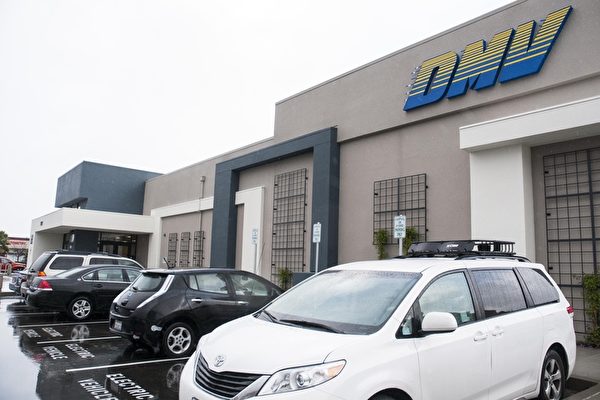
On September 11th, the United States Federal Circuit Court of Appeals in the District of Columbia held a hearing on the case of California Department of Motor Vehicles (DMV) v. U.S. Department of Transportation (California DMV vs. U.S. DOT). The judges conducted inquiries on issues including “non-citizen commercial driver’s licenses” and the cessation of federal funding measures.
Looking back to the fall of 2025, federal investigators found that over 25% of commercial driver’s licenses (CDL) for truck and bus drivers they reviewed were deemed illegal due to drivers’ expired immigration visas.
On November 12th, U.S. Transportation Secretary Sean Duffy announced that California DMV had acknowledged issuing around 20,000 “Non-Domiciled” commercial driver’s licenses to undocumented immigrants. The Department of Transportation ordered California to revoke these licenses and notified holders that the licenses would expire 60 days later on January 5, 2026.
However, California DMV did not revoke these licenses, allowing undocumented drivers to continue driving with valid licenses. As a result, the Federal Motor Carrier Safety Administration (FMCSA) under the Department of Transportation froze and refused to release $160 million in federal highway construction funds to California, leading California DMV to file a lawsuit against the DOT.
Three judges – Bradley Garcia, Florence Pan, and Neomi Rao – of the D.C. Circuit Court of Appeals formed a panel and conducted a two-hour inquiry into the matter.
Federal lawyer Simon Jerome pointed out in court that California’s actions were fundamentally unsafe and illegal: “It is absurd if a commercial driver’s license with a validity of several years, such as five or eight years, is issued when the driver’s immigration documents are set to expire tomorrow.”
Deputy Attorney General of California Kristen Kido argued that current licenses allow for a change in residence, stating, “You can get an eight-year commercial driver’s license in California and then move to Arizona the next day,” therefore, changes in immigration status should be treated equally.
Kido also argued that federal laws do not explicitly require the validity period of a commercial driver’s license to align with the validity period of one’s immigration status, and that California met the requirements of lawful residency when issuing these commercial licenses.
Jerome countered by stating that federal regulations mandate states to only accept valid non-expired immigration documents, and California’s interpretation of the regulations was “ludicrous” and undermined federal safety standards. Allowing individuals to retain licenses after losing lawful residency was unacceptable to the FMCSA.
California argued that they were complying with new federal regulations but did not agree to revoke those licenses before January 5, 2026.
Jerome pointed out that California initially agreed to implement a 60-day corrective action plan but unilaterally changed the schedule, missing the January deadline. Therefore, freezing the $160 million in federal funds was justified.
He emphasized that allowing commercial vehicle drivers to continue driving with a CDL validity period exceeding the legal residency permit would lead to various problems, including safety hazards, regulatory loopholes, and inconsistencies in national standards.
Among the three judges, Garcia seemed more inclined towards the view that the validity period of commercial licenses should not exceed the allowable residency period in the U.S., and that California’s interpretation of the law exceeded national security standards.
Judge Pan also questioned the arguments made by California’s attorney, expressing skepticism towards the argument that “there is no federal rule requiring the validity periods of the two to be consistent.” Rao inquired whether California’s failure to complete the federal corrective action plan on time amounted to resistance against federal oversight, and whether the FMCSA’s freeze on funds was reasonable.
The panel has not yet rendered a judgment. Once they do so, both California DMV and the U.S. Department of Transportation have the right to appeal to the United States Supreme Court.