
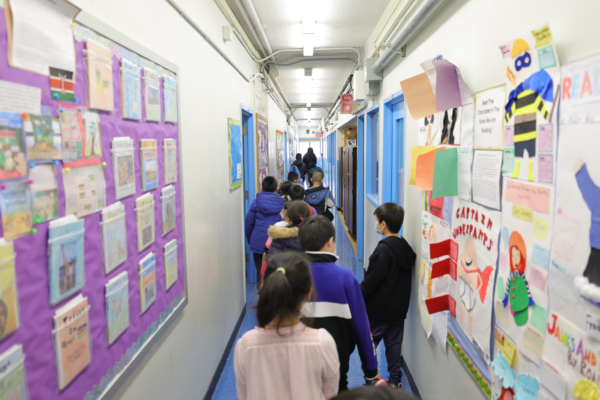
New York City’s public school system has long been grappling with a severe issue of “chronic absenteeism.” According to the latest official data released, a staggering 33% of students citywide are chronically absent from school. In an effort to curb student dropout rates and truancy, the New York City Department of Education (DOE) is preparing to deploy “truancy coordinators” in schools to work closely with families and help students return to the classroom.
These “truancy coordinators,” as reported by the New York Post, will be existing staff members who also take on this additional role, including teachers, school counselors, school administrators, or social workers.
The coordinators will need to proactively engage with high-risk students’ families early on, collaborate with parents of students refusing to attend school, and introduce students to the psychological health and related resources provided by the school to help them overcome barriers to attending school.
Documents show that staff members taking on this new role will not receive any additional compensation. This has stirred strong discontent among staff members, questioning why the city government departments cannot handle this matter and seeing it as an additional burden that disperses teachers’ focus.
The documents stipulate that all public school principals citywide must formally submit selections for coordinators by September 30.
Truancy behavior is often closely related to mental health issues such as disabilities, anxiety, or depression. Data indicates that in the 2024-2025 school year, the chronic absenteeism rate among disabled students was as high as 43%.
The introduction of this new policy stems from a collective lawsuit initiated in 2024 by families of disabled students with chronic absenteeism. Parents accused the city government of lacking sufficient resources and support, resulting in students with mental health issues being unable to stay in the classroom. Following a settlement agreement reached in the collective lawsuit, the Department of Education officially established this coordinator mechanism.
Education advocacy groups have sharply criticized the city government for allowing the chronic absenteeism crisis to persist for so long and only reacting passively as the problem worsened. Numerous studies have shown that chronic absenteeism leads to severe academic setbacks and significantly increases the risks of substance abuse, criminal behavior, or dropping out of school among teenagers.
The truancy crisis is just one of the many challenges facing New York City’s public school system. The latest demographic data shows that since 2015, over 150,000 students have left the New York City public school system.
The rate of achievement in reading tests among students in grades 3 to 8 citywide dropped significantly by 6 percentage points compared to the previous year, with only about half of the students meeting the state’s English proficiency standard. Out of over 1,500 public schools citywide, more than 900 schools have over half of their students failing to pass state math or reading tests.
A spokesperson for the New York City Department of Education stated that truancy coordinators will establish a “robust framework” to combat chronic absenteeism and ensure that every student can thrive academically and in terms of their mental and physical well-being.