
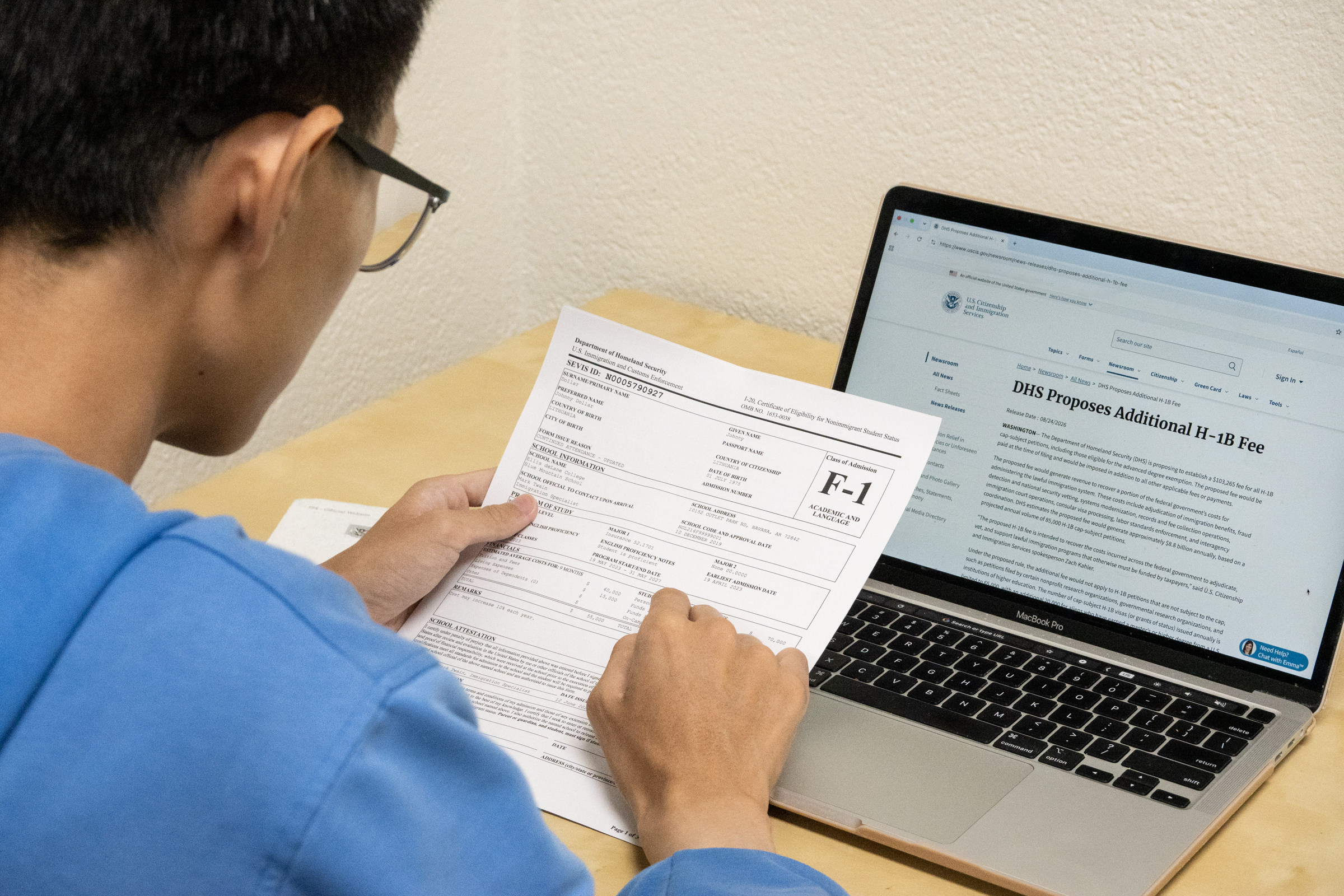
The United States government is set to implement a new policy on September 15 that will cancel the “duration of status” (D/S) stay permits granted to international students and visiting scholars upon entry. A lawsuit challenging the Department of Homeland Security’s (DHS) decision to cancel the D/S status was heard in a federal court in Massachusetts on September 3. However, as of September 11, the judge has not issued a ruling.
Under the new rule published by DHS on July 17, the maximum stay period for holders of F visa for students, J visa for visiting scholars, and I visa for foreign media representatives entering the U.S. will no longer be granted as D/S status on their I-94 entry cards. Instead, they will be given a fixed stay period.
The D/S system allowed individuals to stay in the U.S. as long as they maintained their legal status, such as students with valid I-20 forms or visiting scholars with valid DS-2019 forms. The new rule imposes limits on stay periods, with F visas and J visas valid for up to 4 years, and I visas for a maximum of 240 days (90 days for Chinese passport holders). Extensions can be applied for based on academic and work needs.
The decision to cancel the D/S status has faced legal challenges from groups like the Presidents’ Alliance on Higher Education and Immigration, NAFSA: Association of International Educators, American Federation of Teachers (AFT), and United Auto Workers (UAW). They argue that the new rule violates federal administrative law, is arbitrary, and fails to address public opposition or evaluate the impact on universities, research, international recruitment, and long-term doctoral students.
Critics also argue that the restrictions on students’ academic choices exceed the authority of DHS. Retired immigration law professor Stephen Yale-Loehr believes that the plaintiffs have a good chance of winning the lawsuit, as DHS failed to properly consider thousands of criticisms of the proposed rule.
The new rule restricts students from pursuing the same or lower-level degrees after graduation and imposes additional limitations on changing majors or degree levels during graduate studies. The lawsuit questions these restrictions, arguing that the legality of maintaining student status should be determined by U.S. immigration law and DHS overstepped its authority by defining academic limitations for students.
The implementation of fixed stay periods for international students and scholars aims to strengthen security measures, combat immigration fraud, and ensure compliance with immigration laws. The court, presided over by Judge F. Dennis Saylor, raised concerns about the rationale behind the 4-year limit and questioned how it relates to national security.
In light of the evolving immigration policies, students like Xu face uncertainties about their academic and career paths. Xu’s friend, a doctoral student, worries about the impact of the new rules on graduate students in fields like physics and science, where completing a degree within 4 years may be difficult.
While some students may not fully grasp the implications of the new rules, others like Xu are navigating the challenges and uncertainties brought about by the changing landscape of U.S. immigration policies. Xu reflects on the limitations and complexities he faces as a student, highlighting the impact on academic freedom and career choices.
Despite the uncertainties, many international students continue to pursue their education in the United States. From the visa application process to adjusting to the new regulations, students like Xu and his friend remain resilient in their pursuit of higher education and professional goals.
The stories of international students like Xu and his friend shed light on the diverse experiences and perspectives within the academic community amidst the backdrop of a shifting immigration landscape. As the debate over the cancellation of the D/S status continues, stakeholders in the education and immigration sectors advocate for policies that uphold academic freedom and support international students.