
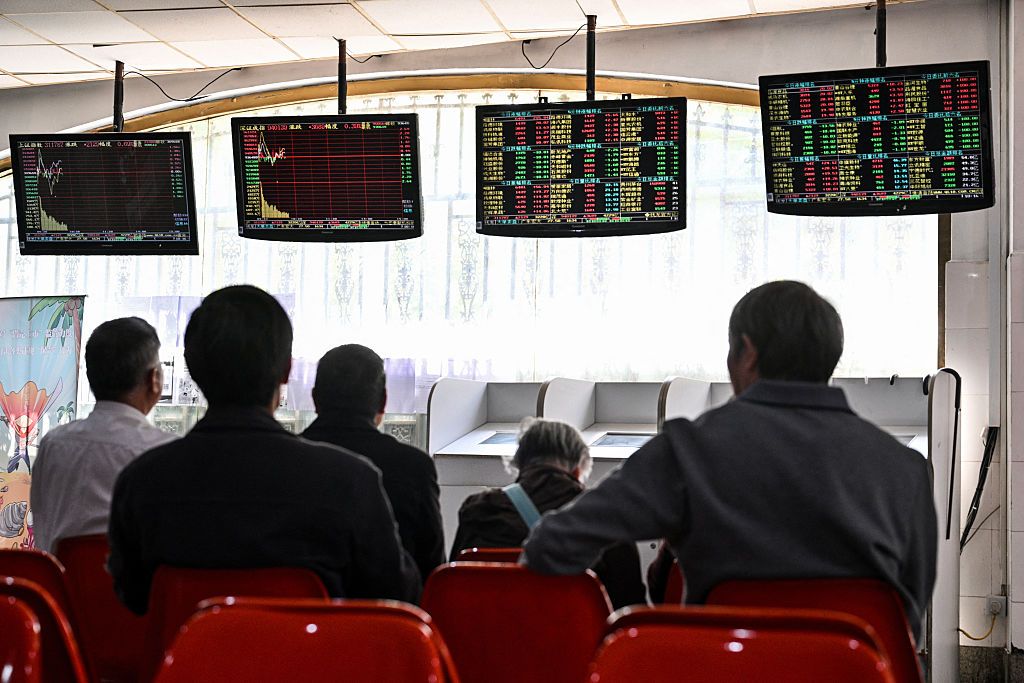
In mainland China, A-shares experienced significant volatility in July. As of July 28th, excluding ST stocks, out of 5325 stocks, 271 stocks saw their largest pullback from their June highs exceed 50%, with the electronics and communication industries accounting for 42.1% of this.
According to a report by “Yicai” on July 29th, the aforementioned 271 stocks represent about 5.1% of the total, meaning roughly 1 out of every 20 stocks had fallen by more than half from their June highs during this period.
The term “largest pullback” refers to the maximum extent to which a stock price falls from its peak to its subsequent low, and does not necessarily mean these stocks had cumulatively declined by over half as of July 28th.
Breaking it down by industry, 94 stocks in the electronics industry experienced pullbacks of over 50%, while the communication industry had 20 such stocks, totaling 114. Mechanical equipment, basic chemical, and power equipment industries had 41, 31, and 23 stocks respectively.
Even high-market-cap technology stocks were not immune to this round of decline. Stocks like SMIC, Jiangbolong, and Tianfu Communications saw their largest pullbacks reach 53.86%, 55.99%, and 51.5% respectively.
Though Zhong Jiuchuang and Xinyisheng did not pull back by over half, their declines reached 35.92% and 34.25% respectively. “Yicai” estimated that from their June highs to their July lows, the combined market value of these two companies decreased by over 600 billion RMB.
The average largest pullback in the electronics and communication industries were 39.48% and 32.5% respectively, both surpassing the market average of 25.27%. Among the 11 stocks with market caps exceeding 100 billion RMB and experiencing over half pullbacks, 7 were tech stocks.
On July 28th, the A-share technology sector saw a sharp decline, with the ChiNext Index falling by 7.35% and the Science and Technology Innovation 50 Index dropping by 6.33%; the communication and electronics sectors decreased by 10.88% and 7.02% respectively.
As reported by “Hua Xia Times,” Tan Zhimo, a fund manager at Jinxin Fund, stated that the previous trading day’s overall decline in U.S. chip stocks dragged down the Asia-Pacific technology stocks, including A-shares. Simultaneously, certain “cyclical financing” transactions in the AI industry also raised market concerns.
“Cyclical financing” refers to industrial chain enterprises investing or providing financing to customers, who then use the funds to purchase their chips or computing services. Investors are questioning whether some computing orders stem from genuine end-user demand or are driven by investment and financing loops.
Before the tech stock decline, fund positions were already highly concentrated. According to a report by “Shanghai Securities News” on July 25th, Chen Guo, Vice President of the Dongfang Fortune Securities Research Institute and Chief Strategy Officer, revealed that by the end of the second quarter, actively managed equity funds’ allocation to the electronics and communications industry had reached 60.2%, the highest since 2010.
“Hua Xia Times” also quoted Guo Yiming, Managing Director of Jufeng Investment Advisory, who stated that despite external market influences, with limited new funds, money is still shifting between different sectors. He predicts that sectoral turbulence adjustments and repeated index probing may continue.