
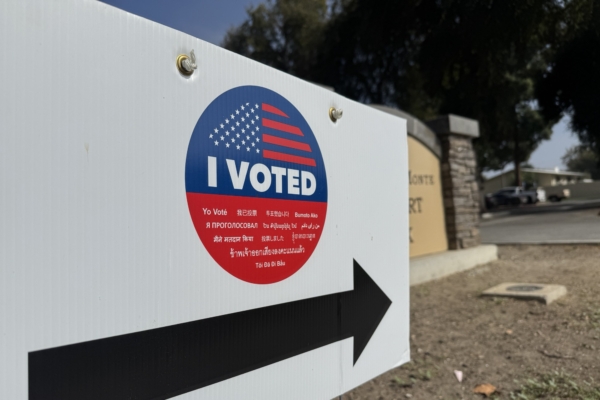
In November of this year, California voters will see 14 statewide ballot propositions on their ballots. As of July 24th, the state legislature has submitted 5 measures, and citizens or groups have also put forward 9 initiatives and gathered enough signatures.
Among the 14 ballot propositions, Propositions 1, 37, and 38 respectively call for issuing $11.25 billion, $25 billion, and $8.4 billion in bonds; Propositions 3 and 40 aim to extend taxation on high-income earners and impose a “wealth tax”; Propositions 41, 42, and 43 are designed to limit tax increases or raise the threshold for tax hikes. Additionally, there are 3 propositions related to elections: including the citizen initiative Proposition 39 “Voter ID,” and two proposals put forward by the state legislature (allowing the use of public funds to support candidates and allowing officials to be replaced without a direct election after recall). Other important issues include the state government’s budget accounts, spending limits, and whether to expedite environmental review processes for specific projects.
The Veteran and Housing Assistance Programs Bond Measure, submitted by the state legislature, authorizes the issuance of $11.25 billion in bonds. $10 billion of this amount is designated for the State Housing Assistance Program (including programs for moderate and low-income housing development and purchase, such as multi-family housing programs, CalHome, farmworker housing, university housing, Native American housing, and government low-cost housing pilot program); the remaining $1.25 billion is for the Veteran Home Purchase Loan Program.
Voters who vote “Yes” support authorizing the state government to issue $11.25 billion in bonds; those who vote “No” oppose it.
The Budget Stabilization Account Cap Increase and Gann Limit Changes Amendment, submitted by the state legislature, aims to raise the deposits and expenditures limit of the state Budget Stabilization Account (BSA) from 10% of the state’s General Fund revenues to 20%, while expanding its usage to cover the repayment of state debts and obligations (including repayment of federal debts related to unemployment insurance).
The Gann Limit, named after Proposition 4 initiator Paul Gann in 1979, aims to restrict expenditure growth of state and local governments, with the limit adjusted annually based on inflation and population growth. In the previous year, in 1978, Gann and Howard Jarvis jointly drafted Proposition 13, which limited the annual increase of property taxes.
Voters who vote “Yes” support increasing the Budget Stabilization Account and the Gann Limit; those who vote “No” oppose the increase.
The Renew State Income Tax Increase for Education Funding Initiative, a citizen initiative, seeks to make the “high-income earner surcharge tax” set to expire in 2031 permanent, maintaining annual state revenue of $5 billion to $15 billion for use in funding education and healthcare programs.
Voters who vote “Yes” support permanently taxing high-income earners; those who vote “No” oppose the permanent taxation.
The Allow Public Financing of Election Campaigns Measure, submitted by the state legislature, aims to repeal the 1988 ban on public funding of election campaigns, permitting state and local governments to provide public funds to qualified candidates for election campaigns.
Voters who vote “Yes” support government funding of election candidates; those who vote “No” oppose it.
The Eliminate State Officer Recall Successor Elections Amendment, submitted by the state legislature, dictates that after the successful recall of an official, their successor will not be required to go through a special election. For example, if the governor is recalled, the lieutenant governor will directly succeed until the end of the original term. Moreover, the proposition states that the recalled official can run for the same position again in the future.
Voters who vote “Yes” support allowing direct succession of a recall successor without an election; those who vote “No” advocate maintaining the current law where voters decide the successor through a special election.
The Second Mortgage Homebuyer Program and Revenue Bond Initiative, a citizen initiative, authorizes the California Housing Finance Agency (CalHFA) to issue bonds totaling up to $25 billion. This is to provide second mortgage loans to families residing in California for at least one year with household incomes not exceeding 200% of the state median income, and assist in paying a 3% down payment.
Voters who vote “Yes” support issuing bonds to provide second mortgage loans to moderate-income homebuyers, while those who vote “No” oppose it.
The Immunology and Immunotherapy Research Funding Initiative, a citizen initiative, authorizes the state government to issue $8.4 billion in bonds. The funds will be allocated to a non-profit medical research institute designated by the State Department of Health and a public or non-profit university/research institution. The state government plans to increase annual expenditure by $500 million over 25 years to repay interest and intends to recover some or all costs over the coming decades.
Voters who vote “Yes” support issuing bonds to fund immunology research; those who vote “No” oppose it.
The Prohibit New Taxes on Retirement Holdings, Personal Assets, and Savings and Limit Retroactive Taxes Initiative, a citizen initiative, prohibits the imposition of new taxes on individual property (including retirement accounts, financial assets, investment accounts, business interests, and intellectual property) and prohibits retroactive taxation on actions, activities, or conditions that occurred before the enactment of new taxes since January 1, 2026.
Voters who vote “Yes” support prohibiting new taxes on personal property and limiting retroactive taxation; those who vote “No” oppose the proposition (thus allowing or maintaining the current regulations).
The Two-Thirds Vote Requirement for Local Tax Measures Amendment, submitted by the state legislature, requires local tax-increasing measures to obtain a two-thirds majority approval from voters to pass, and prohibits changes to property taxes at the local level unless approved by voters. The proposition has received overwhelming bipartisan support in both chambers of the state legislature (Senate 35:1, Assembly 68:2).
Voters who vote “Yes” support the requirement for local tax-increasing measures to obtain a two-thirds majority approval from voters; those who vote “No” oppose it (meaning a simple majority suffices for approval or no high threshold is required).
The Spending Requirements for Federally Qualified Health Centers Initiative, a citizen initiative, mandates that non-profit Federally Qualified Health Centers (FQHC) or similar entities allocate 90% of their annual total revenue toward expenditures that advance the mission of FQHC (as calculated by the California Attorney General). The Health Department is authorized to fine non-compliant organizations and establish a special fund within the special deposit fund. The initiative has garnered support from healthcare unions and groups, leading to lawsuits filed by entities such as the California Hospital Association.
Voters who vote “Yes” support strengthening oversight and penalties on the allocation of funds by Federally Qualified Health Centers; those who vote “No” oppose it.
The Expedited Environmental Review Process for Certain Projects Initiative, a citizen initiative, amends the California Environmental Quality Act (CEQA) and the Permit Streamlining Act to streamline the review process for a range of specific projects, including housing, water supply systems (excluding the delta conveyance system), clean energy, medical facilities, public safety infrastructure (excluding prisons), broadband, education, and transportation (excluding high-speed rail). If the reviewing agency fails to complete the review within the stipulated timeframe, the application will be automatically deemed approved.
Voters who vote “Yes” support amending environmental regulations and speeding up the approval process for specific projects; those who vote “No” oppose it.