
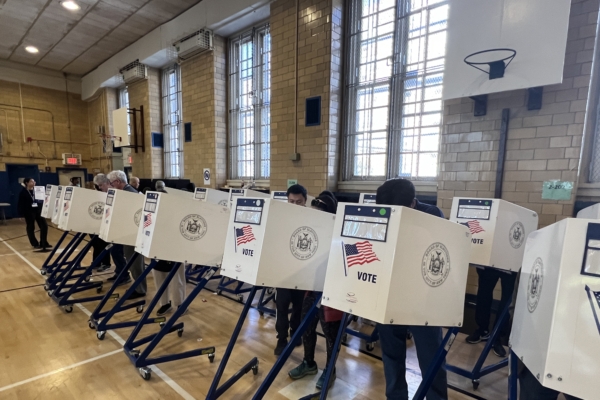
New York City Mayor Mamdani’s government efficiency commission (COGE) announced five proposed amendments to the “City Charter” on July 23, intending to submit them to the voters for referendum in the November election. This move is seen as a response to the Department of Government Efficiency (DOGE) at the federal level, aiming to streamline administrative processes and shorten approval times.
After holding 10 public hearings and collecting over a thousand opinions, COGE introduced these constitutional amendment proposals. Several measures in the proposals will eliminate public hearings or city council review processes related to sidewalk cafes, small municipal properties, and office leases.
The committee is expected to vote on the proposals on the evening of the 23rd, and if approved, they will be directly included in the November election referendum. As the Charter Amendment Committee has the legal right to propose amendments directly, it does not need approval from the city council to be included on the ballot.
The first proposal simplifies outdoor dining permits: integrating sidewalk and street dining applications, eliminating mandatory public hearings and city council voting rights, and having the transportation department collect community feedback in other ways. The approval period can be significantly shortened from a maximum of eight months to about two months, saving businesses up to $1,800 in fees.
The second proposal focuses on government procurement reform: authorizing the procurement committee to flexibly design surveys based on contract size and allowing agencies to submit written opinions instead of conducting hearings. The reform is expected to save a 30-day process.
The city government also plans to convert contracts funding nonprofit organizations into grants at the discretion of the city council, reducing the payment cycle from 10 months to 6 months. In the future, the city government will establish framework agreements with pre-approved nonprofit organizations, reducing some contract processes from 13 months to 6 months.
The third proposal aims to expedite street construction and municipal land reviews: eliminating internal redundancies, empowering the transportation department director to quickly approve permits for bike lanes and bus lanes, increasing project progress by one-third. In addition, a fast-track review process will be implemented for small idle municipal lands and air rights, reducing the time from seven months to 90 days, with an expected revenue increase of over $200 million. Moreover, the city council’s veto power over city office leases will be eliminated, saving approximately 50 days.
The fourth proposal integrates the building permit platform: consolidating the 40 permits scattered across 18 agencies onto a single digital platform, and the Buildings Department will increase staff to issue certificates of occupancy (CO), enhancing processing efficiency.
The fifth proposal regulates emergency funds: setting the target for the “Emergency Fund” at 12% of the previous fiscal year’s tax revenues. The funding formula will be updated every four years, and only in the event of the mayor certifying a major disaster or economic downturn can more than half of the funds be utilized in a single year.
The city government emphasizes that COGE will continue to operate after the November election, continuing to gather public opinion and proposing municipal reform suggestions.