
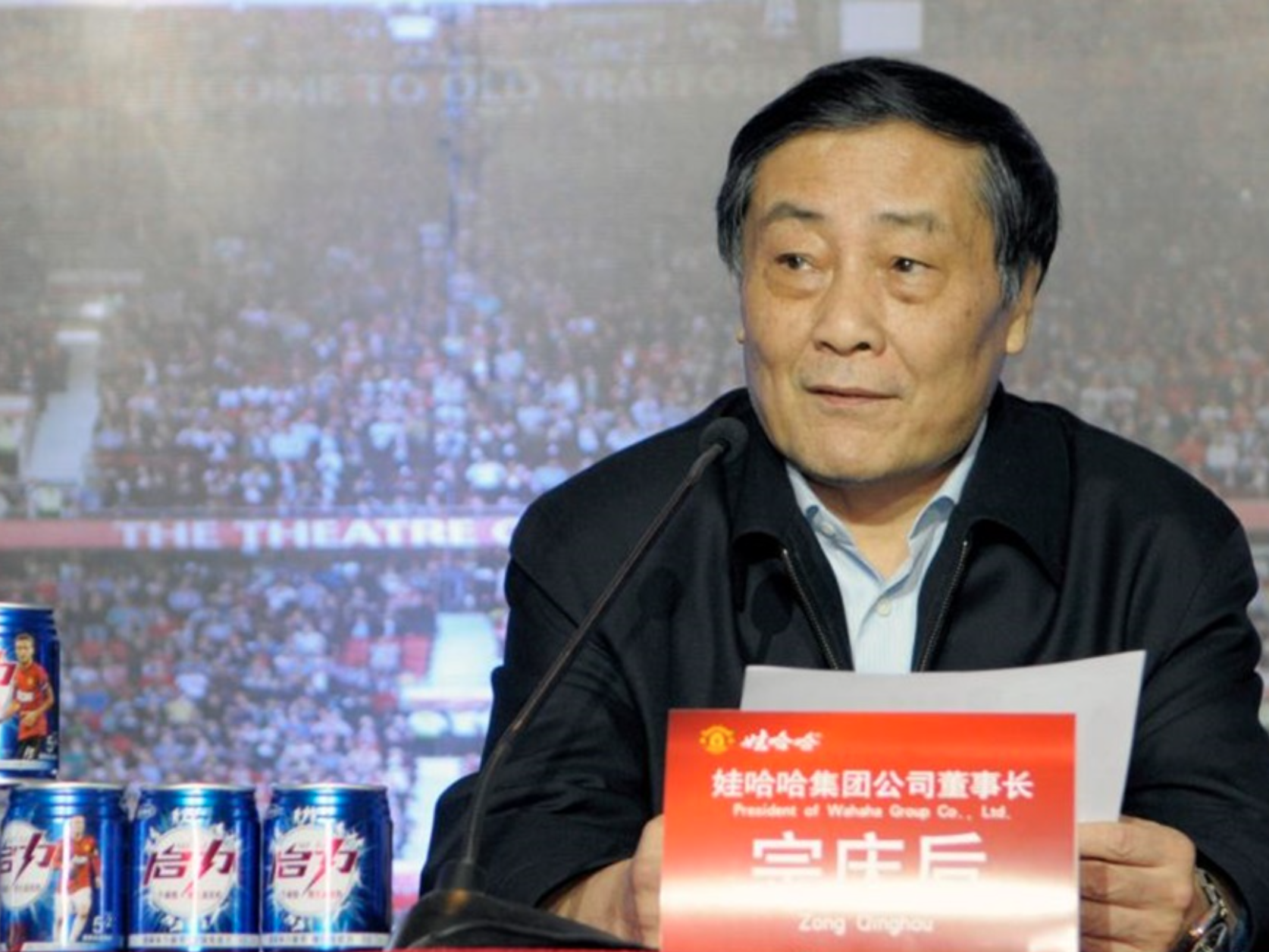
The legacy dispute of the founder of Wahaha Group, Mr. Zong Qing, has seen new developments. On July 21st, the Hong Kong High Court rejected the appeal application by Zong Qing’s daughter, Ms. Zong Fuli, and Jianhao Capital Limited, maintaining the original court order for asset preservation and disclosure of information. Approximately $1.8 billion of assets in HSBC bank accounts will remain frozen, prohibiting withdrawals, mortgages, or transfers until the mainland Chinese court completes the relevant case proceedings. This nearly two-year-old inheritance dispute has once again reached a stalemate.
According to a report by the “Daily Economic News,” the Hong Kong High Court upheld the asset preservation order issued by the original judge on August 1, 2025, ensuring that the offshore assets in question will continue to be protected by the judiciary to prevent any asset transfers during the litigation period.
The case originated from the inheritance dispute that arose after Zong Qing’s passing. Three individuals claiming to be Zong Qing’s illegitimate children, Zong Jichang, Zong Jieli, and Zong Jisheng, filed a lawsuit, asserting that the funds in question originally belonged to an offshore trust established by Zong Qing during his lifetime, and each of them should have respective interests in the trust. They accused Zong Fuli of taking over the assets without fulfilling the trust establishment as agreed upon, and of allegedly transferring some funds. As a result, they requested the court to take asset preservation measures.
On the other hand, Zong Fuli consistently denied the claims made by the plaintiffs, not only questioning the identities of the three individuals and the legal validity of the relevant trust documents but also stating that the movement of the funds was part of normal business operations and not a malicious asset transfer.
As reported by The Paper, the Hong Kong High Court stated in its judgment that the five grounds for appeal presented by the defendants did not have a reasonable chance of success, hence refusing to grant an appeal. The court also mentioned that even if not required by law to obtain appeal permission, it would not approve any delay in filing an appeal by the defendants. Additionally, the court ordered Zong Fuli’s side to pay HK$250,000 in legal fees to the plaintiffs.
The five grounds for appeal raised by Zong Fuli mainly revolved around whether the Hong Kong court had jurisdiction, whether the plaintiffs should seek relief from the mainland Chinese court first, whether the plaintiffs had any trust or property rights, whether it was necessary for the Hong Kong court to issue the injunction, and whether the scope of the disclosure order was too broad.
The judge dismissed each of the aforementioned reasons in the judgment, deeming the case as “a pending case with ample substantive grounds and significant disputes,” where it was necessary for the Hong Kong court to implement asset preservation measures to prevent the disputed assets from being transferred during the trial and to ensure that any future rulings by the mainland court could be effectively enforced.
Legal experts point out that the ruling by the Hong Kong court is procedural in nature, aimed at preserving the disputed assets rather than making a final determination on asset ownership. Whether the $1.8 billion assets in question will ultimately belong to Zong Fuli or the three plaintiffs is still pending a ruling from the Hangzhou Intermediate Court.
According to court documents, before his passing, Zong Qing had entrusted Zong Fuli to establish separate offshore trusts for his three children, with a total value of approximately $2.1 billion. The plaintiffs claim that Zong Fuli did not fulfill these arrangements and transferred some of the funds, thus seeking accountability for her actions. The disputed assets are currently held in HSBC bank accounts of Jianhao Capital Limited in Hong Kong, including bonds, fixed-income products, and some cash.
In addition to the Hong Kong case, the three plaintiffs have also filed a lawsuit with the Hangzhou Intermediate Court, mainly concerning the final determination of the disputed assets and related inheritance rights. The freeze order issued by the Hong Kong court will remain in place until the resolution of the Hangzhou case.
Wahaha Group previously stated that the Hangzhou case does not involve the group’s equity. Zong Qing’s direct ownership of 29.4% of Wahaha Group shares has been legally inherited by Zong Fuli and completed the business registration changes.
However, the Hangzhou court is currently reviewing another case involving the 24.6% stake of the Wahaha Staff Shareholding Association. Over fifty retired and former employees have objected to the equity buyback agreement signed in 2018, and the outcome of the litigation could potentially impact the group’s equity structure.
Following Zong Qing’s passing in February 2024, Zong Fuli took over as the chairman of Wahaha Group and assumed full control of the business operations. Subsequently, legal disputes concerning family inheritance, offshore trusts, and overseas assets have continued to escalate, making it one of the prominent cases in recent years among Chinese entrepreneurial family inheritance disputes.
On November 27, 2025, the news of “Zong Fuli confirmed resignation as chairman of Wahaha Group” sparked discussions. Apart from Zong Fuli, several senior positions within Wahaha Group also underwent changes.
Despite resigning from all positions, Zong Fuli still retains her shareholder status. Current equity ownership analysis shows that Zong Fuli still holds 29.40% of the shares in Hangzhou Wahaha Group.