
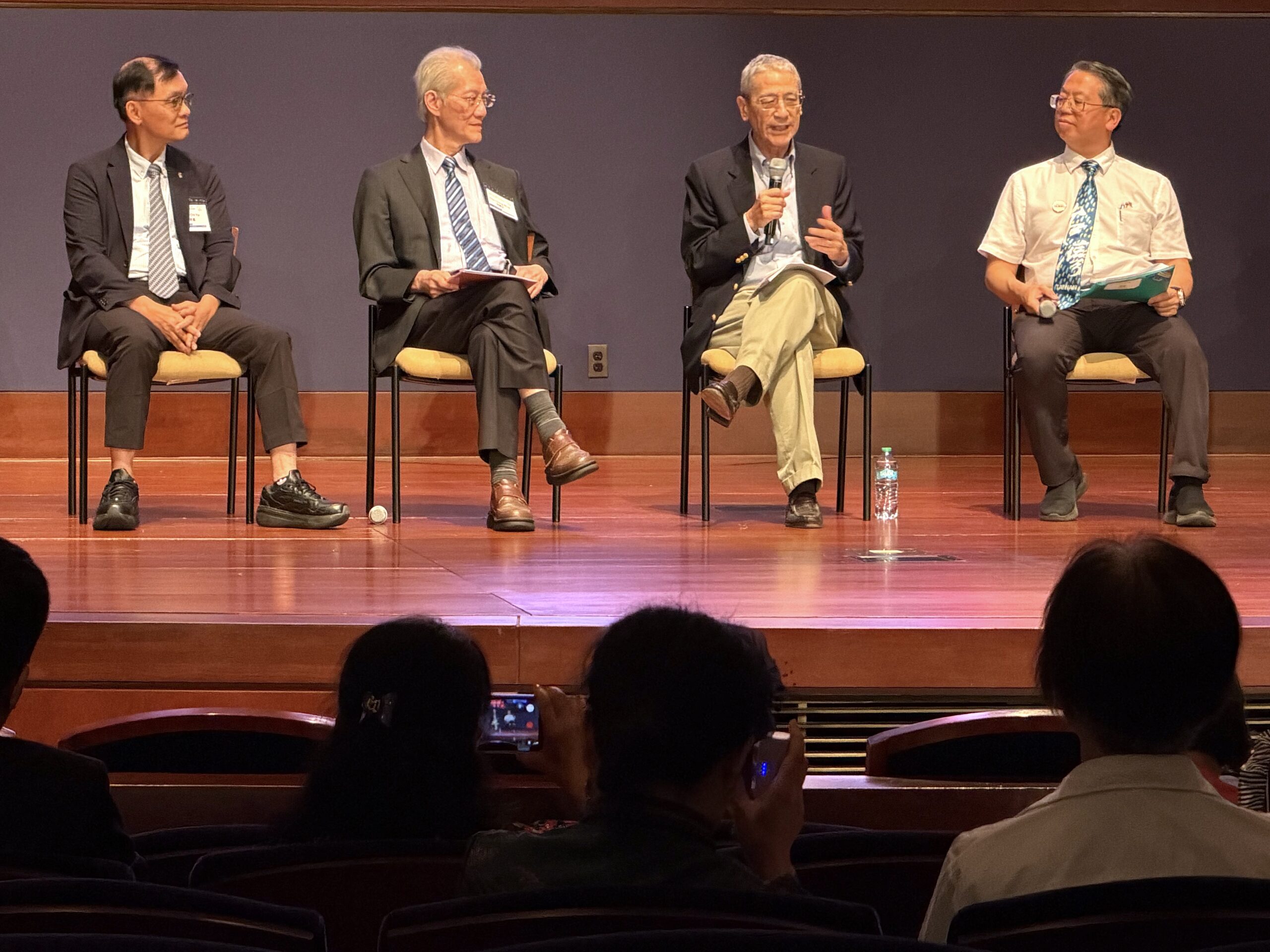
Despite the continuous provocations of military aircraft, the Chinese Communist Party (CCP) is not yet ready to use force against Taiwan, as Xi Jinping is unwilling to relinquish military power. However, the CCP has already initiated a non-kinetic warfare, with the United States and Taiwan needing to take the lead. This message was conveyed by several experts on US-Taiwan relations at a forum held in Washington, DC.
On July 21st, the “China Freedom and US-Taiwan Security Forum” organized by the Consilium Institute and Hello Taiwan was held in the US Congress, delving into the threats posed by the CCP to the freedom societies of the United States and Taiwan. National Taiwan University Professor Emeritus Ming Jurong, American lawyer and China expert Zhang Jiadun, Retired US Air Force Brigadier General David Stilwell, and former Deputy Dean of the Republic of China Army Officer School Major General Yu Zongji (Retired) discussed the prospects of US-Taiwan relations, vulnerabilities within the CCP, and strategic outlook for the Indo-Pacific region.
They mentioned that the CCP is not yet prepared to launch a military attack on Taiwan, but alternative forms of warfare have already begun. Through cognitive warfare, information warfare, infiltration, and united front tactics, Xi Jinping and the CCP aim to subvert the existing world order and establish communist ideology dominance over humanity. The United States and Taiwan must proactively defend freedom against subversion.
American lawyer, writer, and China expert Zhang Jiadun stated at the forum that if the CCP invades Taiwan, it would entail a complex land, air, and sea joint warfare, but the “CCP’s army is not prepared.”
He analyzed that the CCP Central Military Commission, which controls the Chinese military, currently has five vacant seats, with only Xi Jinping himself and another officer remaining. However, that officer is a political commissar, and “there are no combat commanding officers in the top leadership of the Chinese People’s Liberation Army.”
Zhang mentioned, “If the CCP wants to invade Taiwan, Xi Jinping must hand over near-complete control of the Chinese military to a certain military leader. Once that senior officer gains near-complete control of the Chinese military, he will become the most powerful figure in China.” However, even in calm times, Xi Jinping is unwilling to do so, let alone in the current political turmoil within the CCP.
Zhang stated, “The CCP’s core narrative is that the Chinese people are incapable of protecting themselves, managing themselves, and therefore need the Communist Party. Taiwan completely overturns this argument.”
“Beijing is aggressively encroaching on democratic systems,” he said. “We cannot allow it to take over any free society, especially an important one like Taiwan.”
Zhang added, “Xi Jinping is facing difficulties domestically. The window of opportunity for him to achieve the goal of annexing Taiwan is closing.” He emphasized, “We can not only prevent the CCP’s attempts to take over Taiwan, but also prevent its reach to other regions in East Asia. Now, we can achieve this without costs. In a year or two, the cost will be enormous. Now is the time to sell weapons to Taiwan.”
Ming Jurong, an authority on CCP politics and cross-strait relations in Taiwan, emphasized that China is a communist country. He highlighted Xi Jinping’s strategic ambitions, aiming to overturn the international order and challenge universal values with communist ideology.
Facing the CCP’s wolf warrior diplomacy and intimidations towards Taiwan, Ming pointed out that Taiwan is not easy to be taken due to its strong democratic allies and robust semiconductor industry.
He mentioned the internal instability faced by the CCP in terms of economy, society, and politics. If attacking Taiwan, it would lead to opposition from the United States, Japan, and Europe. Currently, the CCP dares not to strike Taiwan, as China is in a situation where “it is better to fight in the South China Sea than the Taiwan Strait.”
However, Ming Jurong noted that although Xi Jinping’s ambitions are challenging to achieve through attacking Taiwan, the unseen warfare has already unfolded on Taiwan’s soil, especially within the Legislative Yuan.
He stated that the CCP’s tactics aim to divide Taiwan through cognitive warfare, infiltration, and united front strategies. These methods have caused significant harm and created divisions in Taiwan, orchestrated by Beijing.
“The war is not coming or on the verge of happening; the war has already begun,” Ming said. “Xi Jinping’s ambition is vast; he is waging war against the United States and Taiwan, but he believes in ‘unrestricted warfare’, meaning achieving goals not through military conflict but through cognitive warfare.”
Ming mentioned that Xi Jinping is biding his time, waiting for Taiwan and the United States’ elections and any disruptions to consolidate more Taiwanese support. If successful, he could demand re-election confidently at the CCP’s 21st Congress in 2027.
He concluded, “History tells us that tyranny will perish, but we also need to make efforts to accelerate the demise of tyranny.”
Retired US Air Force Brigadier General David Stilwell participated in the forum virtually. He previously served as Assistant Secretary of State for East Asian and Pacific Affairs, US Military Attaché at the Embassy in China, and held leadership roles in the US Indo-Pacific Command and the Joint Staff at the Pentagon.
Stilwell pointed out that since the collapse of the communist bloc in 1991, the United States has relaxed its vigilance against communism, believing that the world would become a peaceful society and disregarding threats from the CCP. The U.S. needs to rethink and understand how Xi Jinping and the CCP define warfare.
He mentioned, “Xi Jinping and the CCP view any force or method that can compel their main rivals – the United States and Taiwan – to submit to their will as warfare.”
Stilwell added, “The U.S. focuses too much on physical warfare and defense, but that is not the CCP’s priority.” He emphasized that the CCP targets U.S. vulnerabilities such as the information space, economic ties, and companies. Many companies prioritize profit over national security by collaborating with the CCP.
Stilwell said the U.S. should consider how to win in information warfare, such as exposing the CCP’s violations of the Sino-British agreement in reclaiming Hong Kong, revealing its untrustworthiness and illegality to prevent futile negotiations.
He suggested that the U.S. should redefine warfare, with the Treasury and Commerce departments creating regulations to prevent American companies from engaging in cooperation with the CCP that harms the U.S. economy and security.
Former Deputy Dean of the Republic of China Army Officer School and Defense Planning and National Resilience expert Maj. Gen. Chung-Chi Yu stated, “Challenges in the Taiwan Strait are escalating. China has set up a war preparation target for the People’s Liberation Army in 2027, and military pressure around Taiwan continues to increase.”
“Numerous Chinese vessels have been active around Taiwan, not only to pressure Taiwan but also to display China’s capability to control the surrounding sea lanes,” Yu said.
He mentioned that China launched an intercontinental ballistic missile towards the Pacific, not only targeting Taiwan but also other countries that might be involved in the conflict.
Yu explained CCP’s “Anaconda Strategy” of gradually increasing pressure stages, starting with political and information warfare, escalating to coercion, isolation, or blockade, ultimately aiming to control Taiwan.
“Therefore, Taiwan needs stronger digital channels, communication systems, and critical infrastructure. A whole-of-society approach is necessary to ensure the government, military, businesses, and people can continue to operate in crisis,” he underscored.
He highlighted the importance of civil defense and public readiness. Education must help people understand the nature of threats, resist political warfare, and false information. Taiwan shifted from neutral patriotism education in 2002 to reshaping nationalism and anti-communism in 2026, refining anti-communist points in the curriculum, emphasizing political differences across the strait and national identity.