
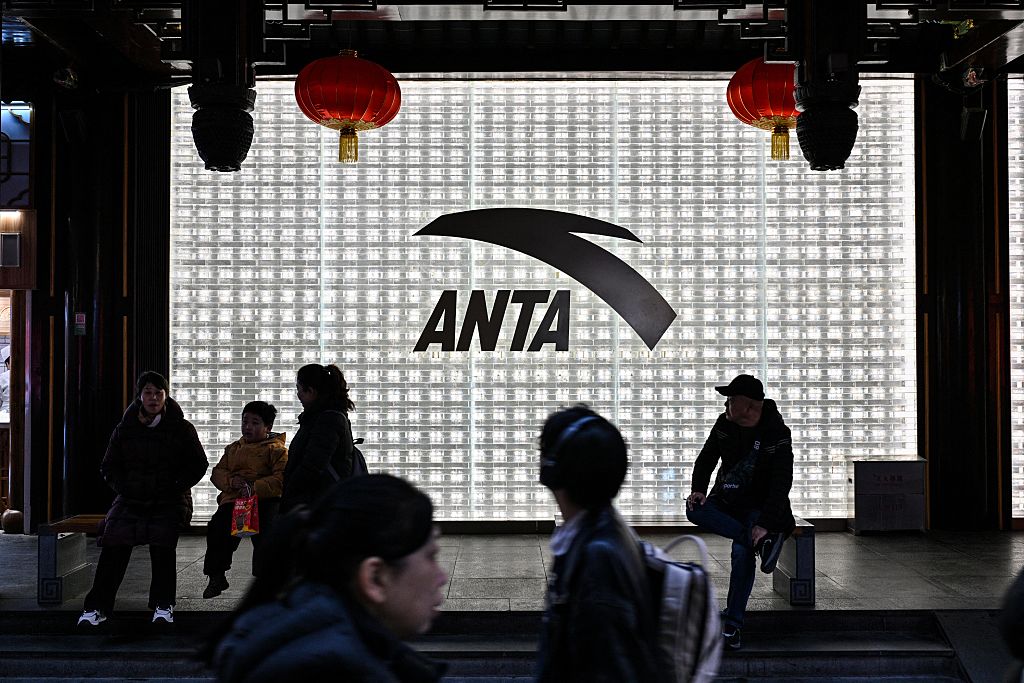
On Tuesday, August 18th, former CEO of Chinese sportswear brand Anta, Xu Yang, made his first public response to his resignation on his social media account, stating that he decided to relocate to the United States due to his family’s educational needs. His social media location was tagged as the Hong Kong International Airport, with information indicating that his flight to Los Angeles had taken off approximately an hour ago.
In his post, Xu Yang wrote, “I did not arrange any farewell because of the guilt of betraying trust and the reluctance to show vulnerability. I hope everyone is doing well!”
Xu Yang resigned from his position as CEO of Anta brand on July 15 due to “family reasons,” and was temporarily replaced by Anta co-CEO Lai Shixian.
His departure coincides with tightened exit controls by the Chinese Communist Party, sparking discussions once again on Chinese social media platforms. Some netizens commented that under the new exit regulations imposed by the CCP, people are feeling uneasy, and now the big shots are only daring to respond once they are on a plane.
There are also confused netizens questioning why wealthy Chinese families are immigrating to the United States while the CCP propaganda continues to portray the U.S. in a negative light.
In late July, the State Council of the CCP announced new border control regulations, set to take effect on September 15. The regulations include enhanced scrutiny of travelers and provide new criteria for limiting Chinese citizens from exiting the country, with some cases potentially facing a ban of up to three years.
In recent years, Chinese citizens already faced strict examination when traveling abroad, and in some cases, public servants were required to surrender their personal passports to their workplaces for safekeeping. Following the announcement of the new regulations, there has been a significant amount of discussion on Chinese social media, with some netizens openly questioning whether they will still be able to freely travel abroad after the rules are enforced.
Professor Gao Shuchao from the Singapore Management University, who specializes in studying China’s trade policies, urged people in China on the overseas social media platform X to leave while they still can.
Professor Li Shaomin from the University of Virginia’s Oudemia noted that the CCP’s control over outbound travel not only affects the general population but also imposes stricter constraints on individuals within the CCP system.
He wrote that during the era of Mao Zedong, only those who were highly trusted by the organization had the opportunity to travel abroad. However, in contrast, the situation seems different now, with the tightest controls falling on the officials and members of the power system seen as “insiders.”
Li Shaomin emphasized, “The more you are considered an insider, the less freedom you have to leave. Not only does the regime distrust the common people, but it also lacks trust in its own officials and the people it promotes.”
He added that the current political regime of the CCP appears to be increasingly insecure.