
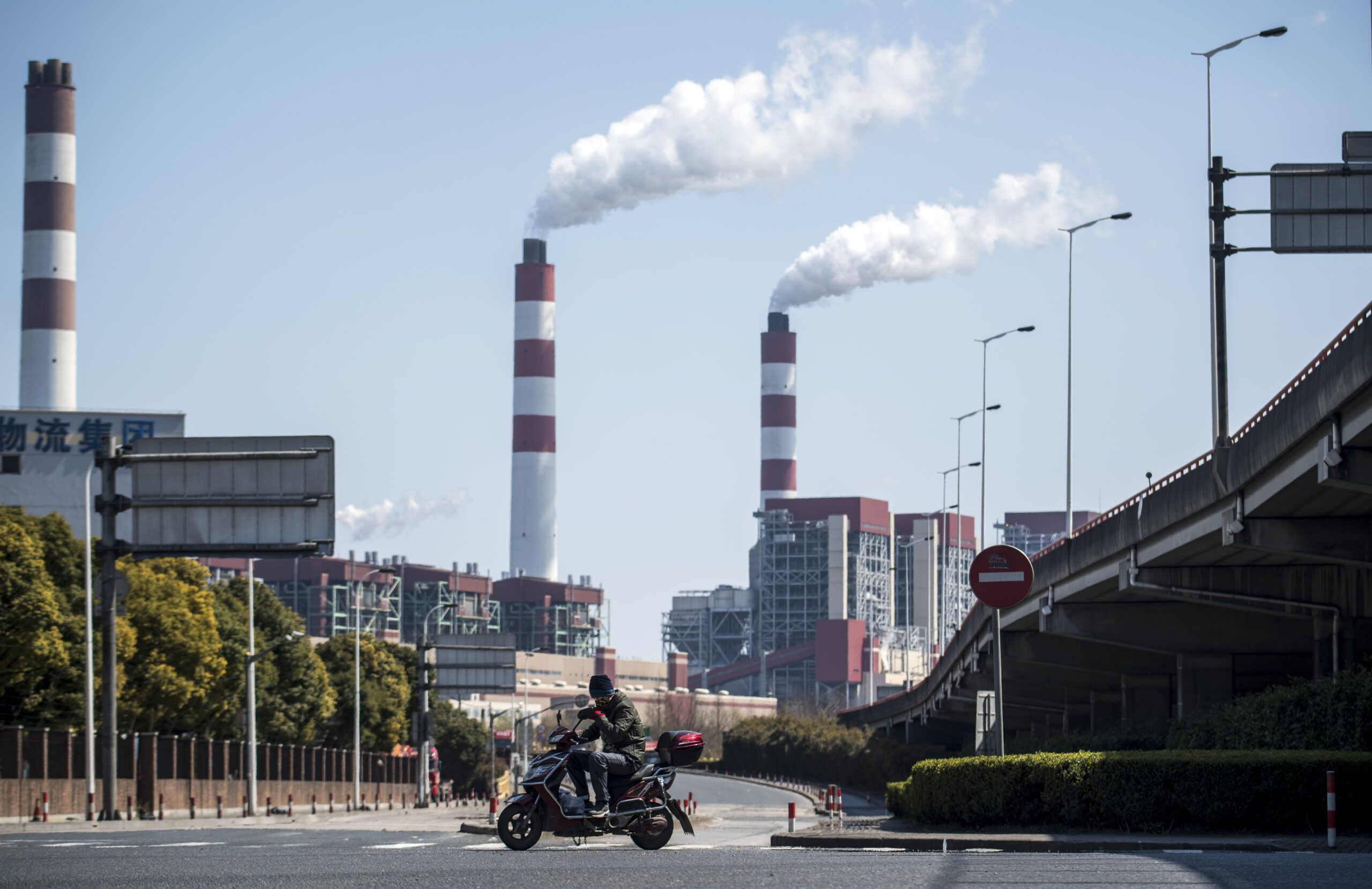
In July, China’s economy saw various indicators falling below expectations, with particularly weak consumption and a significant decline in energy demand. The industrial crude oil processing volume and raw coal production of large-scale industries both saw substantial reductions, while electricity generation, known as the “barometer” of economic activity, experienced its first decline in three years.
According to data released by China’s National Bureau of Statistics on Monday (17th), the industrial crude oil processing volume for large-scale industries in July was 53.11 million tons, a 15.8% decrease compared to the same period last year, with a daily average processing volume of 1.713 million tons. In the first seven months of the year, the industrial crude oil processing volume was 397 million tons, a 6.5% drop year-on-year. Concurrently, crude oil supply in July decreased by 11.32 million tons.
Domestically, the industrial crude oil production of large-scale industries in July was 182.7 million tons, an increase of 150,000 tons compared to the same period in 2025 when it stood at 181.2 million tons. In terms of imports, data from the General Administration of Customs of China shows that crude oil imports in July were 35.73 million tons, a reduction of 11.47 million tons compared to the same period in 2025 when it was at 47.2 million tons.
The industrial raw coal production for large-scale industries in July was 340 million tons, a decrease of approximately 40 million tons compared to the same period in 2025 when it was at 380 million tons, marking a 10.1% year-on-year decline. In the first seven months of the year, the industrial raw coal production was 2.7 billion tons, showing a 2.9% decrease year-on-year.
On the import side, although the raw coal import volume in July this year reached 42.72 million tons, an increase of 7.12 million tons compared to the same period in 2025 when it was at 35.6 million tons, the overall supply of raw coal still decreased by more than 30 million tons.
In July, the industrial natural gas production of large-scale industries was 21.4 billion cubic meters, a 0.9% decrease year-on-year. For imports, the natural gas import volume in July was 10.54 million tons, a 0.84% decrease compared to the same period in 2025 when it was at 10.63 million tons.
The electricity generation of large-scale industries in July was 943.9 billion kilowatt-hours, a 0.1% decrease year-on-year, with a daily average generation of 304.5 billion kilowatt-hours.
According to monthly data from the National Bureau of Statistics of China (which provides data for the last 36 months directly and requires monthly inquiries for other data), this marks the first decline in the past three years.
Electricity generation serves as a key indicator and thermometer for macroeconomic activity. Overall, there is a strong positive correlation between electricity generation and economic growth: during periods of economic vitality, factories operate at higher capacity, service industries thrive, leading to an increase in electricity usage; conversely, during economic downturns, electricity consumption decreases.
China’s sustained economic weakness is considered a significant factor contributing to the decline in energy demand.
In July, economic data fell below expectations across the board, particularly in consumption. The year-on-year growth rate of value-added by large-scale industries in July slowed to 4.5%; consumption growth rate declined to 0.6%; and the depreciation in fixed asset investment widened to 6.7% in the first seven months, all below economists’ forecasts. Detailed consumption data indicates that consumption of domestically substituted products strengthened while non-domestically substituted products continued to decline. Communication equipment saw a 20.4% increase (compared to 16.5% in the previous month), while household appliances narrowed their decline to -1.9% (from -8.7% the previous month). Other categories showed a general weakening trend, with automobiles declining by 17.0% (compared to -16.1% in the previous month), construction and decoration by 14.2% (from -10.5%), jewelry by 10.1% (from -3.4%), and clothing and footwear by 1.0% (from 3.9%).
Michal Meidan, the director of China Energy Studies at the Oxford Institute for Energy Studies, previously told Reuters that if the conflict in Iran further slows China’s domestic economic growth or impacts its export markets, Chinese oil demand faces more downside risks.
The real estate crisis in China has severely impacted the construction industry and weakened diesel fuel demand for several years, with property prices still on the decline. If China’s economy continues to exhibit structural weakness, demand for plastics and other petrochemical products may further decrease, affecting refineries and reducing crude oil consumption.
Of note, with the rapid increase in the number of new energy vehicles and the accelerated utilization of the national AI computing center, there has been a rapid increase in electricity demand. However, the national electricity generation has started to decline, highlighting reduced electricity usage in other sectors such as manufacturing, commerce, and services, reflecting sluggish economic activity.
According to official data from the Chinese government, the total electricity consumption of the country’s computing centers reached 170 billion kilowatt-hours in 2025, accounting for 1.6% of the total social electricity consumption. By the end of June 2026, the number of new energy vehicles in China had reached 48.97 million, representing 13.19% of the total number of vehicles, with pure electric vehicle ownership at 33.675 million.