
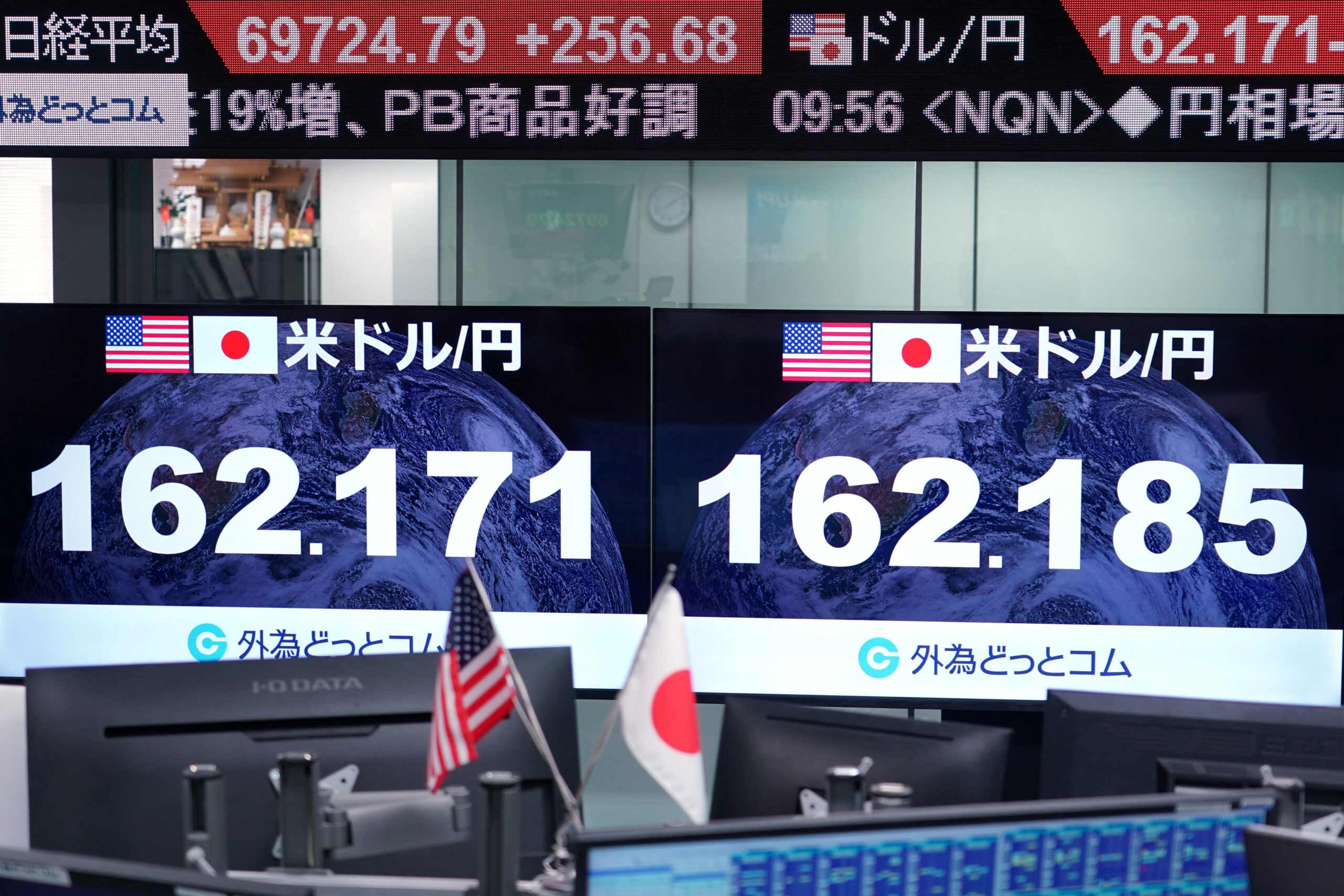
In recent times, escalating tensions in the Middle East have driven safe-haven funds towards the US dollar, leading to a continued depreciation of the Japanese yen. On the evening of July 23, the yen fell to as low as 163.99 per US dollar, approaching the 164 level, marking a new low not seen since December 1986. Despite the Japanese government’s repeated warnings and hints at potential intervention measures, market consensus remains that verbal warnings alone may not be sufficient to reverse the yen’s downward trend, particularly with the widening interest rate differential between the US and Japan and the strength of the US dollar supporting this trend. The weakening yen is also gradually shifting from being a benefit to becoming a detriment to the Japanese economy.
As tensions in the Middle East continue to intensify, safe-haven funds are rapidly flowing towards the US dollar. On the evening of July 23, the yen’s exchange rate briefly dropped to 163.99 per US dollar, nearing the 164 level and hitting a new low since December 1986. Market observers have remarked that “the depreciation is happening much faster than expected, with the 165 yen mark now in sight.”
Japanese Finance Minister Takayuki Katayama reiterated to the media on Friday (24th) that “decisive action will be taken when necessary.” This marks the third consecutive day that Katayama has hinted at implementing strong measures when deemed essential. However, market analysts widely believe that verbal interventions may not be enough to counter the yen’s depreciation trend, given the expanding US-Japan interest rate differential and the prevailing situation of “buying the dollar in times of crisis.”
Why has the Japanese yen depreciated to such an extent? In addition to the widely cited interest rate differential between Japan and the US, Takashi Hashimoto from the Japan International Monetary Institute pointed out during an interview with TBS Television in Japan that “the decline in Japan’s international competitiveness has become a key factor driving the long-term depreciation of the yen.”
It is reported that in 1986, Japan boasted a trade surplus exceeding 13 trillion yen, making it the world’s largest trade surplus nation at that time. However, by 2025, Japan had recorded a trade deficit of nearly 3 trillion yen.
In the 1980s and 1990s, Japan’s manufacturing industry heavily relied on the “domestic production, overseas export” model, with yen depreciation bolstering the competitiveness of Japanese goods for export. Nevertheless, following the burst of the economic bubble and the progression of globalization, major Japanese corporations in sectors such as automobiles, electronics, and steel have shifted a substantial amount of their production capacity overseas. This has resulted in the hollowing out of Japan’s domestic industries, with Japan facing five consecutive fiscal years of trade deficits up to the 2025 fiscal year.
On the other hand, Japan heavily relies on imports of commodities such as energy, iron ore, and food, and the weakening yen further escalates import costs.
Hashimoto stated, “The diminishing competitiveness of Japan’s manufacturing industry has weakened global demand for Japanese products and reduced the market’s demand for the yen, becoming a significant factor in the long-term depreciation of the yen.”
This indicates that the traditional logic of “yen depreciation benefiting exports” is gradually becoming obsolete as Japan’s industrial structure evolves. The Japanese business community is increasingly concerned about the cost pressures posed by the weakening yen. Eiji Hashimoto, President of the Japan Iron and Steel Association and Chairman and CEO of Japan Steel, stated, “The yen depreciation no longer provides significant benefits to the manufacturing industry as it did in the past.” He added that the traditional model of “yen depreciation benefitting manufacturing” is no longer applicable.
Despite the yen’s decline exceeding the levels observed during previous Japanese government interventions, the market widely believes that conditions for another intervention are becoming ripe. However, the Japanese government and the Bank of Japan have refrained from taking action so far.
Senior researcher Yoshiki Shima from Dai-ichi Life Asset Management Economics Research Institute provided analysis on TBS CROSS DIG (a financial media collaboration between TBS Television and Bloomberg), stating that the strengthening factors supporting the US dollar have not changed. Market expectations suggest that the Federal Reserve may further raise interest rates within the year, while the Bank of Japan faces limitations in its pace of raising rates due to economic and fiscal factors, potentially leading to a widening of the US-Japan interest rate differential. Furthermore, the forex hedging operations by foreign investors after buying Japanese stocks and the continued overseas investments by Japan are contributing to increasing selling pressure on the yen.
He pointed out that “in this environment, even if the Japanese government intervenes again, it may only temporarily boost the yen before being counteracted by market selling pressure, which is why authorities have maintained verbal warnings without taking actual actions.”
Next week, the Bank of Japan and the Federal Reserve will each hold monetary policy meetings. Meanwhile, Japanese Prime Minister Sanae Takaichi is expected to make policy decisions regarding whether to lower the consumption tax on food. Amid the intertwining influences of exchange rates, monetary policy, and fiscal measures, the market will continue to monitor whether the yen will break through the 164 level and head towards 165, as well as whether the Japanese government will alter its current stance of observation.