
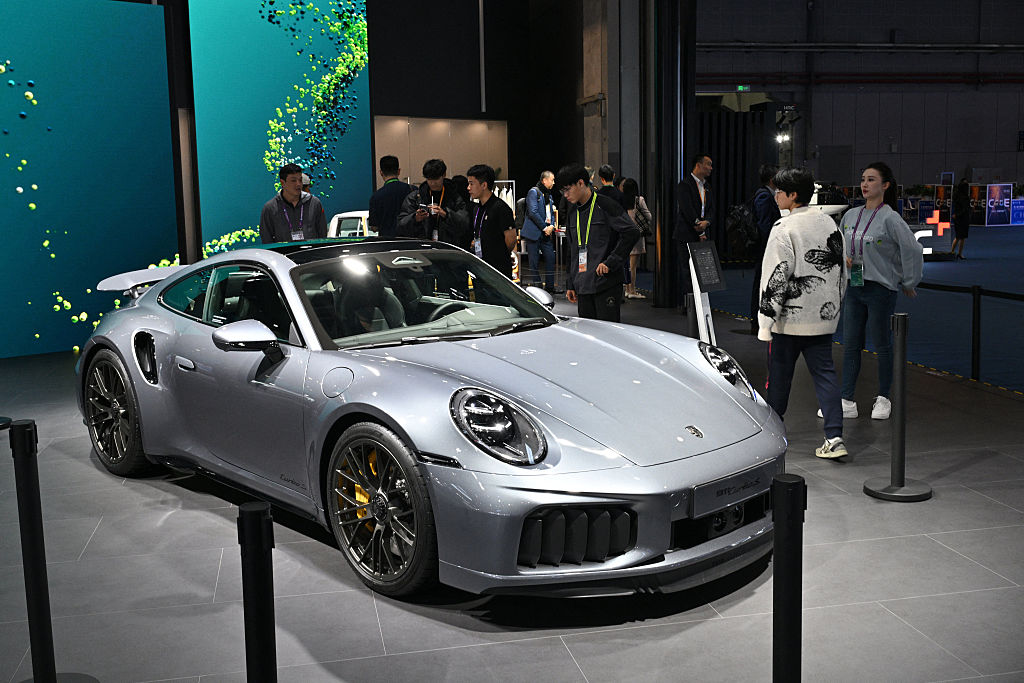
Luxury car sales of German brands continue to decline in the Chinese market, with Porsche’s annual deliveries in China decreasing by over half in the past four years, and dropping a further 32% in the first half of this year. Mercedes-Benz, BMW, and Audi collectively sold around 200,000 fewer vehicles in the first half of this year compared to the same period last year.
According to a report by “China News Service” on September 12, Porsche’s deliveries in China decreased from 95,671 vehicles in 2021 to 41,938 vehicles in 2025, a 56% decrease over four years. In the first half of this year, they delivered only 14,501 vehicles, a 32% drop year-on-year.
Porsche’s dealers in China have decreased from about 150 in 2024 to 114 by the end of 2025, with plans to further reduce them to around 80 by the end of this year. The company has also been gradually ceasing operations of about 200 self-built charging stations in China since March of this year.
Previous reports from Reuters indicated that Porsche plans to cut 5,000 more jobs by 2035; together with previous plans, the total job cuts amount to around 9,000 employees, approximately one-fifth of the total workforce by the end of 2024. The company faces challenges such as weak demand, declining sales in China, and setbacks in their electric vehicle strategy.
In the first half of this year, BMW, Mercedes-Benz, and Audi collectively delivered around 704,000 vehicles in China, a decrease of around 200,000 vehicles compared to the same period last year. Among them, Mercedes-Benz sales dropped by 28%, while BMW and Audi both saw a decrease of about 20%.
Mercedes-Benz’s second-quarter data revealed a 2% sales growth in markets outside of China but a 30% decline in the Chinese market.
While the sales of these three companies decline in China, the luxury car market in the mainland is also consistently shrinking.
Market data released by the China Automobile Dealers Association in August showed that luxury car retail sales in the mainland were around 150,000 vehicles, a 26% decrease year-on-year; wholesale and production volumes both decreased by 24% year-on-year. Retail sales of conventional gasoline-powered passenger cars decreased by 40%, with pure gasoline cars dropping by 45%.
Claire Yuan, the director of China automotive enterprise ratings at S&P Global Ratings, previously told the Associated Press that the slowdown in China’s economic growth is a significant reason for the weakening demand for high-end vehicles.
Gong Min, an automotive analyst at UBS, stated that the long-term stagnation in the real estate market has weakened consumers’ willingness to make significant purchases, and affluent individuals are increasingly reluctant to openly display their wealth.
In addition to weakening demand, traditional luxury car brands are also facing pressure in their transition to new energy vehicles. Zhang Xiang, an industry expert, told “China News Service” that some new energy models introduced by traditional luxury car brands are still modified from gasoline car platforms. He believes that these types of models lack competitiveness in terms of power performance, pricing, and intelligent driving functions.
Based on quotes from Beijing dealerships, the full price of a top-tier Audi A3 is around 160,000 RMB, a Mercedes-Benz C260L is approximately 260,000 RMB, and a BMW 5 Series installment base car price is around 280,000 RMB.
A report released in June by the China Automobile Dealers Association and the automotive data service platform “Jingzhengu” showed that the three-year residual value of Porsche has dropped to 58.5%, down from 68.8% a year ago, while the resale value of second-hand Mercedes-Benz, BMW, and Audi vehicles also continues to decline.
Some netizens on Weibo describe the luxury car market as “if prices don’t drop, no one buys; if they drop, people are afraid to buy.” Another netizen mentioned that continuous price reductions on new cars result in faster depreciation for existing owners and potential buyers continue to adopt a wait-and-see approach.