
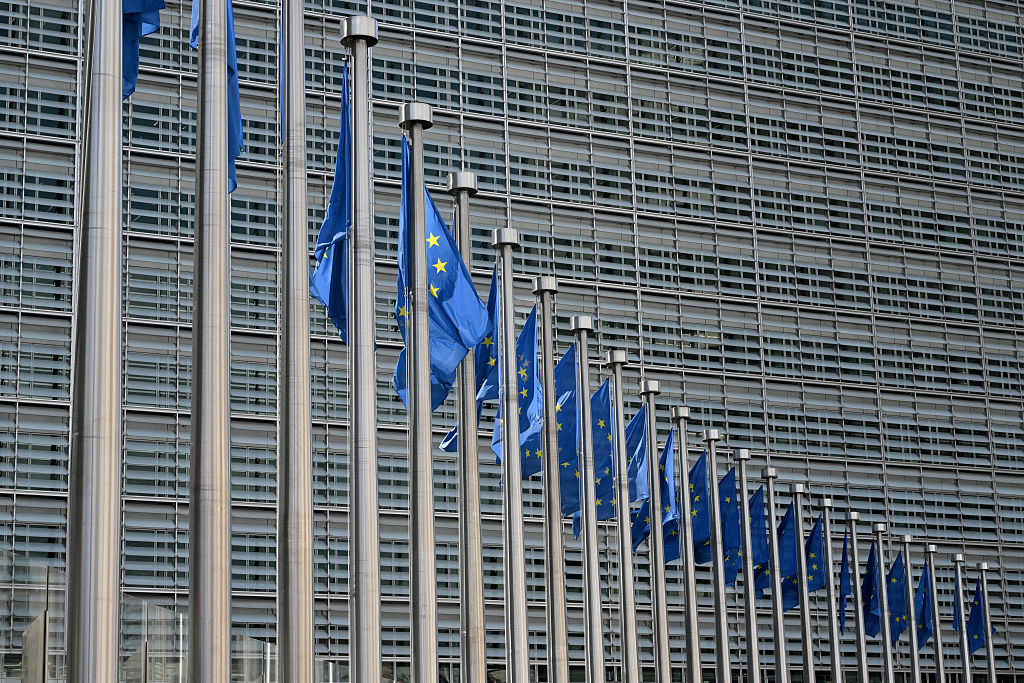
On September 9, the European Commission released a new memorandum on public procurement rules, stating that in the current environment of heightened supply chain vulnerability, public procurement has become a “strategically important issue.” The proposed unified digital platform for public tenders across the EU aims to further integrate and simplify existing procurement systems, considering various factors including price, quality, and safety.
The European Commission published a memorandum explaining the EU “Public Procurement Law” proposal on Wednesday, September 9th. The memorandum highlights that in the current geopolitical environment, global competition is intensifying, supply chain vulnerabilities are increasing, and economic dependencies could be exploited by other countries or forces. Therefore, how public procurement agencies utilize public funds has become a matter of strategic importance.
The European Commission stated that the proposal aims to strengthen the Single Market, enhance security and supply chain resilience, as a response to concerns raised by former European Central Bank President Mario Draghi and former Italian Prime Minister Enrico Letta regarding the industrial decline in Europe.
Public procurement in the EU accounts for about 15% of the EU’s Gross Domestic Product (GDP), amounting to approximately 2.5 trillion euros (2.91 trillion US dollars) in 2025. Critics, including Draghi and Letta, argue that the EU has not effectively leveraged public procurement to fully exploit the advantages of its overall market size.
Under the current system, businesses face challenges dealing with a variety of forms, languages, and redundant procedures used at different levels across the EU’s 27 member states, from federal to central and local authorities, making cross-border bidding quite complex.
The proposed new regulations will replace the EU’s current three public procurement directives and reduce the discretion of member states in implementing related rules. The new rules will apply to all sectors except defense.
Under the new regulations, government agencies must decide on the winning bidder based on the “best price-quality ratio,” in which quality standards must account for at least 30% of the total score; for labor-intensive contracts, quality standards must account for at least 50%. This makes it more challenging for government agencies to solely base their evaluations on cost. Many Chinese companies offer low-priced goods, some of which may be subsidized by the government. This modification can reduce the impact of low-cost dumping on the EU market.
The new regulations also require assessors to consider risks related to critical infrastructure, cybersecurity, supply chain disruptions, strategic dependencies, and foreign influences in certain situations.
The proposed measures do not mandate the full implementation of a “Buy European” policy, but will allow European government agencies to exclude bidders with less than 50% European content calculated by total value in public contract bids; they can restrict only EU operators to participate in bids and give priority to EU companies in strategic industries. However, companies from countries that have trade agreements with the EU and provide reciprocal treatment in public procurement will not be excluded.
Stéphane Séjourné, Vice President of the European Commission, stated, “This is a thorough simplification because we are moving from three directives to a single regulation.”
He further commented, “We believe that part of the response to European economic policy and the transformation of the European economic model also comes from the internal market and its strengthening… Thus, at this moment, it is a strategic lever. Especially China, India, the United States, and all major powers are now using this lever to drive their respective industrial and economic strategies.”
In 2024, Draghi completed a report titled “The Future of European Competitiveness” commissioned by the European Commission. The report, referred to as the “Draghi Report,” is one of the main driving factors behind the new proposal issued by the EU Commission.
The “Draghi Report” states that the previous global landscape is disappearing, and the foundation on which the EU exists is being undermined.
“The era of rapid global trade growth seems to be over, and European companies face more intense competition from abroad and reduced access to overseas market channels. Europe suddenly lost its most important energy supplier, Russia. Meanwhile, geopolitical stability is diminishing, and our dependence has ultimately become a weakness.”
The “Draghi Report” also mentions that Europe has largely missed out on the productivity boost brought by the network-led digital revolution. In fact, the significant productivity gap between the EU and the US is largely due to the tech industry. The EU is relatively weak in advancing emerging technologies for future growth. Among the top 50 global tech companies, only four are European.
“However, Europe’s demand for growth is increasing. The EU is entering a period in modern history where growth is no longer supported by population growth. By 2040, the EU’s workforce is expected to decrease by nearly 2 million people annually. We will have to increasingly rely on productivity to drive growth.”
If the EU maintains its average productivity growth rate since 2015, it will only be enough to sustain the GDP until 2050 — by which time, the EU will face a range of new investment requirements that must be financed through higher economic growth.