
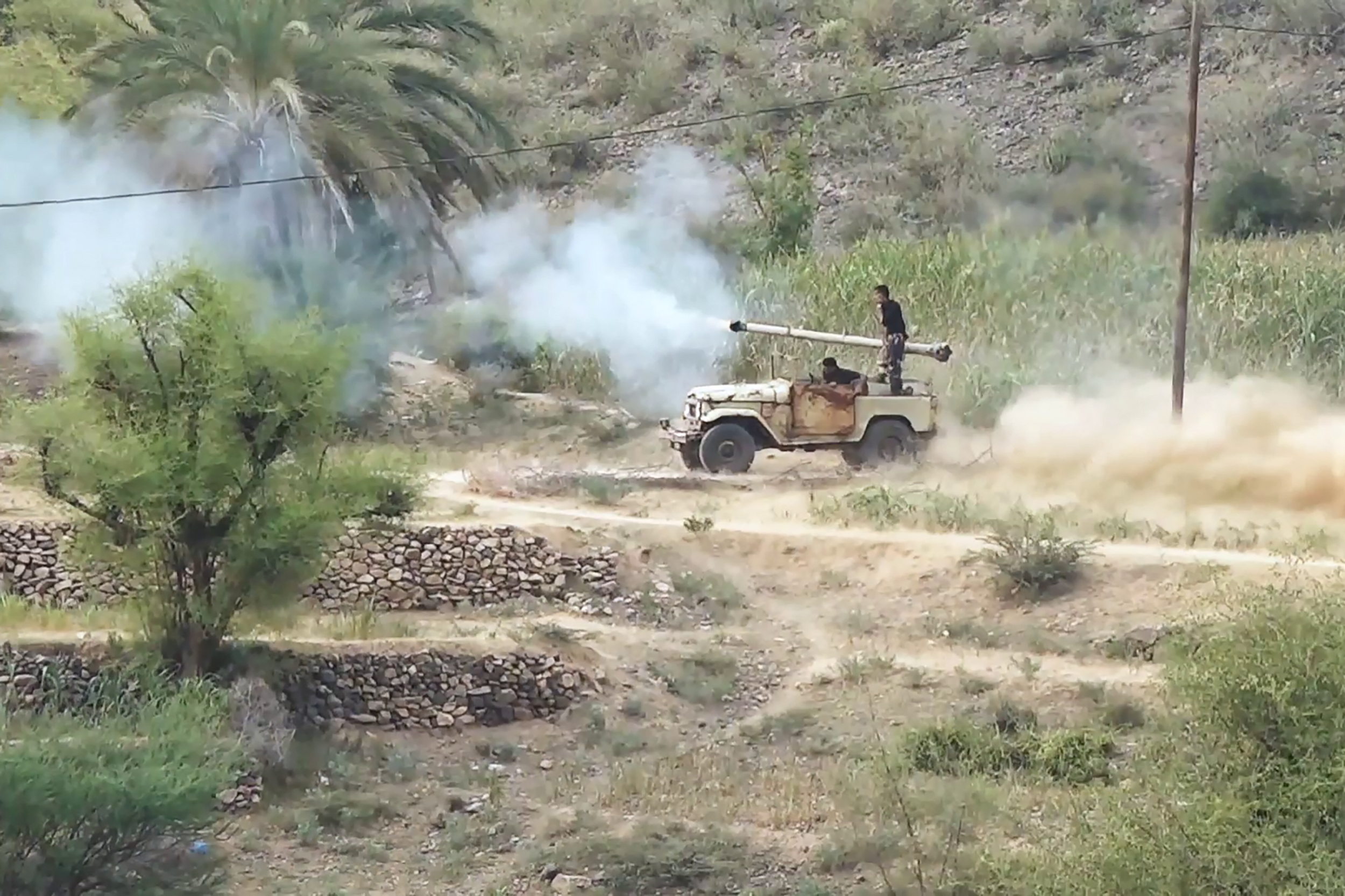
In recent times, the Houthi armed group in Yemen has escalated its attacks on Saudi Arabia, with the southern Saudi city of Khamis Mushait issuing emergency alerts four times within 24 hours. Sources have indicated that as the conflict intensifies, Pakistan has delivered a warning to Iran on behalf of Saudi Arabia, urging Tehran to restrain the Houthis to prevent further escalation of the crisis.
On Thursday, the Saudi Civil Defense Department announced shortly after the latest alert that the danger had been averted.
The Saudi-led coalition stated that the Houthi forces attacked an airbase in Khamis Mushait on Tuesday, as well as nearby oil infrastructure, resulting in at least 73 injuries in four southern Saudi cities.
According to Reuters, this is one of the largest-scale attacks by the Houthis on Saudi Arabia since the US-Iran conflict in February this year.
The coalition further mentioned that the Houthis continued their assaults on Saudi national assets and infrastructure on Wednesday.
On Wednesday, Reuters cited sources from Saudi Arabia, Pakistan, and Iran, reporting that after the intensified attacks by the Houthis, Pakistan had conveyed Saudi Arabia’s warning to Tehran, urging Iran to use its influence to restrain the Houthis and prevent the situation from spiraling out of control.
A senior Iranian official confirmed that Pakistan had conveyed the message to Tehran on Tuesday, while the Iranian side stated, “The Houthi armed group is not under Iranian control.”
However, two Iranian sources informed Reuters that Tehran had instructed the Houthis to attack Saudi Arabia last week, promising to provide more funding and weapons. They also mentioned that several Islamic Revolutionary Guard Corps commanders from Iran had visited Yemen to assist in coordinating the attacks.
Houthi military spokesperson Yahya Saree stated on Wednesday that Saudi warplanes had carried out 54 airstrikes in multiple provinces of Yemen in the past 12 hours, and he declared that these actions “will receive a response and will be punished.”
As the conflict escalates, Saudi Arabia, Pakistan, and Turkey are enhancing security coordination. A Pakistani source revealed that Saudi officials had met with high-ranking military representatives from Pakistan and Turkey in Riyadh to coordinate response measures.
Sources mentioned that the three countries agreed that their forces would not enter Yemen, and any military response would originate from within Saudi territory.
Pakistani Defense Minister Khawaja Asif stated on local television, “An assault on one country will be considered an assault on three countries.”
“There is no ambiguity or doubt about this,” he further added, “Invading Saudi Arabia would definitely trigger this agreement.”
However, Pakistani officials emphasized that their military role would be limited to defending Saudi territory. Another Pakistani source stated that a decision to participate in retaliatory attacks had not been made yet, and Pakistan could provide military, technological, ground, or aerial support within Saudi territory but would not engage in combat on foreign soil.
The fighting between Saudi Arabia and the Houthis has been intensifying over the past few months. The ceasefire mediated by the United Nations in 2022 had largely halted the longstanding conflict between the two sides, but the recent outbreak of hostilities has raised concerns that a broader regional conflict could reignite.
A regional diplomat told Reuters that Tehran’s attempts to threaten Gulf security were aimed at pressuring Washington to make concessions on the issue of blocking Iranian ports, but this could backfire and prompt Saudi Arabia, Pakistan, Turkey, and other countries aligned closely with the US to enhance security cooperation.