
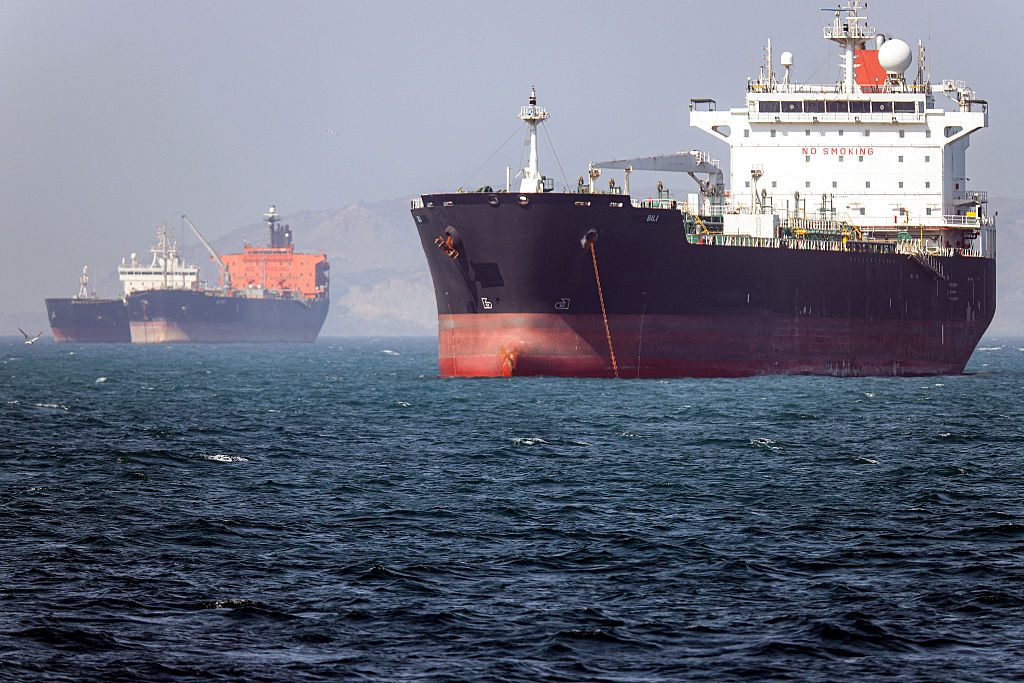
The ongoing tension in the Middle East continues to escalate, leading to growing concerns in the market over disrupted oil supplies. International oil prices on Tuesday (September 8) continued to rise, with Brent crude oil surpassing $97 per barrel.
As of Tuesday midnight Greenwich Mean Time, Brent crude oil futures rose by 34 cents to $97.34 per barrel, up by 0.35%; while U.S. West Texas Intermediate (WTI) crude oil rose by $1.15 to $92.63 per barrel, up by 1.26%. These quoted prices represent intraday levels and not the closing prices for the day.
Brent crude oil had already reached its highest level since July 24 during Monday’s trading session. Traders continue to factor in risk premiums into oil prices due to the tense situation around the Strait of Hormuz, a crucial global oil shipping lane that is currently restricted.
According to Reuters, Iran stated on Monday that energy infrastructure in the Gulf region, including U.S. oil and gas interests, is vulnerable to attacks. Iran warned of retaliation if the U.S. were to attack Iranian assets again. Diplomatic breakthroughs between the U.S. and Iran have not yet materialized.
The U.S. Central Command reported that U.S. forces struck three Iranian oil tankers last Saturday, one of which was located near Kharg Island, a major Iranian oil export hub. This strike occurred following attacks by Iran’s Islamic Revolutionary Guard Corps on U.S. warships in the region.
Analyst Daniel Hynes from ANZ Bank mentioned that the recent escalation of tensions increases the likelihood of a prolonged standoff between the U.S. and Iran, potentially leading to intermittent limited military actions.
Hynes predicts that oil supply in the Persian Gulf may continue to be restricted for the remainder of 2026, with a full recovery to pre-war shipping levels possibly not occurring until the end of the first quarter or early second quarter of 2027.
Goldman Sachs has revised its December 2026 price forecasts for Brent crude and WTI upward by $5 each to $85 and $80 per barrel, respectively; the 2027 forecasts are $80 and $75 per barrel. This forecast assumes that disruptions in Middle Eastern shipping will persist until 2027.
Financial services platform Marex analyst Ed Meir stated that as long as the conflict continues, oil prices are likely to remain elevated until the end of this year.