
**Protest Held Outside EU Headquarters in Brussels Urging Stronger Action Against Chinese Component Dumping**
On Monday, September 7th, the European Metal Association (EUROMETAL) held a protest outside the European Union headquarters in Brussels to pressure the EU to strengthen its resistance against China’s dumping of components. The association predicts that by the end of this year, due to the “colonization” of the European industry by Chinese companies, the manufacturing sector in the EU will lose 300,000 job opportunities.
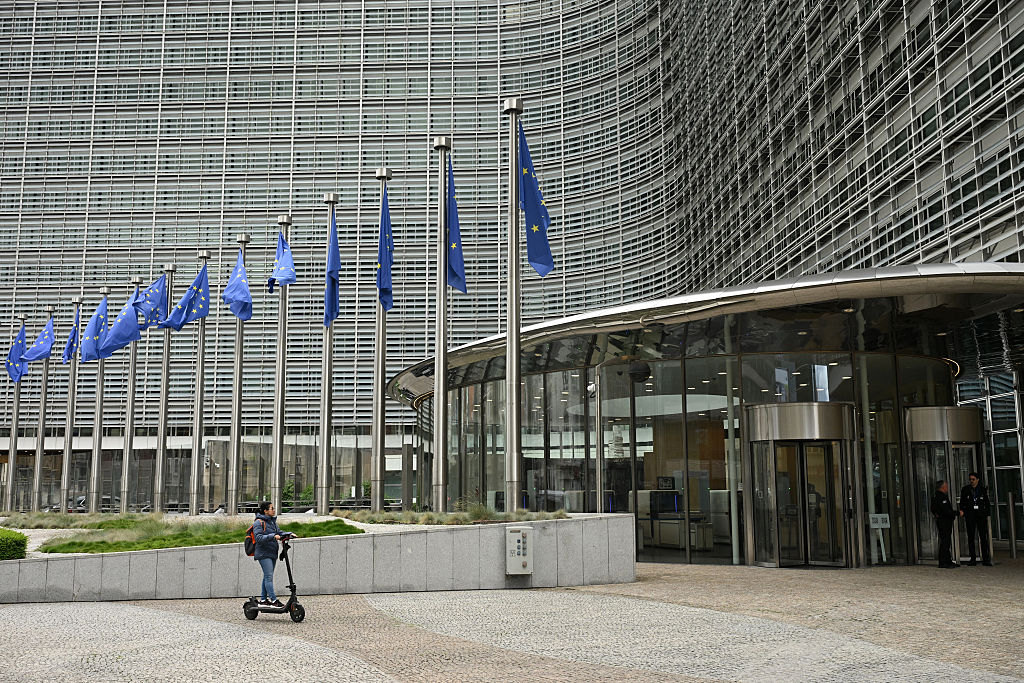
Representatives from the European Metals Industry Association (EUROMETAL), representing European steel distribution, derivative products, and manufacturing industries, staged a protest outside the EU headquarters in Brussels, Belgium on September 7th.
During the demonstration, the protesters brought ten symbolic coffins, placed them outside the EU building, with inscriptions such as “Rest in Peace! EU Competitiveness”, “Rest in Peace! European Manufacturing”, “Rest in Peace! Industrial Employment Opportunities”, “Rest in Peace! EU steel demand”, and “Rest in Peace! European Factories”, symbolizing the vulnerability of Europe’s industrial capacity, competitiveness, and job opportunities.
The association believes that European manufacturers face higher environmental and carbon emission costs in raw material inputs, while overseas competitors importing finished products into the European market can avoid these costs.
According to current EU policies, imports of steel are subject to carbon emission rules and trade measures, but these rules and measures do not apply to all products produced using this steel.
Chairman of the association, Alexander Julius, stated in a statement on the organization’s website, “We are not asking for subsidies or special treatment, but for fair competition. European manufacturers are investing to meet the highest global environmental and climate standards. At the same time, many imported finished products entering the European market do not have to bear the same obligations. This creates an unfair competitive environment, putting European factories, investments, and jobs at risk.”
This coffin-carrying pressure campaign comes as the latest round of EU-China trade negotiations nears its deadline. The EU and China will conclude negotiations on trade imbalances in October.
Currently, China’s trade surplus with the EU has reached a record-breaking €1 billion per day. Chinese-manufactured components not only evade carbon emission taxes and are dumped at low prices in Europe but are also aided by the undervaluation of the Chinese yuan, making it difficult for European companies to compete.
Recently, Volkswagen, a leading German automotive manufacturer, confirmed plans to lay off 100,000 employees domestically.
For the EU, this presents a challenging issue where they must find a balance between protecting European industry and not increasing costs for downstream customers.
In 2024, the EU imposed punitive tariffs of up to 35.3% on imported electric vehicles from China, in addition to the standard 10% import tariff, totaling up to 45.3% in tariffs. Starting from July 1st of this year, the EU increased tariffs on over-quota steel imports from 25% to 50%, while reducing tariff-free quotas by 47%.
However, “the problem now is that China can transform excess capacity into machinery parts, automotive components, battery materials, infrastructure equipment, and other downstream products, bypassing single item restrictions and continuing to impact the European manufacturing industry with low prices.” Professor Sun Guoxiang from the Department of International Affairs and Business at Nanhua University in Taiwan told Dajiyuan. Previous EU anti-dumping and anti-subsidy actions against China mainly targeted specific products such as steel, aluminum, and solar panels.
Julius is concerned that no matter how strong the EU’s political stance is, European companies will still purchase Chinese products if they have a price advantage.
American economist Huang Dawei analyzed that Chinese components are rapidly penetrating the entire European market with overwhelming cost advantages and vertical integration capabilities in the supply chain.
He noted that downstream manufacturing industries in Europe, such as automobiles and machinery, to maintain profitability for shareholders, “have no choice but to massively purchase cheap Chinese components, directly crushing the midstream and upstream basic manufacturing industries in Europe, leading to a gradual replacement of the traditional European supply chain” and posing a risk of “hollowing out” Europe’s industry.
The European Metal Association stated that unless Brussels stops Chinese component manufacturers from “economically colonizing” the European industry, the number of unemployed in the EU manufacturing sector will “sharply rise.”
An analysis by the European Commission in June predicted that due to high energy costs and global competition, potential unemployment could exceed one million, including the 100,000 job cuts confirmed last week by German automaker Volkswagen.
China denies all accusations from Europe. Chinese Foreign Ministry spokesperson Maoning stated that China is “closely monitoring” the EU’s moves and will take “necessary measures” to safeguard its own “legitimate rights and interests.”
“EU Today” quoted EU Trade Commissioner Maroš Šefčovič warning that if Beijing does not take concrete actions to balance trade before October, the EU may take stricter measures.
Sun Guoxiang believes that the strong protests from the European industrial sector demonstrate that “European society is shifting from economic dependence on China to alarm over the loss of control over their own industries.”
Huang Dawei mentioned that in its latest five-year plan, China explicitly seeks to “comprehensively control key product supply chains with high added value and core technology”, no longer satisfied with exporting low-value-added products, indicating that China’s current “core strategy” is to “ascend from being a supplier of raw materials to the leader of the value chain”, hence the European industry refers to it as “economic colonization.”
Sun Guoxiang said, “China (the Chinese Communist Party) is not just exporting goods but is exporting a complete industry model supported by state capital subsidies, low-interest financing, and competition among local governments.”
Julius also called for ensuring that the same principles apply to the entire manufacturing value chain if Europe wants to retain manufacturing, innovation, and high-skilled jobs. Keeping manufacturing in Europe is crucial for maintaining European prosperity, resilience, and strategic autonomy.
Before the end of the protest on September 7th, the truck fleet of the European Metal Industry Association honked simultaneously, symbolically raising awareness about the future of European manufacturing among people. Following this, the fleet submitted joint demands to the EU Commission representatives.
Huang stated that the EU’s countermeasures may include closing tariff loopholes; imposing high tariffs on imported parts that have not borne equivalent carbon emission costs, to reduce the possibility of Chinese companies dumping products; strengthening “European manufacturing”; accelerating supply chain derisking to reduce overreliance on China; and forming a “joint resistance” mechanism with the United States and other democratic countries against China’s excess capacity and non-market economic behavior.
Sun warned that if the EU, the US, Japan, and other major industrialized countries simultaneously tighten restrictions, China’s excess capacity could be circumvented through processing in third countries, re-exporting, or investing in new factories to evade these barriers.
“This could turn trade frictions between China and the US or EU into a global conflict over production capacity, creating a new scenario of ‘China exporting excess, while other countries defend against imports’,” he said.
“When Europe and the US consider this not only as a price competition but as a structural threat to domestic manufacturing, employment, and supply chain security, trade barriers will shift from individual friction to institutional containment,” Sun said. “This will reflect that the perception of Europe and the US towards China (the CCP) has escalated from trade imbalances to institutional competition.”