
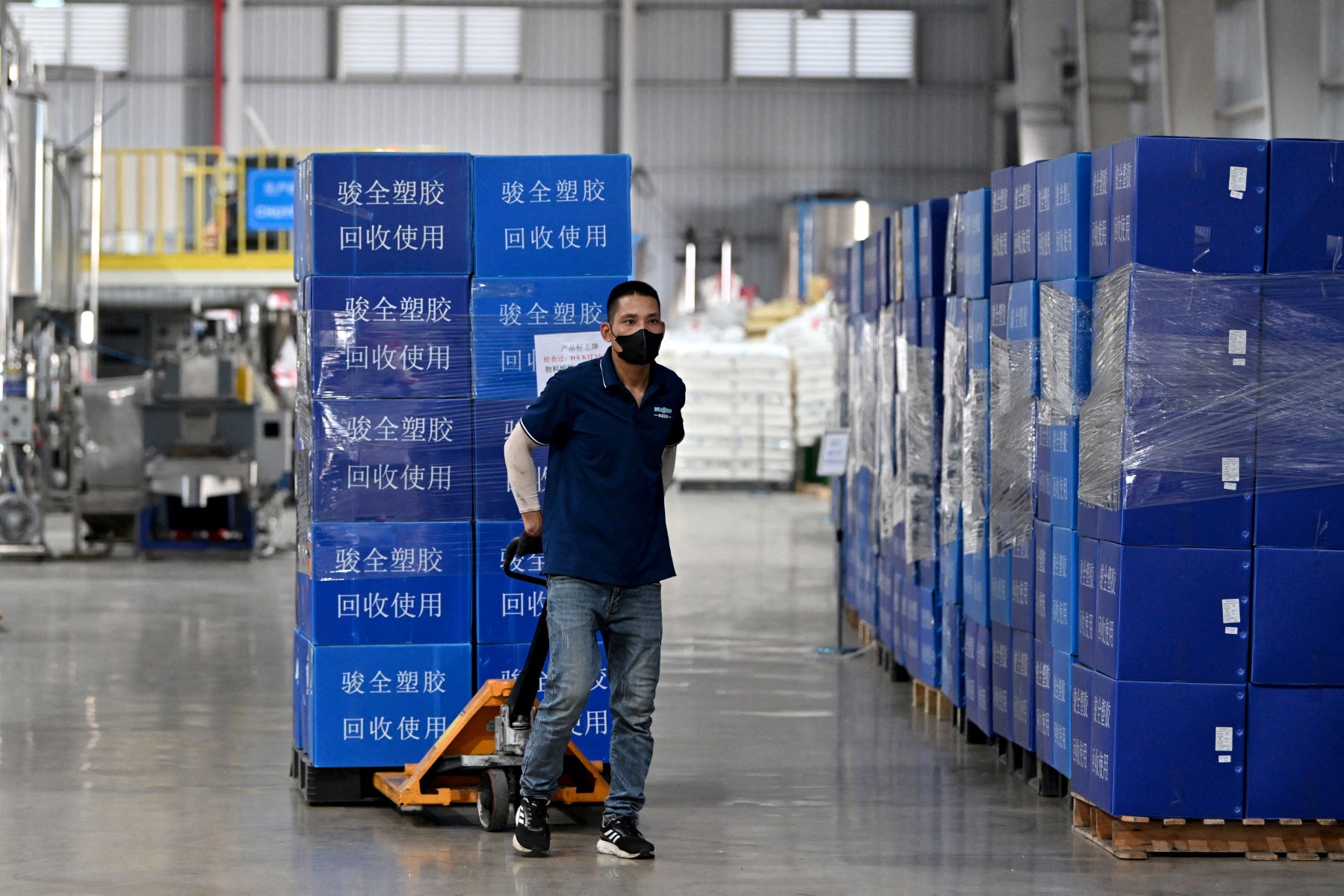
The latest news shows that the U.S. Customs has recently conducted spot checks on some factories in Vietnam with connections to China, focusing on examining the source of raw materials, production processes, the value-added ratio of exported products, and intellectual property rights. This comes as the U.S.-Vietnam trade negotiations enter a critical stage, with the market closely monitoring whether the developments will affect future tariff arrangements.
According to reports from media outlets like Bloomberg, the U.S. Customs and Border Protection (CBP) have conducted surprise inspections at factories in Vietnam linked to Chinese enterprises, reviewing company documents, the source of raw materials, and the production processes to verify whether the products were substantially processed in Vietnam before export to the U.S., meeting sufficient value-added criteria. They are also investigating potential infringements on software intellectual property rights.
Insiders have stated that so far, the inspections have not found sufficient evidence to prove widespread irregularities of Chinese goods being transshipped through Vietnam to the U.S. However, as the investigation progresses, there is external concern about whether the U.S. will adjust relevant trade measures based on the findings. The U.S. Customs and Border Protection declined to comment on the matter.
In recent months, both the U.S. and Vietnam have been advancing the trade framework agreement reached last October, aiming to finalize the agreement. However, the negotiations still face significant differences, with issues such as preventing transshipment through third countries, reducing non-tariff barriers, strengthening intellectual property protection, and cooperation on economic security being important concerns for the U.S.
U.S. Trade Representative Jamieson Greer recently expressed concerns about situations where some products are only relabeled as “Made in Vietnam” before being exported to the U.S., or where goods are transshipped with limited processing. The U.S. believes these practices may involve circumventing trade measures, hence the need to enhance enforcement and scrutiny.
Public records show that the U.S. is currently conducting investigations on Vietnam’s intellectual property protection and structural manufacturing capacity under Section 301 of the 1974 Trade Act, while continuing to strengthen enforcement and scrutiny of Chinese goods being re-routed through Vietnam to evade tariffs.
In response to U.S. concerns, Vietnam has been strengthening enforcement measures in recent years, amending the Intellectual Property Law in 2022 and progressively enhancing supporting regulations. Vietnam has also requested e-commerce platforms like Shopee, Lazada, and TikTok Shop to increase efforts in removing counterfeit and infringing products, cooperate with enforcement agencies in investigations, and expand enforcement from physical markets to cross-border e-commerce domains.
Furthermore, Vietnam has established an interdepartmental enforcement mechanism involving the Ministry of Science and Technology, market regulatory authorities, police, and customs to crack down on intellectual property infringement cases, intensify administrative penalties, and criminal prosecution.
A report submitted to the Office of the U.S. Trade Representative (USTR) by Vietnam shows that from 2021 to 2025, competent authorities handled nearly 20,000 intellectual property infringement cases. Additionally, Vietnam recently announced seizing around 50,000 pairs of counterfeit Nike shoes and other imitation products to showcase the enforcement results in combating infringement.
In recent years, as global companies adjust their supply chains, Vietnam has become a significant manufacturing hub for many multinational corporations. Nike produces over half of its footwear products in Vietnam, and Apple has shifted production of products like AirPods and laptops to Vietnam.
The U.S. government continues to monitor bilateral trade imbalances. According to the latest official data released by the U.S. Department of Commerce and the U.S. Census Bureau, in May 2026, the U.S. had a trade deficit of $20.6 billion with Vietnam, surpassing deficits with Taiwan and Mexico as the largest source of trade imbalance in goods for that month.
Moreover, according to Reuters citing official Vietnamese statistics, in the first half of this year, Vietnam’s trade surplus with the U.S. reached approximately $75.3 billion, a 21% year-on-year increase, with the U.S. remaining Vietnam’s largest export market.