
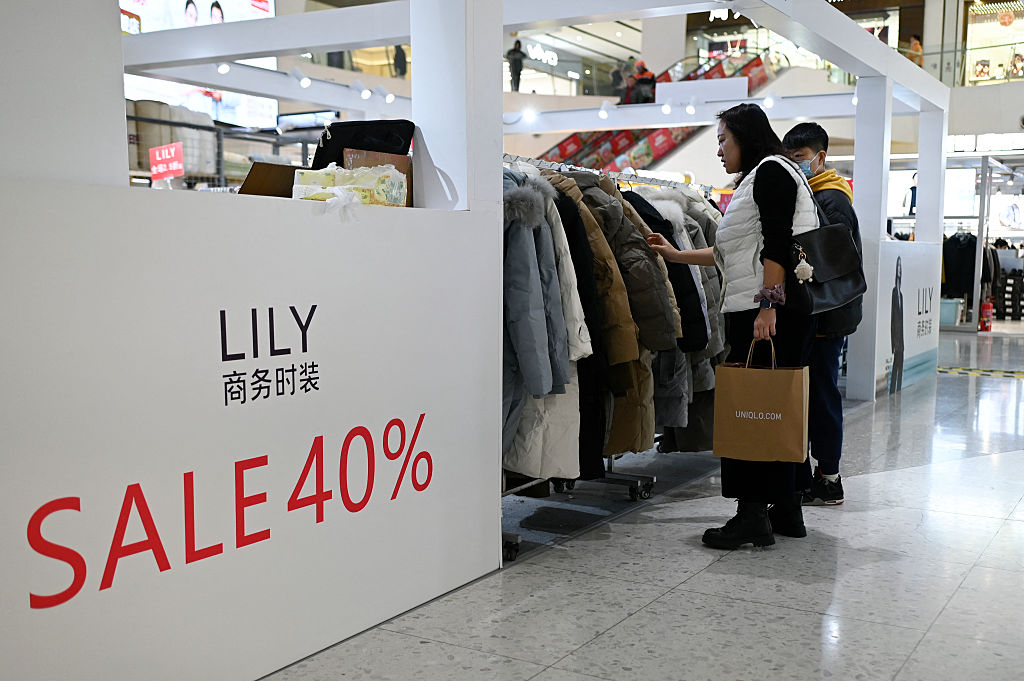
Continued Pressure on Online Women’s Clothing Businesses on the Mainland
Since June, multiple online women’s clothing stores with hundreds of thousands to millions of followers have been closing down, some of them having operated for over a decade. Retailers claim that high return rates, advertising costs, and inventory pressure continue to squeeze profits.
According to a report by the “Blue Whale News” on July 23rd, by late June, the Taobao store “Ji Gu Ji Gu Jia Plus Size Women’s Clothing” which had been in operation for over ten years announced its closure. The store had around 4.67 million followers and at one point achieved annual sales of 2 million pieces, with most items priced between 50 to 100 Chinese Yuan.
One insider mentioned that the store was profitable in 2025 but turned into a loss in 2026, with an increasing return rate being one of the reasons.
Recently closed stores include studioscout, heydress, 2th desire, and “Renyi Lite Mode” among others. According to “Blue Whale News,” over the past two months, over ten different scale women’s clothing online stores have announced closure, with some operating for over a decade.
An industry expert stated that a few years ago, the return rate for online women’s clothing stores was around 50%, but now some stores have reached 70% to 80%.
After items are returned, retailers may also incur costs for logistics, packaging, labor, and discounted merchandise. Clothes being repeatedly returned can lead to issues like damage, deformation, or unsellable conditions.
Another cost comes from “advertising spending”, where retailers pay for exposure on live streams, short videos, or product pages. Some practitioners mentioned that the advertising costs in some women’s clothing live streams could make up about 20% of the displayed transaction amount on the platform, but paid promotions might not necessarily translate to corresponding sales.
An estimate from a medium-sized women’s clothing retailer showed that in a short video live streaming model, if the annual sales target is 100 million Chinese Yuan, advertising costs could exceed 30 million Yuan. Combined with influencer commissions and other marketing expenses, related costs could be close to half of the transaction amount. If the return rate reaches 70%, out of the 100 million Yuan platform transaction amount, only around 30 million Yuan effective sales may remain, excluding costs for logistics, warehousing, and damaged goods.
According to Sina Finance report, some consumers have raised concerns about some online stores where promotional images are heavily edited, leading to noticeable differences in item design, color, and fabric upon receipt. Some low-priced women’s clothing has also shown issues like poor workmanship, easy deformation, or damages.
Industry expert Cheng Weixiong from the footwear and clothing industry highlighted the prevalent problems of copying, trend-following, and homogeneity in online women’s clothing. Intense price competition has led some upstream factories to cut costs on materials and production, potentially lowering quality which in turn could further increase return rates and inventory pressures.
Some operators attribute a portion of returns to consumers trying on items or purchasing multiple sizes simultaneously. There are differing views on the causes of high return rates between buyers and sellers, leading some owners of closed online stores to shift focus to offline physical stores.
As online women’s clothing stores continue to shutter, revenues, profits, and investments of mainland clothing companies are on the decline.
Quoting the China Garment Association and the National Bureau of Statistics of the CCP, in the first five months of 2026, the operating income of mainland clothing enterprises above the designated scale was 393.296 billion Yuan, a year-on-year decrease of 3.75%; total profits were 10.277 billion Yuan, down by 11.41%; and fixed asset investment in the clothing industry decreased by 10.3%.
Overall, consumption market growth remains sluggish. According to the National Bureau of Statistics of the CCP, in the first half of 2026, the total retail sales of consumer goods in mainland China increased by 1.3% year-on-year, with retail sales of commodities growing by 1.1%, but retail sales of units above the designated size decreased by 0.8%.