
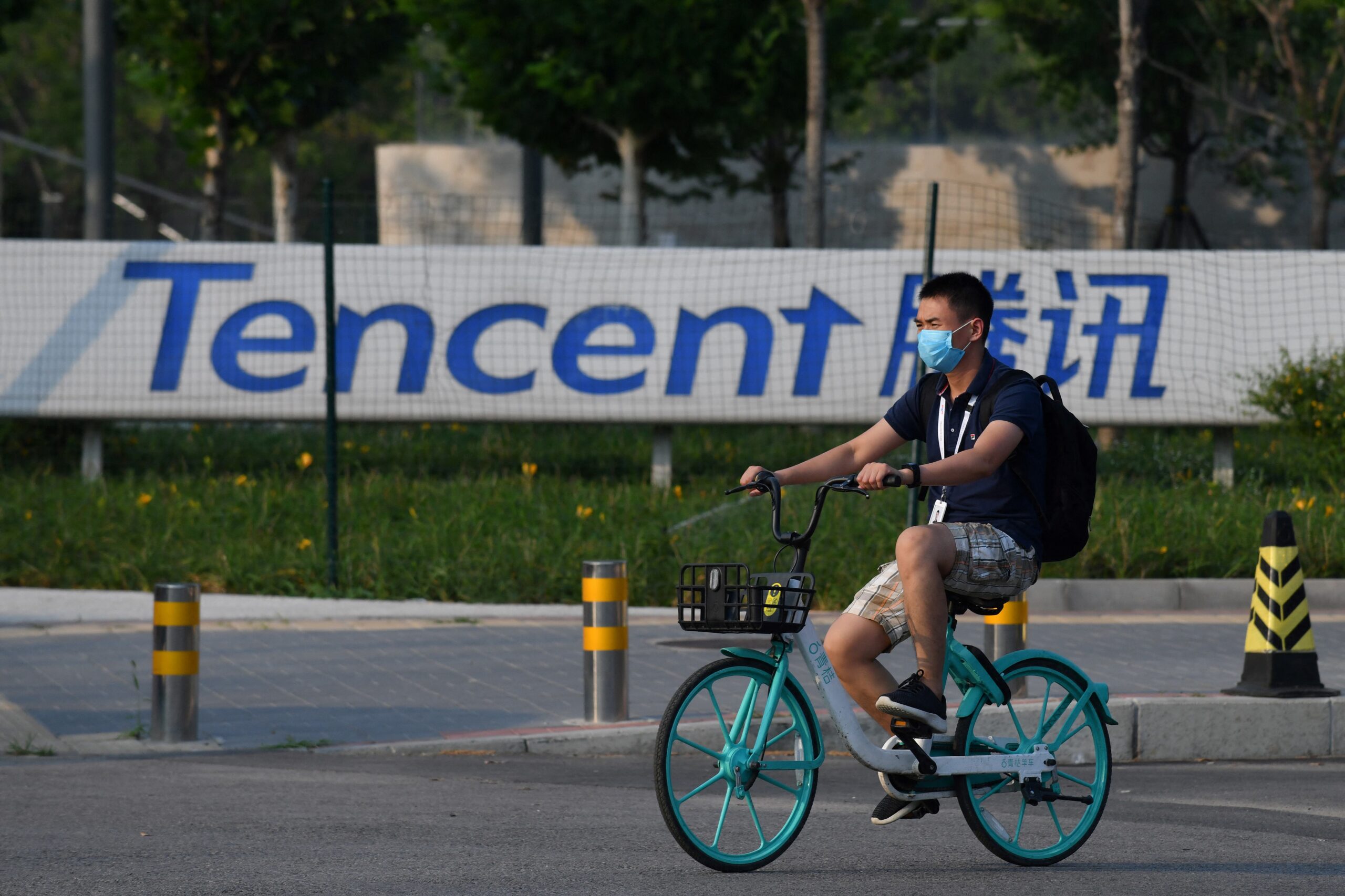
In a recent development that has sparked a controversy over salary confidentiality, a screenshot of Tencent’s year-end bonus with an internal traceable watermark circulated on the internet. Tencent issued an internal announcement regarding the incident, stating that Ye, a project team leader of WeChat Business Group (WXG), was dismissed for leaking sensitive company information and has been blacklisted as “never to be rehired.”
According to an official Weibo post by Shaanxi White Deer Video, Tencent’s anti-fraud investigation department received a tip-off about Ye’s involvement in leaking sensitive company information within the WXG project team.
Upon investigation, it was revealed that during Ye’s tenure, he had shared company-sensitive information with external parties, leading to the circulation of such information on external platforms, causing severe adverse effects both internally and externally for the company.
Tencent deemed Ye’s actions as a violation of the third clause of the “Tencent High Voltage Line” regarding “violations of information security and leakage of confidential information,” which includes “leaking or inquiring about salary information” and “deliberate or improper operations (including but not limited to improper configuration, uploading to external sharing spaces) resulting in the leakage of sensitive internal information.” The company decided to terminate his employment and blacklist him from future employment opportunities.
Furthermore, Tencent stated that Ye violated the relevant regulations of the “Management Cadre Violation Punishment Measures,” and the company will separately announce the handling results of his violation of management cadre rules.
Previously, a widely circulated screenshot of Tencent employee annual income displayed that Ye’s year-end incentive consisted of cash and stock parts, totaling nearly 3.2 million yuan, with around 820,000 yuan in cash bonuses and approximately 2.35 million yuan in stock incentives.
Following this, netizens discovered that the screenshot contained an internal traceable watermark of Tencent, which led to the salary confidentiality dispute. After the controversy escalated, Ye’s internal meeting schedules were swiftly cleared. Speculations within the industry at the time suggested that he might have triggered a company investigation due to leaking internal information.
However, Tencent’s internal announcement this time did not explicitly state whether the specific content leaked by Ye is the same as the previously circulated year-end bonus screenshot on the internet.
Public records indicate that Ye had received Tencent’s highest performance rating, “Outstanding,” twice in 2025, which was one of the significant reasons for his substantial year-end incentive.
It is worth noting that Tencent’s current performance evaluation is divided into three categories: Outstanding, Good, and Underperform. “Outstanding” corresponds to the previous 4 to 5-star rating, usually granted to only the top 10% to 20% of outstanding employees in the team. Employees with this rating typically receive a year-end bonus equivalent to 6 months’ salary or even higher.