
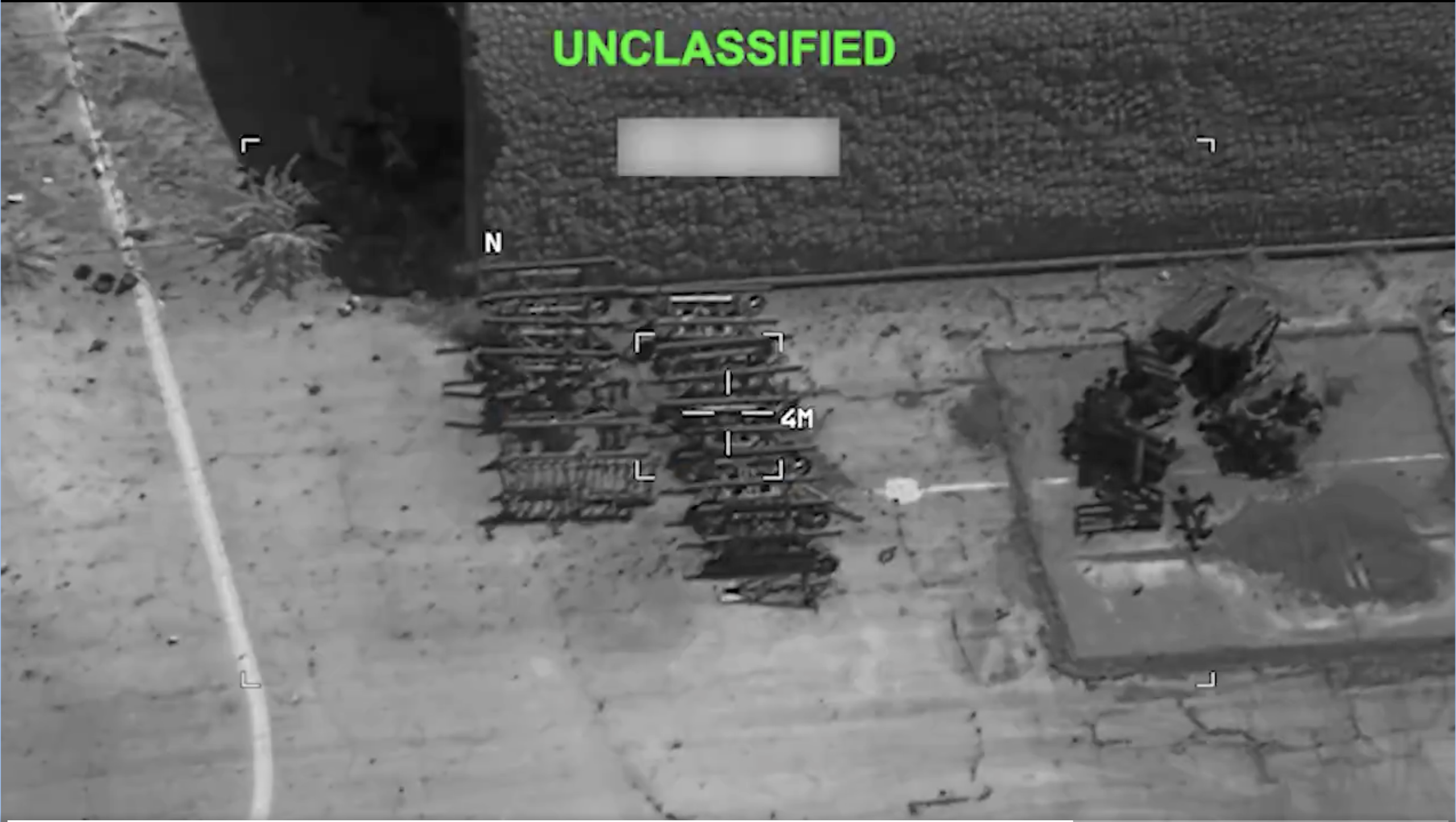
The United States Central Command (CENTCOM) completed its latest round of military operations against Iran on Tuesday (July 21st) night, marking the 11th consecutive night of strikes by the U.S. military on Iran.
Meanwhile, U.S. Secretary of State Marco Rubio, speaking in Manila, Philippines, expressed that despite the ongoing military operations, the United States remains willing to negotiate to end the Iran crisis. However, Tehran is currently not taking negotiations seriously.
According to a statement from the Central Command, at 8:15 p.m. Eastern Time on Tuesday night, the U.S. military successfully completed the 11th consecutive night of strikes on Iran.
The operation lasted approximately 75 minutes, targeting Iran’s military operations centers, maritime combat capabilities, aircraft hangars, drone storage facilities, and military logistical infrastructure.
The U.S. stated that this move is aimed at further weakening Iran’s ability to threaten commercial shipping in the Strait of Hormuz. According to U.S. data, Iran has attacked more than 30 commercial vessels passing through the strait over the past three months.
Despite ongoing security threats, the Strait of Hormuz remains open for commercial shipping. Since early May, the U.S. military has assisted around 900 commercial vessels, facilitating the passage of a total of 450 million barrels of crude oil through the strait.
During the ASEAN Foreign Ministers’ Meeting, Rubio stated that Washington “remains committed to diplomacy,” but he questioned whether Tehran is equally willing to negotiate.
Rubio said: “The issue we currently face is that they’re not taking negotiations seriously. If they are serious, we are serious. If they are not, then we will take necessary measures to protect our interests and those of our allies.”
He also warned that allowing Iran to control the Strait of Hormuz would set a dangerous precedent globally and could have implications for regions with international waterways and territorial disputes, such as Southeast Asia.
“If we set a precedent in the Middle East where a sovereign nation can unilaterally control an international waterway, charge tolls, and if you don’t pay, they blow up your vessels, then we have created a very dangerous precedent. This situation could be replicated in other parts of the world, including this region (Southeast Asia),” Rubio said.
While a diplomatic breakthrough has not been achieved yet, related mediation efforts are ongoing. A senior Iranian official stated that Tehran has received a 10-day ceasefire proposal from mediators, aimed at salvaging the temporary ceasefire agreement signed between the U.S. and Iran in June this year.
Iran’s Interior Minister Eskandar Momeni has also visited mediation country Pakistan, seeking continued assistance in the mediation process.
As the conflict continues, the shipping risks in the two major global energy routes—the Strait of Hormuz and the Bab el Mandeb Strait—remain high.
Shipping data shows that on Tuesday, three vessels carrying bulk commodities passed through the Strait of Hormuz, down from four the previous day; no Very Large Crude Carriers (VLCCs) or Liquefied Natural Gas (LNG) carriers were observed that day.
In the Red Sea, three tankers carrying Saudi Arabian crude oil, originally bound for China and India, altered course towards the Suez Canal on Tuesday after threats from Houthi armed forces allied with Iran, avoiding the Yemeni coastline at the southern end of the Red Sea.
The Houthi armed forces declared a naval blockade against Saudi Arabia on Monday, warning shipping companies not to load or unload goods at Saudi ports, or they might become targets of attack.
Due to the risks of shipping disruptions, international oil prices continue to rise. Brent crude oil prices maintained above $91 per barrel during Wednesday’s Asian trading session, and U.S. gasoline prices have also risen above $4 per gallon again.
The U.S. military confirmed on Wednesday that Staff Sergeant Angel S. Rampersad, 28, who went missing after the attack on the Jordanian base, is believed to have perished, bringing the total number of U.S. military casualties to 18 since the conflict began.
An Iranian health official stated that recent U.S. strikes on Iran have resulted in 50 civilian deaths and 500 injuries.