
On August 25, 2026, a three-year criminal sentence sent shockwaves through the global Chinese community. The subsequent broadening of the “border control” regulations for entry and exit on September 15 cast a shadow over the homecoming journey of overseas Chinese.
Two years ago, when American-based artist Gao Sheng returned to his homeland, little did he know that he would face a two-year trial followed by three years behind bars. The reason for his arrest was simply a satirical artwork he created overseas years ago. His wife and their American-born son were also hit with “exit bans” for “collaboration in investigations”, trapping them in China to this day.
This is not an isolated case but the prelude to a systemic tsunami unleashed by Beijing: those entering China, especially ethnic Chinese, may be detained or “convicted”; it may not be for what you are doing now but for past words or online postings; and it may not be just you who gets detained, even having American citizenship is no guarantee.
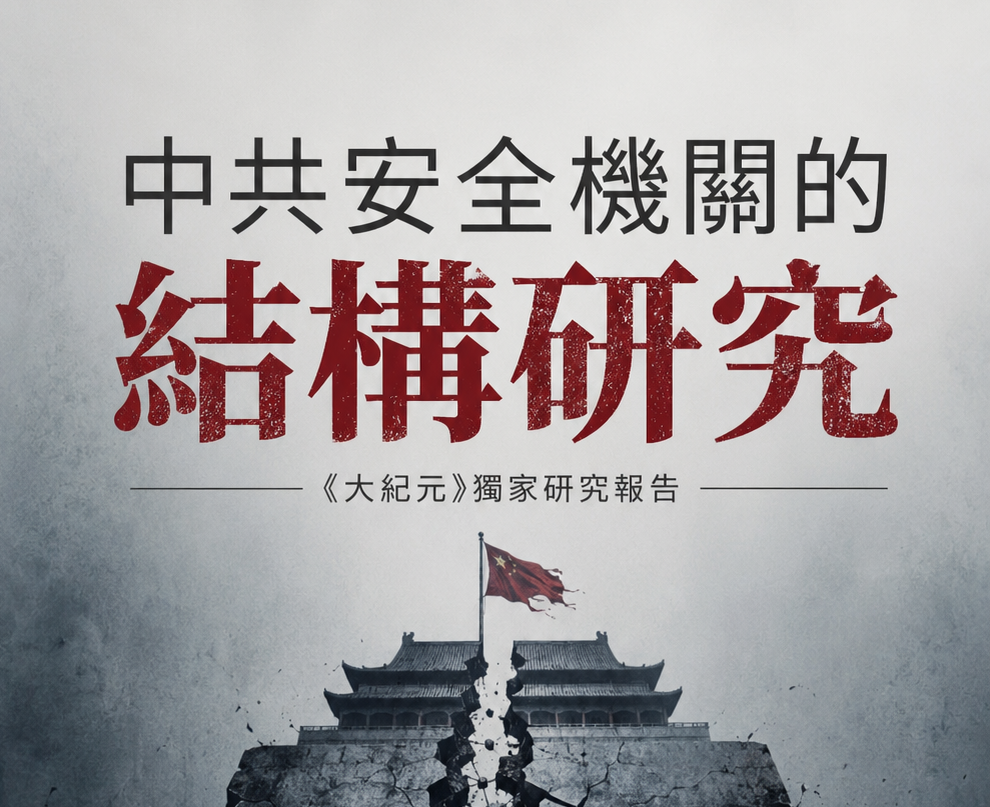
Exclusive research reports obtained and analyzed by Epoch Times, titled “Walls Have Ears: A Study on the CCP’s Special Situation System” and “Structure Analysis of the CCP’s Security Agencies”, dissect the “three traps” lurking behind the facade of “homecoming visits” for global Chinese elites.
The revised “Regulations of the State Council on Entry and Exit Administration” by the Chinese State Council officially came into effect on September 15, 2026. Sections Four and Six of the regulations are akin to blank administrative checks handed to grassroots security agencies: Section Four stipulates that Chinese citizens deemed to engage in activities “endangering national security and interests” abroad can be prohibited from exiting the country for six months to three years upon return; Section Six authorizes not informing the parties involved in cases related to national security or criminal investigations.
When these new regulations overlap with the blood-red judgment in Gao Sheng’s case, a harsh reality looms before all overseas Chinese: after September 15, which overseas Chinese may find themselves trapped in the quagmire of “no return” due to their foreign speech, work, or social relationships upon returning home.
Since 2023, the U.S. State Department has been issuing ongoing travel advisories warning that Beijing authorities may consider public information, research materials, or statistics as state secrets, and may detain or expel individuals for criticizing the CCP government via private electronic messages.
“Your naturalization certificate proves you are a foreign citizen, but it does not guarantee recognition by the CCP government.”
In the ingrained notions of many overseas Chinese, having a foreign passport or permanent residency (green card) equates to a protective talisman. However, the exclusive report by Epoch Times bluntly points out that when the CCP deals with political, social, and national security affairs, “politics” always trumps “law”.
The Party-state system accurately divides “overseas Chinese” into three categories and carries out asymmetric identity and administrative hijacking:
The fourth section of the new regulations hangs like a sword over this group. Every overseas gathering you attend, every comment you make, and even reposts in private groups may become reasons for being restricted from exiting the country upon return.
This is the most easily overlooked legal blind spot.
In fact, according to China’s own Nationality Law, Article 9, Chinese citizens who settle abroad, voluntarily acquire or obtain foreign nationality, automatically lose Chinese citizenship. But the CCP regulations leave two loopholes here: “settle abroad” and “revoke citizenship”.
Many people do not formally cancel their Chinese household registration or ID after naturalization, and may even obtain a “Chinese Travel Document” or “Home Return Permit” for entry convenience. Under the cross-departmental data matching of the CCP’s “interface regime”, as long as you leave behind even a trace of “Chinese association”, security agencies could administratively designate you as a “Chinese citizen”.
Furthermore, Article Eighteen of the new entry and exit regulations clearly defines “immigration management institutions” – including the national immigration management departments, border entry-exit inspection agencies, and local public security entry-exit management institutions – as the units responsible for executing this identity determination.
To put it simply, your foreign identity is not a matter of passports, but is determined by the CCP system. This undoubtedly increases the uncertainty of safety for overseas Chinese in their entry and exit.
A. Failure to cancel household registration:
According to CCP regulations, if you fail to formally cancel your household registration after naturalizing as a foreign citizen, you may face risks of mandatory cancellation and penalties upon return, including but not limited to being forced to cancel your household registration, temporarily restricted from exiting, fined, or having entry and exit restricted. This single provision could perplex many overseas Chinese and potentially set hidden traps on their journey back home.
Even if you follow the CCP’s citizenship revocation regulations, risks still exist. For example, Li Yanhe, editor-in-chief at Taiwan’s Eight Banners Cultural Center, went missing and was arrested while in Shanghai to cancel his Chinese household registration in 2023. The procedure that should have been an “exit” process turned into his detention.
B. Using Chinese Travel Documents, Home Return Permits, or foreign passports for entry:
Entering with a foreign passport, if you previously held Chinese nationality and have not completed “loss of nationality/revocation”, the CCP may freeze your foreign passport unilaterally and subject you to trial as a Chinese citizen (as in Gao Sheng’s case).
Using a Chinese Travel Document for entry is sure to be regarded as that of a Chinese citizen. And for residents of Hong Kong and Macau entering with a Home Return Permit, even if holding a foreign passport, in accordance with the CCP’s interpretation of the Nationality Law for Hong Kong and Macau issued by the NPC, they will only recognize Chinese citizen status.
The latest China travel advisory by the U.S. State Department also specifically warns that using a “Chinese Travel Document” for entry or still holding Chinese identification or household registration will greatly hinder the provision of consular assistance and protection by U.S. embassies.
While nationality disputes are rare, if parents hold Chinese nationality, the CCP may still “forcibly recognize them as Chinese nationals” in specific geopolitical or political cases, or conduct additional scrutiny.
The detention of Gao Sheng’s seven-year-old son, born in the U.S., is an example of this.
This tactic has been criticized in the international human rights community as a typical “guilt by association” method.
“The risk comes not only from your actions upon returning but also from the digital traces you left overseas before returning.”
The Canadian government explicitly warns in travel advisories that CCP border personnel may likely inspect electronic devices upon entry, and the CCP authorities may view statements or actions abroad as endangering national security or social order.
The exclusive report by Epoch Times highlights that this is not random customs scrutiny but the precise alignment of the CCP’s “data technology layer” and “professional execution layer” – the starting point of meticulous labeling and comparison with “key individuals” and “political security” libraries within the CCP system.
When your mobile phone is unlocked by border inspections, your contacts, WeChat records, Telegram groups, cloud photo albums, and even client lists in work emails are imported into a big data platform and compared with the “key individuals” and “political security” archives within the Party-state system.
The Epoch Times report delves into the closed-loop model of “overseas behavior – data evidence – domestic pursuit”:
“The CCP seeks to control not just you but uses your loved ones – what you care most about and cannot let go of – as remote control strings.”
The Epoch Times report reveals the CCP’s most inhuman “relationship trap”. Beijing’s exit bans and placement of agents are not limited to criminal defendants. Authorities understand the “filial piety” and “family ties” deeply embedded in Chinese traditional culture and have delicately deconstructed and repurposed them into the most chilling tools.
Several false senses of security have long circulated among overseas Chinese:
“I’m just an ordinary employee, I don’t handle secrets”; “My statements are only made in small private groups”; “I’m just visiting my parents, I’ve been back many times before without issue”; “I’ve already changed my foreign passport, worst-case scenario I can seek help from the consulate”.
However, the three traps show that none of these assumptions alone can guarantee safety – because the questions Beijing asks are never about “have you committed a crime or opposed the CCP”, but three more fundamental questions: how might the Party-state classify me, what records from my overseas life could be redefined, and whether my relatives, assets, and social relationships with China could be used as leverage to compel my compliance.
Without understanding the operational logic of this hidden system, that journey back to visit family with no return ticket could easily become a one-way path back to captivity.
The Epoch Times’ exclusive monumental research works “Walls Have Ears: A Study on the CCP’s Special Situation System” and “Structure Analysis of the CCP’s Security Agencies: Frontline Operational Units of Social Control” are now available worldwide as e-books.