
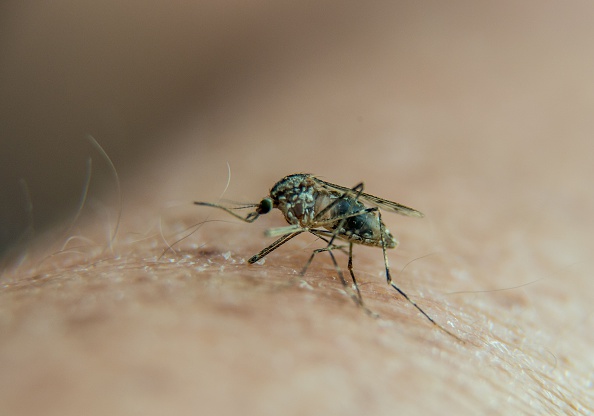
Mosquitoes may be “changing their habits.” In the past, people mainly protected themselves from mosquitoes at night when sleeping, hence insecticides and mosquito nets became important tools for preventing malaria. However, in some regions, disease-carrying mosquitoes start their activities as early as dusk, biting people while they are still outdoors chatting or children are playing. By the time people enter their mosquito nets, the protection might already be one step behind.
According to a report by The Telegraph, this situation has raised concerns in Papua, Indonesia. Some mosquitoes in the area start feeding at dusk, compounded by year-round malaria transmission and limited medical resources and infrastructure, putting the region under prolonged high pressure for malaria control. Similar phenomena have been observed in some areas south of the Sahara in Africa.
Some studies have found that with the widespread use of insecticides and mosquito nets, the activity time of some mosquitoes may change, including early evening biting, delayed morning activities, and more outdoor host-seeking behavior.
Dr. Neil Lobo, a research professor at the Eck Institute for Global Health at the University of Notre Dame in the United States, stated that mosquitoes are adapting to control measures, such as biting outdoors, starting activities earlier in the evening before people enter their mosquito nets, and gradually developing resistance to insecticides. He believes that relying solely on mosquito nets for malaria control is gradually reaching its limit.
In 2025, the World Health Organization (WHO) recommended a new mosquito control tool called “spatial emanators.” Dr. Iqbal Elyazar, an epidemiologist at the Oxford University Clinical Research Unit (OUCRU) in Indonesia, explained that these tools, although not exactly like insecticide-treated nets, cause some mosquitoes to die upon contact with the chemical substances released. Initially known as “repellents,” these products were later named “spatial emanators” when research found that they could kill mosquitoes as well.
The principle of spatial emanators is similar to citronella candles, mosquito coils, or plug-in mosquito repellents, where chemicals with repellent or insecticidal properties enter the surrounding air. The WHO-recommended products currently do not require ignition or electricity.
For example, the American company SC Johnson & Son introduced the “Guardian,” which looks like an A4 paper sheet encased in plastic and slowly releases an insecticide called transfluthrin into the surrounding air, effective for up to 12 months.
Research indicates that these products not only repel mosquitoes but also inhibit biting behavior, decrease activity, and even cause mortality upon contact with transfluthrin. Lobo stated that the current data shows that spatial emanators are “very promising,” but they cannot single-handedly eliminate malaria, as no single control measure can achieve that. Effective vector control is needed to break the transmission chain between humans and mosquitoes, and spatial emanators are expected to fill some gaps left by existing control tools.
A study involving about 6,000 children in Kenya found that the introduction of spatial emanators reduced the proportion of initial malaria infections by 33% and the total number of new cases by 32%. However, WHO currently advises using these tools as a supplement to existing measures like mosquito nets, rather than a replacement. Further research is needed on the effectiveness of stand-alone usage in protecting outdoor activities and addressing mosquito resistance issues.
The World Health Organization reminds that mosquito activity times vary by species, with some being particularly active at dawn and dusk. Therefore, mosquito prevention should not only focus on nighttime sleep. When engaging in outdoor activities, wearing long-sleeved clothing, using locally approved repellents, and using physical barriers like screens and net doors to reduce mosquito entry indoors is essential.
As the autumn season approaches, as long as temperatures remain conducive for mosquito activity, the public should remain vigilant in mosquito prevention, especially during the active periods of dusk and dawn. Additionally, eliminating stagnant water in containers like pots, buckets, and tires can help reduce mosquito breeding grounds.