
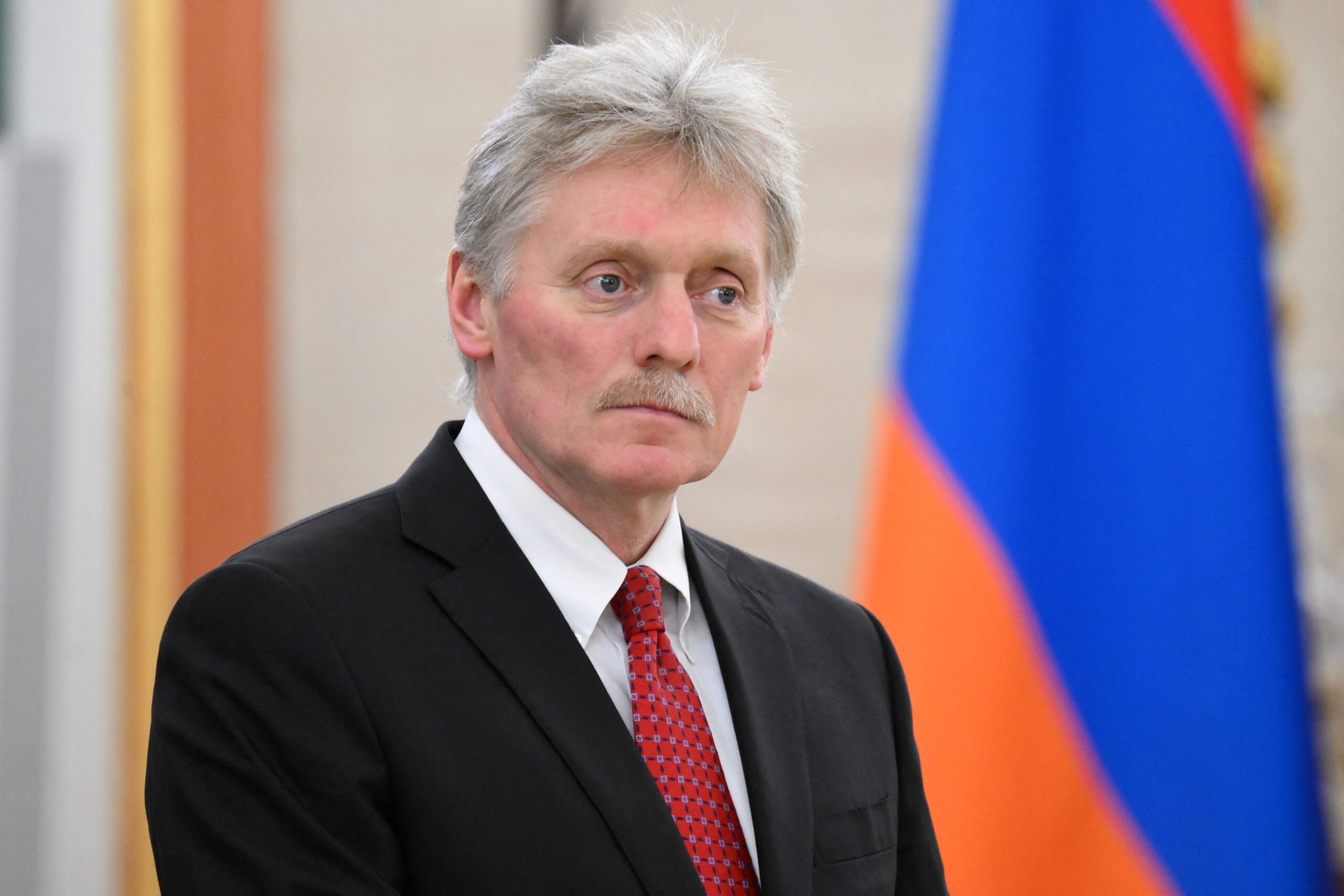
The Kremlin spokesperson Dmitry Peskov stated during an online exchange with Indian journalists on September 8 that Russia has no intention to promote “de-dollarization” and is open to various payment methods.
On September 8, the Indian branch of the Sputnik news agency held a media briefing before the BRICS leaders’ summit, where Peskov took questions from Indian media reporters. The summit is scheduled to take place in New Delhi on September 12-13, with Russian President Putin attending the meeting.
Peskov emphasized that Russia does not have the goal of de-dollarization. Instead, the country is open to any acceptable payment methods. He mentioned that some countries use their own currencies as tools for political pressure, leading to restrictions on those currencies. In such cases, Russia turns to alternative settlement methods without specifying any country names.
He also highlighted that currently, 90% of trade between Russia and BRICS nations is conducted in national currencies, which he described as mutually beneficial. The BRICS countries include Brazil, Russia, India, China, South Africa, Ethiopia, Egypt, Indonesia, Iran, and the United Arab Emirates.
Due to bilateral trade settlements between Russia and India in their respective currencies, Russian companies have accumulated an excess of Indian Rupees. Peskov mentioned that this issue is gradually being resolved.
A report from the Bank of Russia in 2025 showed that in export settlements under foreign trade contracts, the Ruble accounted for 53.7%, “friendly countries’ currencies” for 31.9%, and “unfriendly countries’ currencies” for 14.4%. The import settlements were at 54.4%, 30.6%, and 15.0% respectively. Both the US Dollar and Euro fall under “unfriendly countries’ currencies”. Consequently, the proportion of US Dollar and Euro settlements in Russia’s import and export transactions in 2025 has dropped to below 15%.
After Russia’s full-scale invasion of Ukraine in February 2022 and facing Western sanctions, its foreign exchange reserves were frozen, and financial transactions with Western markets were severely restricted. As a result, Russia’s reliance on the Chinese Yuan has significantly increased since 2022. However, data from the International Monetary Fund (IMF) shows that the global use of the Chinese Yuan remains limited.
The IMF’s annual External Sector Report analyzes global external economic developments and the external sector conditions of various economies. In the IMF’s 2025 External Sector Report on Russia, it was noted that from January 2023, the Russian central bank resumed foreign exchange market operations but only intervened with the Chinese Yuan due to the limitations imposed by sanctions. However, the 2026 report on Russia did not mention the exclusive use of the Chinese Yuan for market interventions.
It is worth mentioning that the IMF’s 2025 report, “Patterns of Invoicing Currency in Global Trade in a Fragmenting World Economy”, stated that the US Dollar still holds a dominant position, while the use of the Chinese Yuan is gradually expanding beyond Asia but remains relatively limited overall. Countries not aligned with the US geopolitically continue to rely on the US Dollar, although the dependence of a few important economies on the US Dollar has decreased.