
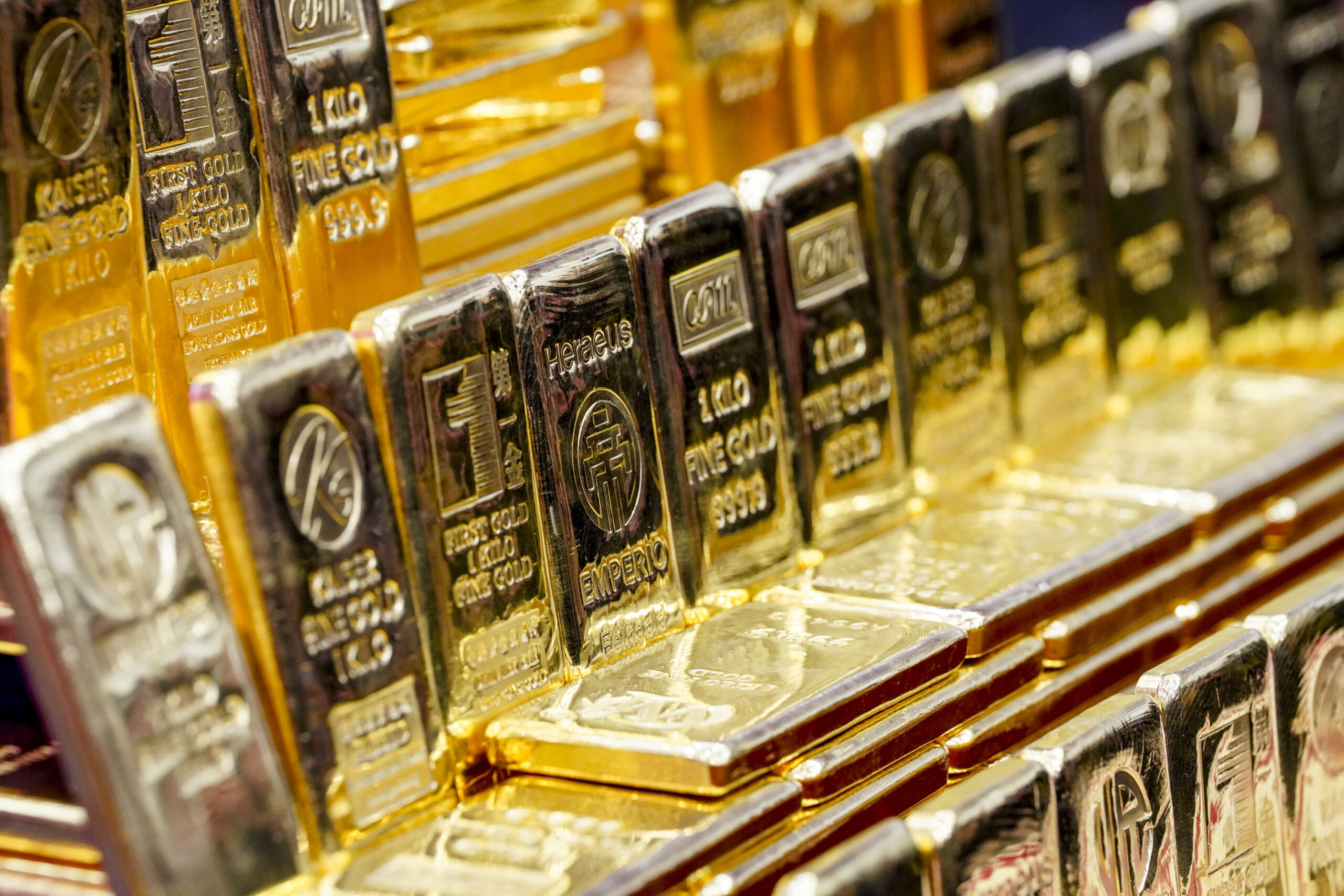
The latest data shows that the People’s Bank of China purchased 20 tons of gold in August, marking the 22nd consecutive month of increasing gold reserves. The international community’s attention to the intentions behind this move has exceeded the realms of conventional economic considerations such as inflation prevention and asset diversification.
According to the State Administration of Foreign Exchange of China’s data released on September 7th, by the end of August, China’s gold reserves reached 76.73 million ounces (approximately 2386.57 tons), an increase of 650,000 ounces (approximately 20.22 tons) from the previous month.
The People’s Bank of China has been increasing its gold reserves for the 22nd consecutive month, with this latest purchase being the largest monthly increase since the resumption of gold purchases in November 2024.
Data from the World Gold Council shows that since the People’s Bank of China resumed purchasing gold in November 2024, the cumulative purchases have exceeded 122 tons. The pace of gold acquisitions by the People’s Bank of China has been accelerating in 2026, with increases of around 5 tons in March, over 8 tons in April, about 10 tons in May, around 15 tons in June, around 20 tons in July, and exceeding 20 tons in August.
Meanwhile, a report released by the World Gold Council titled “Insights into China’s Gold Jewelry Retail Trends in 2026” indicates that gold jewelry consumption in China decreased by 30% to 136 tons in the first half of this year.
Gu Fengda, Chief Analyst at Guosen Futures, told mainland media that the official continuous increase in gold holdings is a systematic arrangement. In addition to contributing to the composition of international reserve assets, gold reserves provide value support for the renminbi.
However, a report by the global independent investment bank Jefferies suggests that Beijing is actively investing in infrastructure related to gold trading to play a more significant role in global gold transactions. Hong Kong is developing a new settlement and delivery system, advancing a physical delivery connection mechanism with the Shanghai Gold Exchange, and constructing an offshore gold storage network. Hong Kong’s planned storage capacity will increase significantly from about 200 tons to over 2,000 tons, indicating that the plan goes beyond gold purchases and aims for larger-scale storage, settlement, delivery, and gold trading.
The report states that the People’s Bank of China remains a core pillar of the gold strategy, with gold purchases accelerating once again. Official figures may be underestimated. Based on comprehensive estimates from physical consumption, customs data, investment flows, and major refining center export data, since January 2024, the total amount of gold purchases by the official sector has reached 161.6 tons, while the central bank’s disclosed figure is only 130.9 tons, suggesting a possible undeclared gold purchase of around 30 tons.
The UK’s Financial Times reported on September 5th that the amount of gold shipped from Russia to Hong Kong had sharply increased this year, making Hong Kong a key trading center for gold. Hong Kong trade data shows that nearly 100 tons of gold were imported from Russia in the first seven months of this year, setting a historical record and nearly tripling the import volume of the same period in 2025.
Debajit Saha, an analyst at the London Stock Exchange Group (LSEG), said, “Since the outbreak of the Russia-Ukraine war, London has closed its gold market to Russia, leading Russian gold producers to increasingly redirect exports to eastern markets.”
Vita Spivak, a consultant at the British geopolitical advisory firm Gatehouse, stated that Hong Kong’s role in facilitating the flow of Russian gold into China reflects a product of “the Russia-China economic relationship.” In this model, Moscow sells resources to Beijing in exchange for economic support.
Mainstream Western think tanks such as the Atlantic Council and institutions like Goldman Sachs believe that the People’s Bank of China’s long-term, high-profile, and accelerating gold reserve accumulation goes beyond conventional economic categories such as inflation prevention and asset diversification. It aims to proactively strengthen its domestic economic resilience. Since physical gold can be stored in its own vaults, it cannot be remotely locked or frozen by the West through international banking systems like SWIFT. This preparation is in anticipation of potential comprehensive sanctions, asset freezes, or economic decoupling triggered by conflicts in Taiwan or other geopolitical crises in the future.
Furthermore, Beijing is leveraging its massive gold reserves and infrastructure to persuade and attract other BRICS countries, as well as countries in the Middle East, Southeast Asia, and beyond, to store gold in mainland China and Hong Kong. Its long-term goal is to establish a non-dollar multilateral trade system based on gold as the underlying clearing tool that bypasses Western control, potentially undermining the US dollar’s status as the sole global reserve currency.