
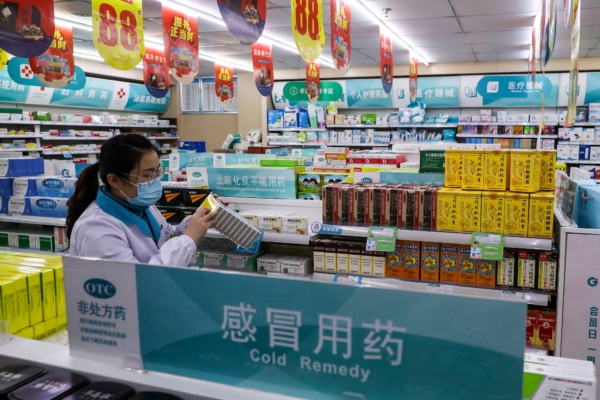
Mainland China’s retail pharmacy industry has recently seen a significant contraction after years of expansion. In 2025, the total number of pharmacies nationwide decreased by approximately 27,200, with chain stores accounting for over three-quarters of the decline. At the same time, the sales volume of physical pharmacies dropped by 2.2%. Experts in the industry attribute this trend to factors such as centralized procurement of medicines, cautious consumer spending habits, and the ongoing shift towards online pharmacy sales, which continue to exert pressure on brick-and-mortar stores.
According to the annual data released by the National Medical Products Administration of the Communist Party of China, the number of retail pharmacies in mainland China decreased from 683,700 in 2024 to 656,500 in 2025, marking a net decrease of about 2.72%, a significant decline.
Among these, chain pharmacies saw a reduction of around 20,800 outlets, representing 76.6% of the total decrease, while standalone pharmacies decreased by 6,368, accounting for 23.4%.
The total number of headquarters of retail chain enterprises also decreased from 6,667 to 6,212, a reduction of 455 establishments. Additionally, the chain store rate decreased from 57.04% in 2024 to 56.23% in 2025.
Industry expert Shao Qing pointed out that medium-sized chain pharmacies with around 300 to 500 stores face greater pressure to close compared to larger chain stores and standalone pharmacies. These businesses often lack the capital and supply chain advantages of larger chains while bearing higher management costs, leading some to resort to closures, transfers, or complete sales. Shao Qing noted that selling pharmacies has become increasingly challenging, resulting in low valuations.
In an article published by the medical industry media “Medical Trends” in April this year, it was reported that within a little over a month from March to April, five chain pharmacies filed for bankruptcy or entered bankruptcy proceedings. Among them, Hubei Zhonglian Pharmacy, which once had over 400 outlets at its peak, and Beijing Dewayi Zhiguan Pharmaceutical Chain, known as the “first affordable pharmacy in Beijing,” were included.
The total number of pharmacies in mainland China increased from around 480,000 in 2018 to over 680,000 in 2024, representing an addition of approximately 200,000 establishments in six years. Shao Qing mentioned that in some regions, the density of pharmacies has exceeded the actual customer flow capacity.
Zhongkang Technology predicts that over the next 3 to 5 years, the number of pharmacies in mainland China may further decrease to below 500,000.
Market monitoring data from Zhongkang Technology, a data service provider in the healthcare industry, indicates that in 2025, the total sales of physical pharmacies in mainland China across all product categories amounted to approximately 517.3 billion yuan, a decrease of 2.2% compared to the previous year, marking a continued contraction since 2023. Sales of health products and other non-pharmaceutical items saw a decline of 11.4%.
Zhongkang Technology believes that the main reasons for the contraction of the physical pharmacy market include reforms in personal medical insurance accounts, regulation of drug prices, stricter supervision, and the diversion of sales to online channels. The organization also stated that Chinese consumers are becoming more cautious in their spending habits and pay closer attention to prices when purchasing health products.
Shao Qing explained that with the expansion of centralized procurement of medicines, the number of prescriptions from hospitals flowing to pharmacies has decreased, and a significant portion of the demand for commonly used medicines has shifted towards online sales.
In the first half of this year, six listed chain pharmacies collectively closed 803 outlets. Despite the closure, due to the opening of new stores and mergers during the same period, the net increase in total outlets was 1,180, primarily concentrated in leading enterprises such as Gensenlin, Yifeng, and Laobaixing.
Meanwhile, Yixintang, Suyu Pingmin, and Jianzhijia continued to reduce their number of outlets. Jianzhijia saw a year-on-year decline in operating income of 6.14% and a decrease in net profit of 25.87%, while Yixintang experienced a 5.02% decrease in operating income.