
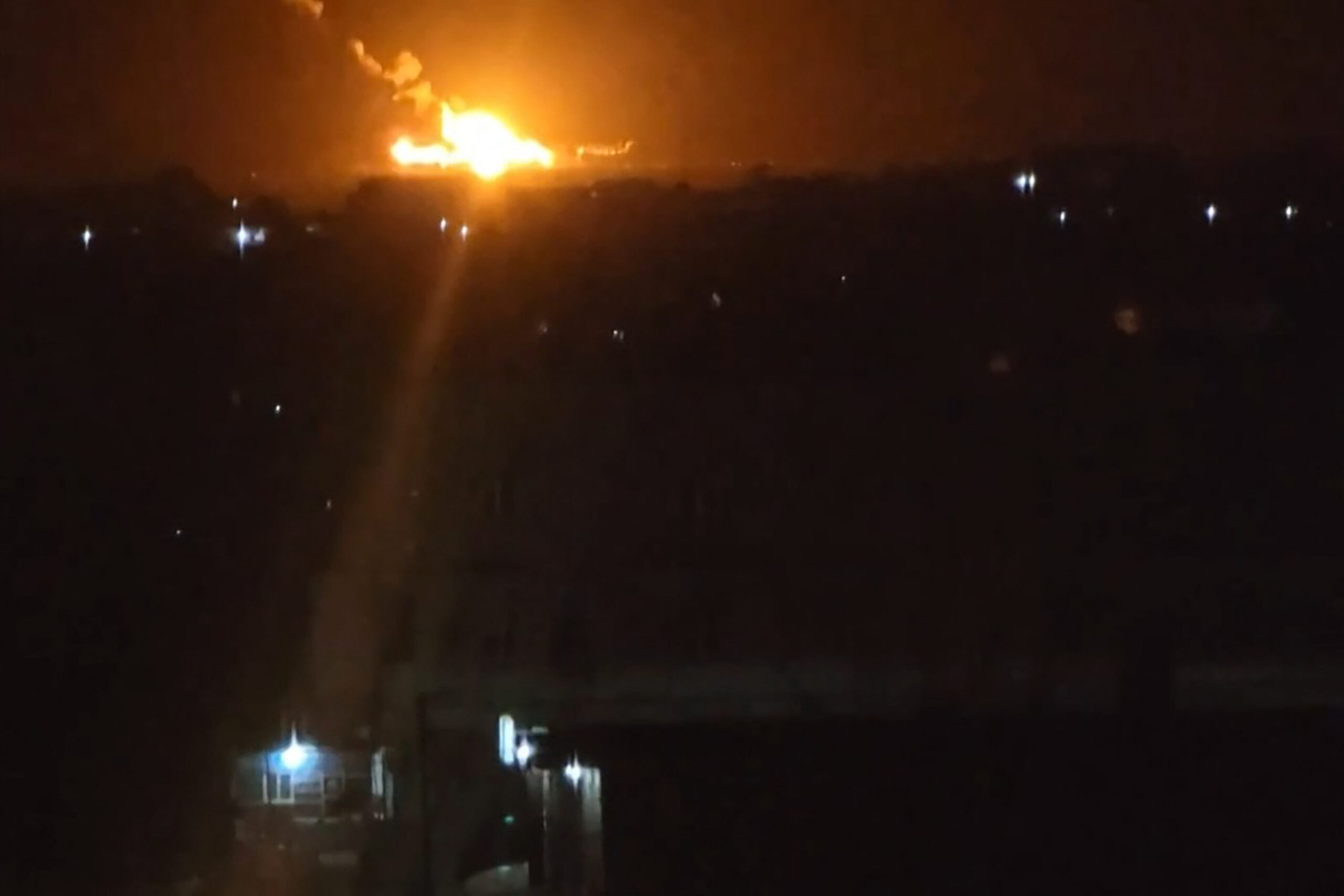
Iran-backed Houthi militants in Yemen launched a large-scale attack on Saudi Arabia’s southern region on Tuesday (September 8th). The attacks spread across four cities, leaving at least 73 people injured and causing fires at multiple energy facilities. In response to this news, Brent crude oil futures prices surged, approaching the $100 per barrel mark.
According to Reuters, the Houthi militants control densely populated areas in Yemen, including the capital Sanaa. The organization claimed to have launched a large-scale military operation on Tuesday, targeting multiple locations in southern Saudi Arabia with drones and ballistic missiles.
The cities reportedly attacked by the Houthis include Khamis Mushait (home to a Saudi airbase in southern Saudi Arabia), Abha (housing facilities related to Saudi Aramco), Najran (a city near the Yemeni border), and Jazan (an important port city on the Red Sea coast with large refineries and power facilities).
Saudi authorities confirmed fires at the related locations and stated that among the 73 injured are women and children. However, independent verification of the scenes has not been seen yet, and due to restrictions in the local media environment, journalists have had difficulty contacting witnesses.
The Houthi militants released photos showing smoke and explosions, claiming to have attacked trucks from Saudi Arabia in a border area in eastern Yemen on Monday.
Houthi-controlled media reported later on Tuesday that Saudi warplanes carried out four airstrikes in the Al-Jawf region east of Sanaa, the Yemeni capital.
For over a decade, Saudi Arabia has led Arab coalition forces in ongoing conflicts with the Houthi militants in Yemen. Despite a temporary easing of hostilities in recent years, ceasefire agreements have broken down, leading to multiple threats from the Houthis to attack shipping near the entrance to the Red Sea.
The International Organization for Migration (IOM) stated that over the past three days, more than 18,500 people have been forced to evacuate due to the conflict on the western coast of Yemen.
Following a relatively calm August, tensions in the Gulf region have escalated once again. With increased confrontation between the US and Iran, global oil prices have risen to their highest since July. On September 8th, Brent crude oil prices briefly surpassed $99 per barrel, nearing the $100 mark.
As of approximately 08:02 GMT, the November Brent futures contract rose by 2.22% to $99.16 per barrel, while the October West Texas Intermediate (WTI) contract increased by 3.3% to $94.50 per barrel.
Since February this year, Brent crude oil prices have risen by over 30%, but remain below the peak of $126 per barrel in late April; the increase in refined fuels such as diesel has been even greater.
The conflict in the Gulf region is seen as a power struggle between the US and Iran, with both sides attempting to exert economic pressure through blockades to force concessions.
Washington claims to be assisting ships in navigating the Hormuz Strait to increase oil flow into global markets, while simultaneously restricting Iranian oil exports on the opposite side of the strait.
Tehran has announced new control measures for the Hormuz Strait, planning to establish a “maritime exclusion zone” soon. This zone is said to extend from the US blockade line through the Hormuz Strait into the Gulf.
Over the weekend, the US reported firing on an Iranian oil tanker in retaliation for Iran targeting US military vessels. Iran, in turn, claims to have used new, more powerful ballistic missiles to attack US ships.
Before the escalation of the conflict, approximately one-fifth of global oil and liquefied natural gas transportation passed through the Hormuz Strait.