
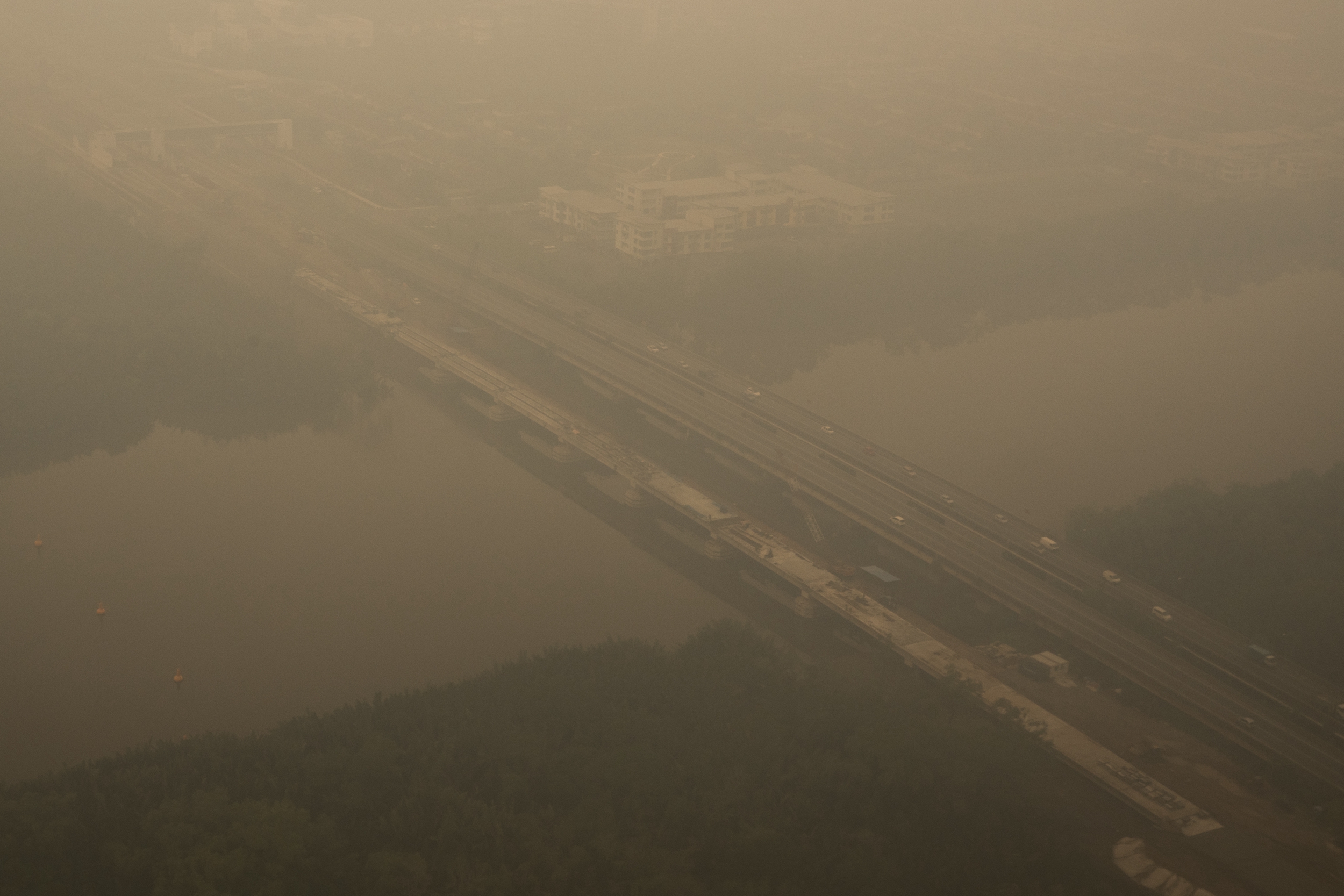
Indonesia has been battling wildfires for weeks, with large areas of Borneo and Sumatra Island being ravaged by fires, resulting in harmful smoke haze that not only increases respiratory problems among the local population but also forces school closures and severely affects several neighboring countries in Southeast Asia.
According to reports from various media sources, the latest estimate from the independent platform Nusantara Atlas, which monitors the forest conditions in equatorial Asia in real-time, indicates that nearly 300,000 hectares of land have been destroyed by wildfires in Indonesia so far this year.
Officials from the Indonesian Ministry of Education stated last week that due to deteriorating air quality, many schools have been forced to close, leading to over 1.4 million students nationwide switching to remote learning.
Deputy Minister of Health of Indonesia, Dante Saksono Harbuwono, stated in August that more than 5 million people in Borneo and Sumatra are directly exposed to health risks caused by haze. From July to August, the Ministry of Health has recorded over 50,000 respiratory infections related to the forest fires, with over 12,000 cases being children under the age of five.
As one of the severely affected neighboring countries, Malaysia declared a state of emergency in the Serian Division of Sarawak state last Friday, September 4, due to the dangerous level of air pollution, leading to the emergency closure of 647 schools starting from Monday, September 7.
The Philippines also experienced a week-long period of extremely unhealthy levels of PM2.5 air pollutants, prompting officials in many cities and provinces to order school closures. Currently, the air quality is slowly returning to normal.
Data from Singapore’s National Environment Agency revealed that the haze from Indonesia caused the air quality in the central region of Singapore to reach an “unhealthy” level last Friday.
Indonesia’s Ministry of Foreign Affairs spokesperson, Vahd Nabyl Achmad Mulachela, stated last Saturday, September 5, through a declaration that Indonesia is actively communicating with other countries regarding the transboundary haze issue and that the meetings of the Association of Southeast Asian Nations (ASEAN) regarding haze and response measures are being held regularly.