
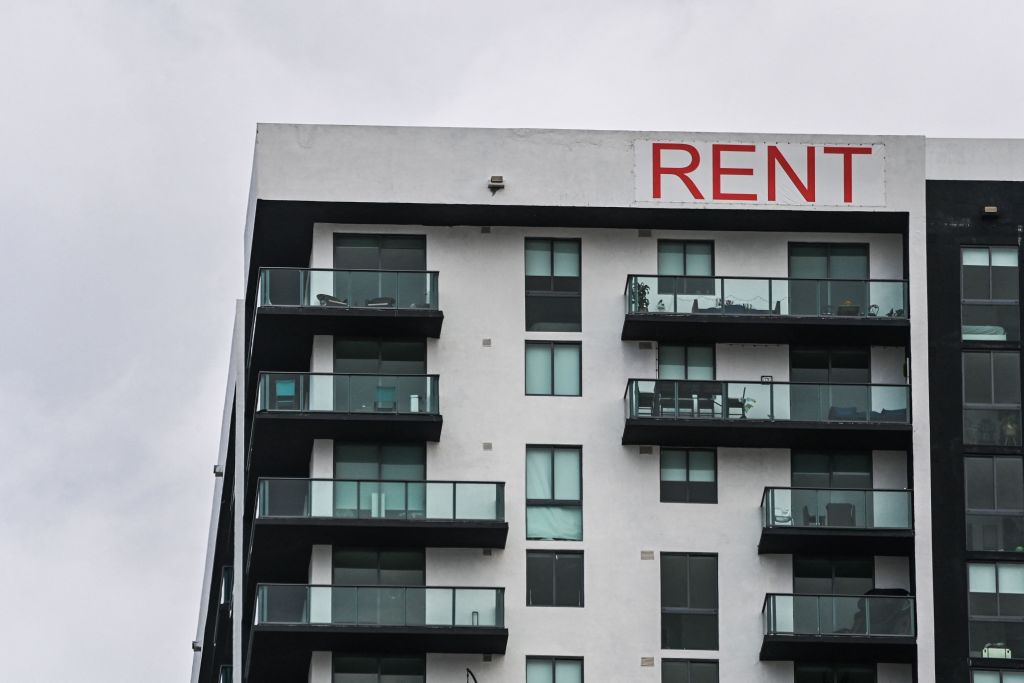
35-year-old Natalie Slagle and her husband Dan Slagle, who live in Portland, Oregon, can afford to buy a house. With an income that can handle a mortgage of about $6,000 per month, they had a budget of around $940,000 for a home purchase. However, after two failed attempts at buying a house, they recalculated and decided to continue renting.
According to a report by the U.S. financial website “MarketWatch” on September 2nd, this couple, who are financial planners, currently spend about $4,000 a month on rent. Many people view buying a house as an important step in building wealth, so why would a financially savvy couple who can afford to buy a house choose to remain as renters?
The Slagle couple had originally planned to buy a house. They viewed properties and made offers twice, but were unsuccessful both times. After these experiences, they started to reconsider: is buying a house really the best financial decision for them at the moment?
Buying a house involves more than just the monthly mortgage payment. There’s the down payment, property taxes, home insurance, and maintenance costs to consider. In a situation where both house prices and mortgage rates are high, a house that is affordable doesn’t necessarily mean it’s a wise purchase at present.
Currently, the couple pays around $4,000 a month in rent. The money saved from what they could have spent on housing costs is being allocated to their daughter’s education account, cash reserves, a brokerage investment account, and their own financial planning firm.
This was the answer the couple arrived at after reevaluating their finances: aside from housing, they have other financial needs and alternate avenues for asset accumulation.
However, renting comes with an unavoidable issue: after renting for 30 years, the house still belongs to the landlord, while buying a house for 30 years can at least leave the buyer with one property of their own.
“MarketWatch” thus calculated a hypothetical scenario over 30 years. Assuming a 35-year-old person buys a $340,000 home with a 10% down payment, factors in a 30-year mortgage, property taxes, insurance, and maintenance, the monthly housing cost would be around $2,600. If the house appreciates at an average of 4% per year and is fully paid off by age 65, the house would be worth around $1.1 million.
Another 35-year-old person chooses to rent, starting with a monthly rent of $1,669, assuming a 3% annual rental increase, and continuously invests the money saved from not buying a home into the stock market. If the investment generates an average annual return of 8%, after 30 years, this renter may not own a home but could potentially have an investment portfolio of around $1.13 million.
On one hand, there’s a house worth about $1.1 million, on the other hand, there’s an investment account worth about $1.13 million. Under these hypothetical circumstances, the final asset sizes from both routes are relatively close.
This calculation doesn’t prove that renting is always more beneficial than buying a house. If house prices appreciate faster, buyers may come out ahead; if the stock market doesn’t achieve an 8% average return, renters investing may fall behind. Buying a house can also provide housing stability, and the monthly mortgage payments can be a form of forced savings for many families.
The “rent + invest” strategy has a crucial prerequisite: the saved money must actually be retained or invested. If the $1,000 saved on housing each month ends up being spent on dining out, traveling, and other consumption, there won’t be a million-dollar investment account after 30 years.
The Slagle family is just one example. However, the trend of high-income families in the United States choosing to rent is clearly visible in the data.
The “America’s Rental Housing 2026” report by the Joint Center for Housing Studies at Harvard University, released in March, shows that the income structure of rental households in the U.S. is moving upwards. Adjusted for inflation, households with a minimum annual income of $75,000 saw an increase of 4.1 million units from 2014 to 2024, reaching 16.3 million units, accounting for about 35% of all rental households.
Over the past 10 years, households with an annual income of at least $175,000 increased by about 1.2 million units. Among these households, about one-third of the household heads are aged 25 to 34, while another 26% are aged 35 to 44, which are typically prime years for first-time homebuyers.
These data don’t tell us exactly why each household chooses to rent, nor do they confirm that they are all employing the “rent + invest” strategy. However, they at least indicate that high-income individuals continuing to rent is no longer just a unique choice made by a few financial planners.
A study released by the real estate platform Zillow on September 1st provided another perspective: even with declining mortgage rates, only 42% of American renters indicated they would consider buying a home.
In addition to house prices and interest rates, some renters value the flexibility that renting brings, as well as not having to directly bear costs such as home maintenance, insurance, and property taxes. Zillow estimates that the annual holding costs for a typical U.S. home, excluding the mortgage, are already close to $16,000.
“MarketWatch” points out that the “rent + invest” approach isn’t suitable for everyone, and the outcome depends on factors such as house prices, rental rates, and investment returns. For the Slagle family who chose to continue renting after two failed house offers, they recalculated their housing costs, ultimately opting to rent and allocate some funds to education, savings, investments, and their own company.
This case reflects not that “renting is always better than buying,” but rather that some financially capable young Americans are reevaluating the choices between housing and other assets.