
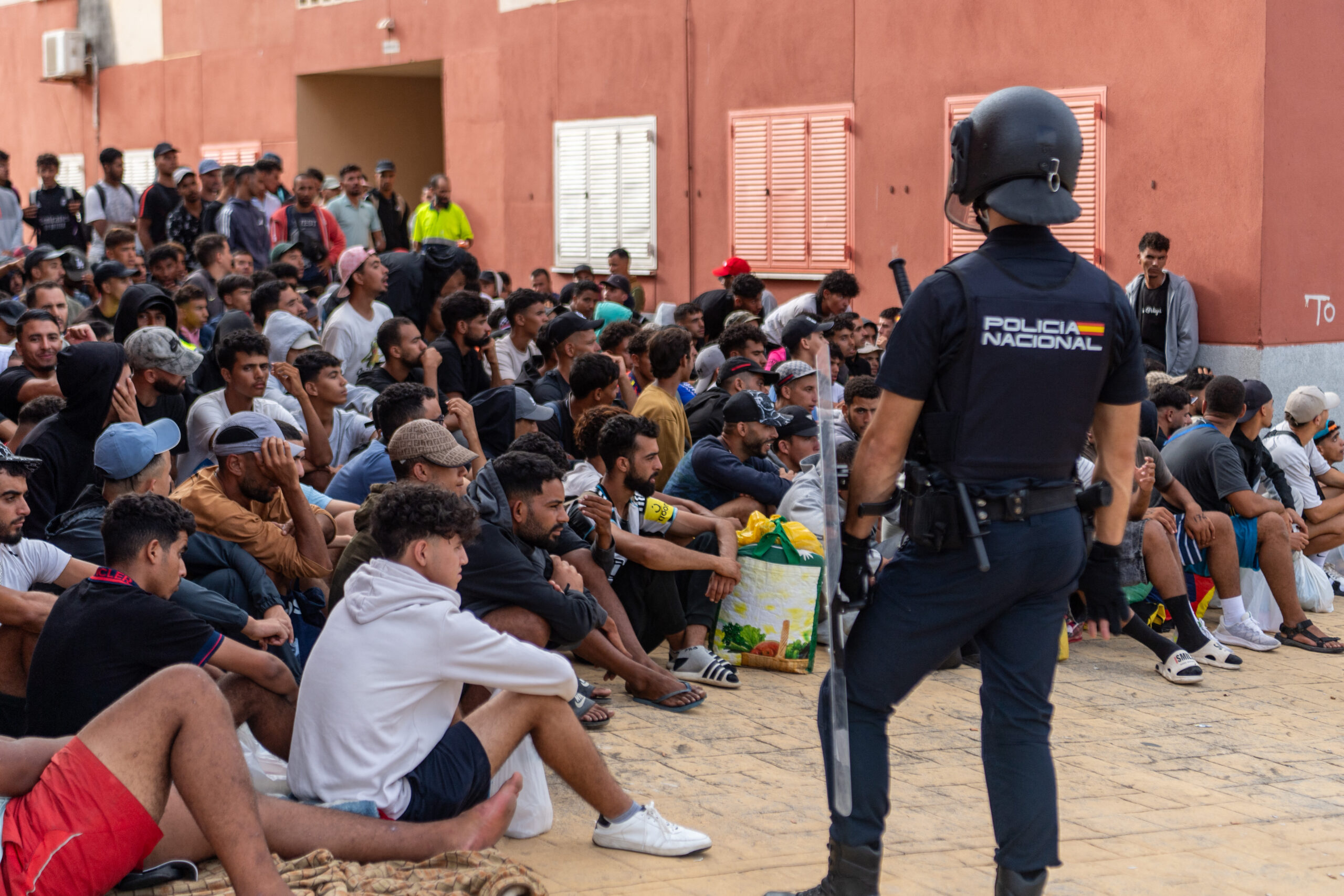
The immigration crisis in Ceuta, a Spanish enclave in North Africa, continues to unfold with a shortage of resources for accommodating a large number of underage migrants. Many children are left stranded in temporary facilities while others are forced to wander the streets.
Ikram, a 17-year-old, sent a message to CBC this week saying, “I’m back on the streets.”
In Ceuta, Ikram briefly found solace after spending nearly a month sleeping in forests, abandoned bathrooms, and streets. She eventually found temporary shelter after staying with a family for three days, helping care for their children.
However, her job opportunities soon disappeared.
Ikram left the coastal town of Fnideq in Morocco at the end of July, along with an estimated 80,000 Moroccans and migrants from southern countries, all seeking to cross into Ceuta. For many, this Spanish territory represents a potential path to legal residency in Europe.
“We are alive in Morocco, but not living the life we want,” she said. Her father is a tailor with meager income.
Ikram had previously attempted to cross into Ceuta solo during a large-scale border crossing operation in 2024. This time, she has no plans to go back.
She recounted her harrowing journey of crossing, saying, “In the morning, my mother told me that people were crossing. Later, on my way to work, I ran into a friend who invited me to join her. I told her, ‘No, I have a job.’ She said, ‘Let’s just go check it out.’ And I said, ‘Fine, let’s go.’ So, we went.”
At the border, they witnessed a chaotic scene with thousands of people attempting to swim around the border fences.
“We saw many dead bodies,” Ikram said, “but I still thought, let me try my luck, so I jumped into the water. I almost died too. I kept crying and eventually couldn’t swim anymore.”
A boy helped her stay afloat. “He kept pushing me, pushing me until I reached the shore.”
When Ikram finally collapsed on the beach, she was taken to the hospital and discharged the next day.
Her 15-year-old brother, Marwan, had crossed the land border earlier that day but soon returned home.
“He couldn’t bear it,” Ikram said, referring to the dire situation immigrants face in Ceuta.
Despite not being allocated official accommodation or child protection facilities, Ikram is determined to stay in Ceuta.
“I hope to build my future abroad so I can help my mom and dad,” she said, “because right now, they are counting on me.”
Following the July surge of arrivals in Ceuta, most returned to Morocco within hours. However, Spanish Prime Minister Pedro Sánchez stated that 5,000 people remain in Ceuta. Local authorities estimate that around 9,000 people are still present in this small enclave and its surrounding areas, with the local population totaling approximately 80,000.
Among those staying includes thousands of unaccompanied underage migrants, including Ikram, living in extremely vulnerable conditions.
According to Jennifer Zuppiroli, an immigration expert from Save the Children Spain, the Spanish Ministry of the Interior has registered 2,500 “children and adolescents” in Ceuta. The actual number may be much higher.
Zuppiroli told CBC News, “Various social and community organizations estimate that there may still be thousands of underage individuals awaiting identification and referral to protective services.”
Sira Rego, the Spanish Minister of Youth and Children, stated that many underage individuals are below the age of 13, with approximately 700 of the underage migrants being girls.
Rego emphasized that facilitating family reunification for these underage individuals is a top priority while acknowledging that “in most cases, they have no possibility of return.”
Under international law, the repatriation of unaccompanied minors must adhere to strict safeguarding measures, considering the best interests of the children.
Meanwhile, tensions on the streets of Ceuta have escalated in recent weeks.
French independent journalist Khadija Toufik reported, “More people are demonstrating, calling for the eviction of immigrants.” Last week, dozens of residents obstructed Red Cross workers from distributing food and water to migrants. Subsequently, the migrant camps on the beach were set on fire.
For the past three days, Toufik has been tirelessly assisting underage individuals in arranging temporary stays in hotel rooms. However, with rising hotel prices, they will soon have to leave.
As for Ikram, she has befriended Hasna, an 18-year-old from Morocco.
A local organization has set up a safe camp for girls, allowing Ikram to enter. Hasna, being overage, has not been granted access and continues to live on the streets of Ceuta.