
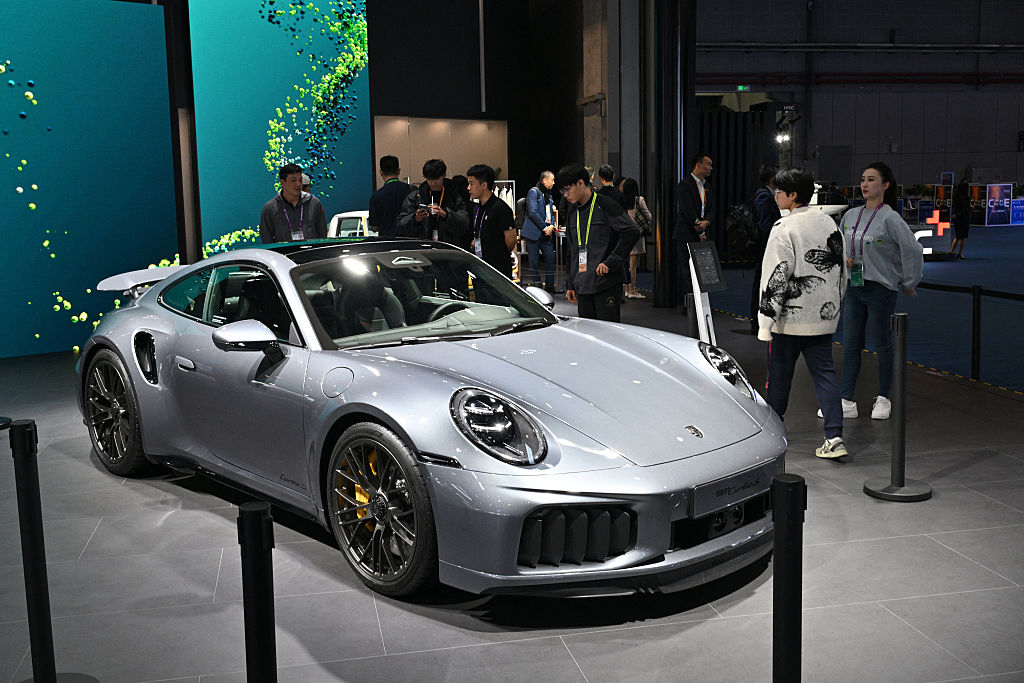
Porsche, the sports car manufacturer, has announced plans to lay off 5,000 employees as a result of plummeting sales in China, increased tariffs in the United States, and premature investment in electric vehicles. This decision has been reached as part of an agreement with employee representatives.
On Monday, Porsche unveiled the layoff plan, which will involve reducing the workforce through early retirement and other voluntary resignation measures. The company has also guaranteed the future of its core factories in Germany and pledged to invest $24 billion by 2035.
This cost-cutting measure is part of CEO Michael Leiters’ plan to revitalize the company. Leiters stated that the agreement with workers “gives us the opportunity to strategically adjust the company and invest in enhancing our competitiveness.”
Employees have agreed to accept smaller bonuses and salary increases, as well as reduce the number of remote working days from the previously agreed upon 12 days per month to 8 days.
The main challenge facing Porsche is the continued decline in the Chinese market. The company’s sales in China dropped to 41,938 vehicles last year, less than half of the peak sales in 2021. Factors such as the sluggish real estate market in China, new tax policies, and competition from local car manufacturers have dampened consumers’ willingness to purchase expensive imported vehicles.
Currently, there are few signs of recovery in the Chinese market for Porsche. In the first quarter of this year, Porsche delivered only 7,519 vehicles in China, a staggering 21% decrease compared to the same period in 2023 when 21,365 vehicles were delivered, marking a more than 60% decrease over three years. In the first half of 2026, Porsche’s sales in China saw another 32% year-on-year decline.
By the end of 2025, Porsche’s dealerships in China had decreased from 150 to 114, with a withdrawal rate of 30%, and it is expected to further adjust to around 80 dealerships by the end of 2026.
“This is not just a short-term slump we are experiencing, but a structural transformation. Customers’ expectations are changing,” Leiters said at the annual shareholders’ meeting. “The competitive landscape is also becoming increasingly volatile.”
These latest cost-cutting measures build upon the agreement reached between Porsche and its workforce last year to cut 3,900 positions. As of the end of 2025, the company had about 42,000 employees.
Leiters revealed his plan to revitalize the brand at last month’s annual shareholders’ meeting, outlining the concept of streamlining and simplifying the Porsche product line. He has also started efforts to sell non-core assets, including the company’s ownership of the race car brand Bugatti and its stake in the electric supercar manufacturer Rimac. Leiters plans to announce the complete strategic plan in early October.
The US tariff policy poses another challenge for Porsche. All cars sold by Porsche in the US are imported from Europe, and the scale is not sufficient to consider local production. Last year, these new tariffs imposed approximately $800 million in costs on the company.
On the other hand, due to the deteriorating market conditions in China and increased tensions in the Middle East, the performance of Audi, Porsche’s “sister brand” under the German Volkswagen Group, has also been affected, leading to a downward revision of its full-year performance outlook. Although their brand positioning differs, the two companies often collaborate on technology development.
In the first half of this year, Audi delivered a total of 727,245 vehicles, a 7.2% decrease compared to the same period last year. This decline is mainly attributed to the ongoing competitive challenges in the Chinese market and the impact of US tariffs. Delivery volumes in China decreased by 19%, while those in the North American market (excluding Mexico) decreased by 17%.
(Partial reference from The Wall Street Journal)