
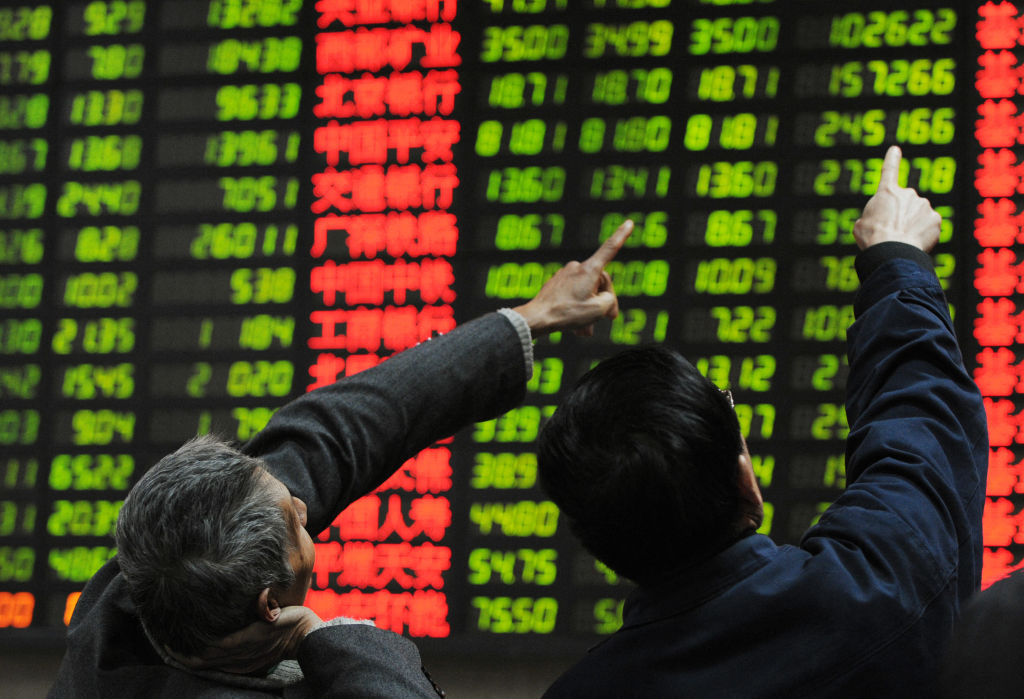
On July 27, 2026, Chinese domestic DRAM chip company, Changxin Technology, was listed on the STAR Market of the Shanghai Stock Exchange. Its market value briefly exceeded 3.3 trillion Chinese yuan during trading, making it the largest market capitalization on the A-share market. However, investors are wary that it could become the next “PetroChina” for trapped investors.
Changxin Technology, China’s largest DRAM chip manufacturer, debuted on the stock market at 49.5 yuan per share, a 471.59% surge from its IPO price of 8.66 yuan. Its initial market capitalization reached approximately 3.31 trillion yuan, surpassing even the Industrial and Commercial Bank of China (about 2.64 trillion yuan) to claim the top spot in A-share market capitalization. It became the first technology stock on the A-share market with an opening market capitalization exceeding 10 trillion yuan.
As of the close of trading on July 27, Changxin Technology was priced at 49.00 yuan per share, with a total market capitalization of around 3.28 trillion yuan. Shareholder information from post-listing disclosure by Anhui State-Owned Assets, Alibaba, and others revealed significant paper gains for these investors.
According to reports from mainland China, Anhui State-Owned Assets had the highest return based on the prospectus calculation. After the IPO, Anhui State-Owned Assets held approximately 33.11% of Changxin Technology’s shares, translating to a market value of about 1.09 trillion yuan at closing price.
Alibaba, through two entities, injected a total of about 6.8 billion yuan before the listing and held a collective 4.48% stake in Changxin Technology. Based on the 3.28 trillion market capitalization, Alibaba’s stake in Changxin Technology was valued at over 147 billion yuan, yielding a profit of nearly 140 billion yuan, marking a return of over 20 times their investment after the listing.
The contrast of these substantial gains is exemplified by Evergrande, a major real estate developer grappling with debt issues, which previously held shares in Changxin Technology but sold them off early. In December 2024, Evergrande sold its 1.56% stake in Changxin Technology for 2 billion yuan. Based on the current market capitalization of Changxin Technology at 3.28 trillion yuan, the 1.56% stake is now worth 511.68 billion yuan, indicating a missed paper profit of about 491.68 billion yuan compared to the initial sale price.
Financial data from WIND showed that Changxin Technology had a total trading volume of 141.187 billion yuan by the close of trading. The turnover rate exceeded 53% within the first hour of trading and reached 66.40% for the entire day. With over 66% of the shares changing hands, the unprecedented high trading volume and turnover rate marked a remarkable debut for the new stock.
Analyst Xia Yan interpreted the data as suggesting that within the first hour of trading, over half of the retail investors and short-term profit seekers who won shares through initial public offering have exited with gains, and by closing, over 66% of shareholders have changed hands. The ability to absorb a massive capital of 141.1 billion yuan indicates that only well-established institutions and public funds, the main funds, were taking over, suggesting a clear intention by the Chinese authorities to support Changxin Technology.
Changxin Technology’s IPO process, from acceptance on the STAR Market on December 30, 2025, to securing registration approval on June 12 of the current year, took less than 7 months. Xia Yan noted that this rare efficiency in the approval process indicates the authorities’ desire to quickly attract capital from the capital markets for Changxin Technology.
The IPO received comprehensive support from the Chinese authorities. In terms of shareholder structure, state-owned capital and the second phase of the National Large Fund actively participated, with state capital shareholders holding crucial positions on the board of directors.
Financial observer Mike Li observed that Changxin Technology does not resemble a traditional state-owned enterprise but operates more like a hybrid entity led by local governments, supported by national industrial funds, and with investments from multiple provinces and cities, operating in a market-oriented manner to avoid falling into the trap of complete state-owned enterprises, facilitating its capital operation.
Nevertheless, investors are cautious about whether Changxin Technology could become the next “PetroChina” for trapped investors. Online discussions in stock-themed communities in mainland China draw parallels between Changxin Technology and PetroChina: both went public at the industry’s peak, with the market treating short-term profits as permanent growth potential, leading to speculation-driven valuation bubbles.
Industry insiders indicate that in an extremely bearish market sentiment, a “one-day tour” market scenario may emerge. The stock market serves as an “economic barometer” where if the economic fundamentals are weak, there won’t be market movement; it’s just speculation.
When PetroChina went public in 2007, it was hailed as “Asia’s most profitable company,” coinciding with the peak of the A-share market in the 6124 bull market and historic high international oil prices. Everyone assumed the perpetual continuation of oil dividends, and on the first day, PetroChina surged to 48.6 yuan, only to continue falling for over a decade, leaving countless investors trapped at higher prices.
As of the close of trading on July 27, PetroChina’s A-share price was 10.90 yuan, a 1.18% decrease from the previous trading day.
Investors humorously remarked online that every generation has its “PetroChina,” underscoring a lesson from the peak of a bull market bubble. Similarly, every generation has its Changxin Technology, and the outcome remains to be seen if it follows the path of the PetroChina bubble peak, serving as a cautionary tale to remember the risks of bubbles and the inevitable decline after a meteoric rise.