
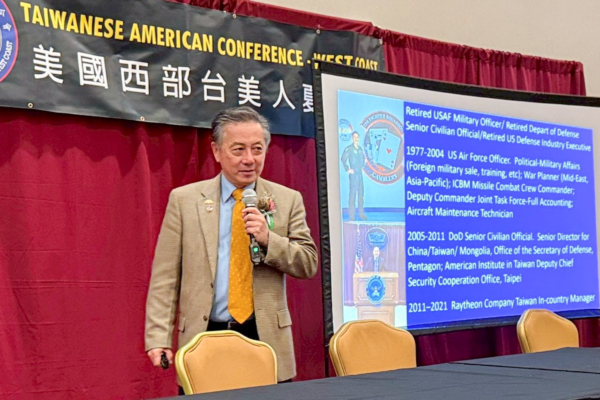
The Taiwanese American Conference – West Coast in the United States’ western region took place from July 10th to 12th in San Diego, California in 2026. This year’s conference not only celebrated the remarkable contributions of Taiwanese Americans to global innovation and development but also delved into in-depth discussions on the significant challenges posed by current international geopolitical and economic situations.
The statement released by the Taiwanese American Conference – West Coast highlighted the growing influence of Taiwanese Americans on the global stage, despite their relatively short history in the United States. Visionaries like Huang Renxun and Su Zifeng from Taiwan are leading the global Artificial Intelligence (AI) technology revolution, while Taiwan Semiconductor Manufacturing Company (TSMC) continues to expand its manufacturing footprint in the U.S.
The statement emphasized Taiwan’s rapid progress in achieving a dual miracle of political democracy and economic development in just one generation, earning international acclaim as a beacon of democracy and the happiest country in Asia. In the U.S., Taiwanese Americans, as a newer generation of immigrant community, have demonstrated a strong work ethic in nation-building efforts and actively participated in the continuous development of democratic society in a country with a 250-year history of democratic practice.
The conference directly addressed the threats posed by the Chinese Communist Party to Taiwan’s security and sovereignty. The statement condemned the People’s Republic of China for promoting the ideology of “ethnicity over democracy” through the implementation of the National Unity and Progress Promotion Law on July 1, 2026, extending its legal reach beyond its borders. The conference deemed this outdated ideology a direct threat to universal values like democracy and freedom.
The Taiwanese American Conference – West Coast pledged to uphold the spirit of passing on the torch, continuing to unite the Taiwanese American community, safeguarding universal values such as democracy, freedom, and human rights, and passing on this mission to the next generation.
One core theme of the conference was “Intelligence Leading the Way,” focusing on leveraging Taiwan’s innovative advantages to tackle challenges and maintain its position globally. To realize this vision, the conference proposed three key strategic directions:
1. Strengthening National Defense Security and Democratic Resilience:
Continuing to deepen Taiwan-U.S. security cooperation to build a stronger defense deterrence force. Additionally, enhancing societal resilience by improving social awareness and capabilities in countering cognitive warfare, misinformation, and coordinated information operations to uphold democratic institutions and societal security.
2. Enhancing Economic Resilience and Strategic Layout:
Adapting to international economic changes, including U.S. tariff policies, while maintaining industrial competitiveness. Moreover, fostering Taiwan’s space technology development and exploring the mutual influence between technological innovation and geopolitics to enhance overall strategic resilience.
3. Constructing Community Emergency Response and Global Cooperation Network:
Enhancing disaster response capabilities of Taiwan and overseas Taiwanese communities, establishing comprehensive civic engagement and community collaboration mechanisms to ensure societal functionality during natural disasters or crises, boosting overall societal resilience.
The statement emphasized that true “intelligence” stems not only from technological innovation but also from the integration of scientific expertise, strategic thinking, and social resilience. Only through such integration can opportunities for sustainable development be created for the next generation amidst the ever-changing international landscape.
The statement also highlighted the pressing economic challenges Taiwan currently faces. In recent months, Taiwan’s youth unemployment rate has hovered around 11.4%, with high housing prices, stagnant wage growth, and diminishing entry-level job opportunities due to rapid advancements in artificial intelligence, placing increasing economic pressure on the younger generation. Consequently, the conference also discussed how to collaboratively address the challenges faced by the youth generation and nurture their ability to forge a future.
Another core theme of the conference, “Innovation Connecting Generations,” stressed the importance of utilizing innovative thinking to sustain cultural heritage, fostering understanding and communication across different generations to pass down shared values and cultural identity.
The conference proposed four action directions:
1. Deepening Cultural Heritage: Sustaining Mother Tongue Vitality:
Actively promoting mother tongue education and cultural heritage to bridge generational communication gaps, allowing the young generation to inherit their cultural identity and historical memory while learning the language.
2. Fostering Transitional Justice Education: Constructing an Equitable Future:
Through promoting transitional justice education, guiding the youth generation to understand history, reflect on the past, and, based on mutual understanding and reconciliation, collectively establish a fairer, more inclusive future society.
3. Recognizing Indigenous Wisdom: Enriching Diverse Cultures:
Respecting and cherishing the valuable cultural assets and traditional wisdom of indigenous peoples, engaging in a dialogue with contemporary society through innovative means to continuously harness the perspectives and wisdom of indigenous communities to inspire future values.
4. Promoting Public Health: Enhancing Community Well-being:
Continuously promoting public health and community care to improve the well-being of people of all ages and collaboratively building a healthier, sustainable, and resilient society.